
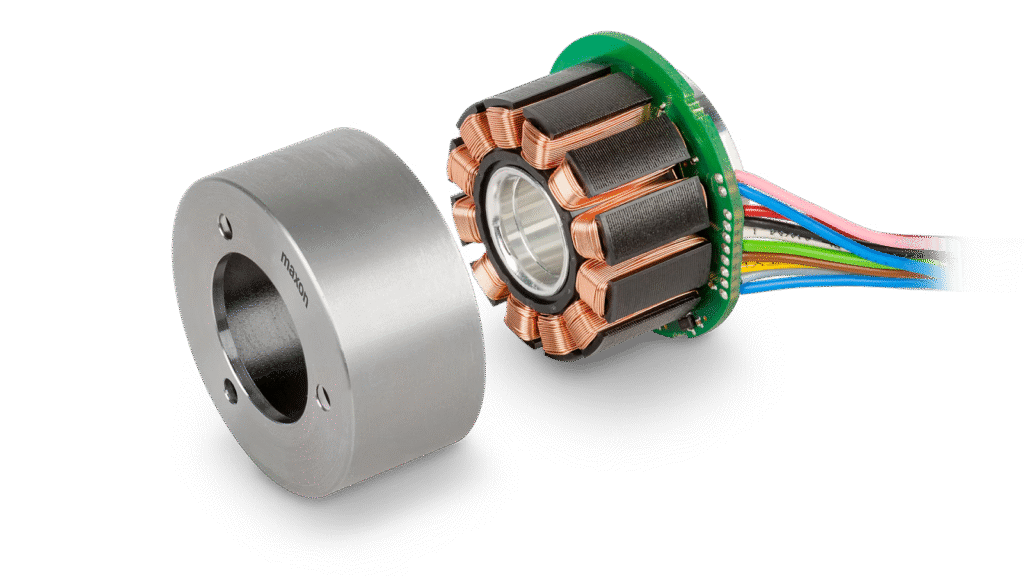
Do you know what one common mistake people make when purchasing components for their automation systems? It is something almost everyone is guilty of, from procurement teams to equipment owners, and from stakeholders to even highly experienced engineers. Surprisingly, it has nothing to do with the motor itself.
The real issue lies in selecting the brushless motor controller, a part that most individuals hardly ever pay attention to. For many, choosing the “right” controller seems like a simple exercise. They think they just have to align a few numbers on the datasheet. They assume that as long as the voltage, current, and speed ratings look similar, the controller will work fine.
In reality, this is one of the most critical decisions in automation system design and must be taken with great care. Most people fail to understand that the majority of performance issues in BLDCs do not occur because of the motor or any other mechanical part. Instead, they come from using an incompatible or poorly matched driver.
Using the wrong driver can lead to:
- Weak startup torque
- Inconsistent speed
- Rapid overheating
- Sudden burnouts
- Noisy operation
- Excessive vibration
- Sometimes, even a complete system failure
These issues not only disturb the motor’s performance but also cause downtime. This is something industries relying on fast, continuous operations cannot afford. Downtime brings in additional cost, which is something no automation line owner wants to increase.
While it may be hard to believe, even experienced buyers often overlook the fact that a brushless motor controller is far more than a simple on-and-off device. It is the manager of the entire motorized system that interprets every input, delivers precise power, and ensures smooth, stable, and consistent rotation.
This is why the right driver isn’t just a good choice; it is rather mandatory. It is the most important component for keeping your system efficient, cool, reliable, and long-lasting. If you also make quick or uninformed purchases, this article is for you.
Below, we will break down the five key factors you must check before selecting a BLDC controller. Whether you work with AGVs, robots, or the procurement department of any automated packaging line, these insights will help you make the right purchasing decisions and avoid costly mistakes that can compromise your entire system.
Before You Start: A Quick Look at What a Brushless Motor Controller Does
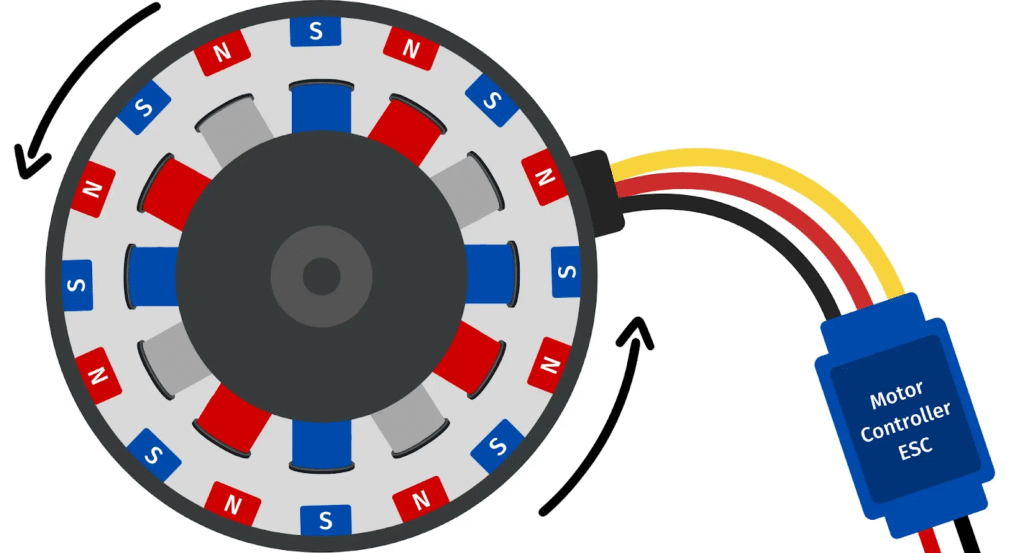
Before we share the fundamental factors you must look at when selecting a motor control system, it is crucial to understand the actual role of a brushless motor controller.
Simply put, a controller is the device that tells the motor how to behave and also ensures it performs exactly as required. It is the brain of the motor system. In a BLDC motor, where there are no brushes to manage commutation, the driver takes complete charge through precise electronic control. It handles the following motorized functional aspects:
- Switches the motor’s phases in a proper sequence
- Regulates speed
- Adjusts torque
- Ensures smooth and stable rotation
From the timing of commutation to the delivery of electrical current, the controller manages every detail. A good control system ensures that the motor:
- Starts and stops safely
- Accelerates and decelerates smoothly
- Responds instantly and correctly to changing loads
Moreover, most of these control systems come with built-in protective features. This helps prevent problems such as jittering, sudden heating, stalling, overheating, and RPM instability. A reliable controller always includes safety and protection mechanisms that safeguard not just the motor and controller, but the entire system.
This is why having a high-quality controller becomes essential in environments with fluctuating loads, unstable power supplies, or frequent startups and shutdowns. Without the right controller, the risk of damage multiplies.
The quality of your control system is directly proportional to the longevity, stability, and efficiency of the entire setup. No matter how premium or expensive your motor or components are, if the controller is unstable or delivers inconsistent torque, the entire system can overheat and fail.
In short, choosing the right motor controller is not just an option; it is a necessity. It forms the foundation of a stable, durable, and reliable automation system that performs exactly the way you expect it to.
5 Major Controller Selection Factors To Consider
Below, we are going to discuss the five major controller parameters or factors that you must consider whenever you want to choose a perfect brushless motor controller. However, before we go in, we want to ease your understanding of each point.
For that, we just want you to remember two things:
- Firstly, selecting a good system is about choosing something that matches your application. It should never be the other way around.
- Moreover, the price should not be the first thing you look at when you are presented with multiple control solution options.
Now that you are clear on these two points, let’s go ahead and discuss the five major factors in detail.
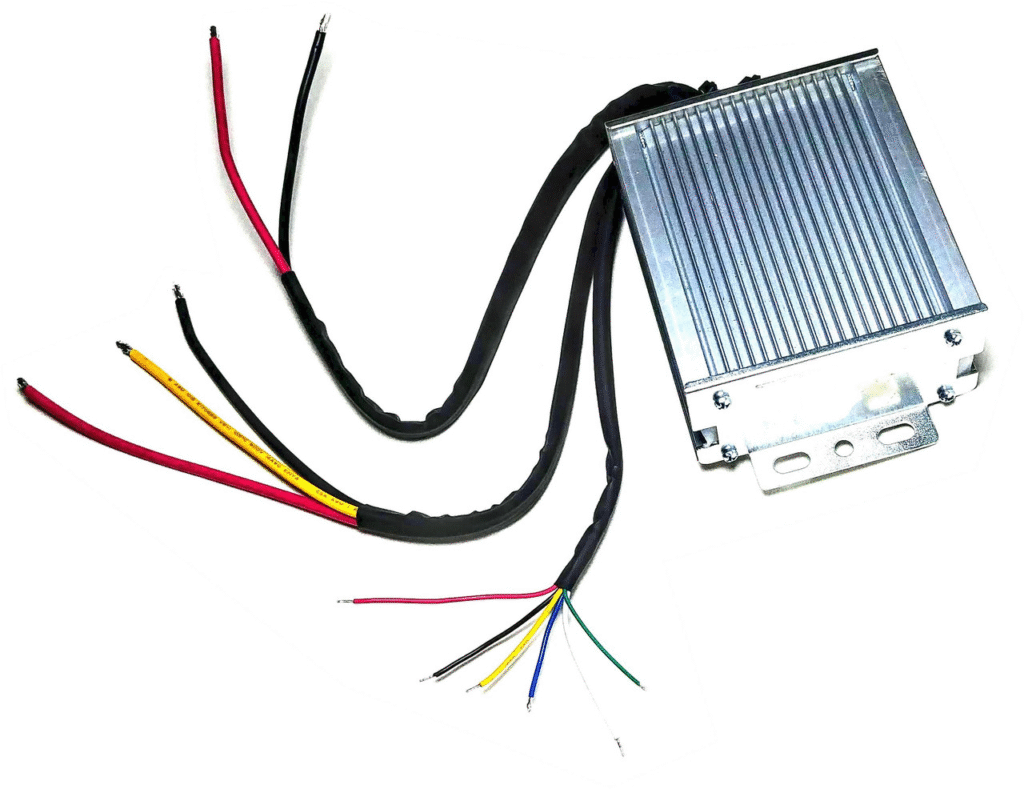
1.Understand Voltage & Current Compatibility
This is quite self-explanatory. Choosing the right driver basically starts with finding something that matches the voltage and current ratings of your motor or the overall system it will be working in. If the voltage and current between the motor and the controller are mismatched, the motor will simply stall or fail. This will ruin the entire system
To make sure you ace this step, first look at the motor’s rated voltage. Now, check if the same voltage has been mentioned on the control system. If the control solution’s voltage is too low, the motor will hardly ever start properly. Even if it does, it will be unable to reach the proper speed. On the other hand, if the controller’s voltage is higher than the motor’s voltage, the windings will overheat, leading to premature motor failure and unnecessary downtime.
The second thing to look at is the current compatibility. Looking closely, you’ll see that the control system has two different current ratings: one is the continuous current, and the other is the peak current.
The continuous current refers to the current that the controller can safely supply for longer time periods. The peak current, on the other hand, refers to the temporary bursts of acceleration that the motor will sometimes need for quick and sudden start-ups. The motor will also need peak current during load changes. A device that fails to match the motor’s requirement for this current will end up burnt or shut the system down.
We suggest going for a controller that comes with 20–30% higher current ratings than what the motor typically requires to operate. This ensures torque stability and keeps everything cooler during long work hours.
All in all, it is important to understand that poor current and voltage matching between the controller and the motor isn’t acceptable. No matter how minimal the incompatibility is, it will cause disruptions, downtime, and ultimately lead to system failure, regardless of what you do.
Below is a brief idea on finding compatibly rated systems in terms of voltage ranges.
| BLDC Motor Rated Voltage | Recommended Controller Voltage | Notes |
| 24V | 24V (or 36V if allowed) | Safe for AGVs, conveyors |
| 36V | 36V | Avoid 48V unless the motor supports it |
| 48V | 48V | Standard for e-bikes, robots |
| 72V | 72V | High-power, industrial use |
2.Choose the Right Control Mode
Once you have found something that matches your motor’s voltage and current rating needs, you have to see the control method being provided by your preferred option. This choice also affects the precision, stability, and long-term quick-start performance of the motor.
Brushless control systems generally operate in two ways: with a Hall sensor or with sensorless control. Hall sensor controllers read rotor position using built-in sensors. This makes them ideal for low-speed applications where precision and seamlessness of motion cannot be compromised.
On the other hand, sensorless controllers rely on back EMF detection. These are perfect for high-speed applications like fans, pumps, and bikes, where precision can be compromised a little. Such controllers are very cheap and easy to use. However, they are not too accurate, especially when the system is moving at a low speed.
Another way to look at whether or not you are getting the right control is by differentiating between open-loop and closed-loop control. Open-loop systems simply follow input commands. These are suitable for basic applications where exact torque or speed is not critical, and the system only needs to read input commands.
Closed-loop controllers, on the other hand, use feedback sensors and encoders to adjust their operation. Depending on your application, you need to see which one of these options suits you best.
Choosing the wrong mode of controller leads to jerky rotations, non-precise speed control actions, unstable speed, coil disruption, and issues across the entire system.
| Feature | Hall-Sensor Controller | Sensorless Controller |
| Low-speed control | Excellent | Weak |
| Startup smoothness | Very smooth | Sometimes jerky |
| Cost | Higher | Lower |
| Ideal for | AGVs, robots, conveyors | Fans, pumps, high-speed tools |
| Reliability | High | Medium (depends on load) |
3.Look For Protection Features To Prevent Damage
Now that the control mode and voltage are done, you have to see whether the controller you are investing in is capable of prioritizing safety while also ensuring the right level of performance. A good brushless motor controller is one that can protect both itself and the motor, along with its surrounding equipment. This way, it ultimately ensures a safer operation of the overall setup.
The protection we are talking about refers to protecting the system’s internal components from electrical and mechanical stress and disruptions. Below are some of the most common protections that a control solution must be able to provide:
- Protection from over-voltage,
- Protection against under-voltage
- Over-current protection
- Short-circuit prevention
- Protection from overheating
All these protections help prevent damage and mitigate smaller issues in time. Sometimes, the protection happens without the users even noticing the issues at hand. These automatic protective actions taken by the controller prevent system failure in case of short circuits, wiring or voltage fluctuations, or unexpected increases in external loads.
Another important protection feature for a control solution to have is stall protection. It becomes essential when you fear that the motor might get stuck or that friction can cause quick burnouts.
Not considering protection options in the control solution means you are putting your entire system at risk. While overcurrent and voltage changes can melt wires, short circuits can destroy everything within minutes. Similarly, overheating can degrade the overall performance of the motor, and a control system without proper protection will simply shut down or fail.
Let’s take a real-world scenario as an example: a conveyor belt often gets jammed when exposed to debris or dust. In the absence of stall protection installed in its controller, the motor will burn within seconds. But when this protection is present, the system simply cuts off power and avoids overheating and friction.
4. Consider Controller Performance & Operating Conditions
Before you choose a control driver, it is very important to consider and understand how the entire equipment and system will actually work. By understanding here, we mean not just looking at the framework and its diagrams on paper, but rather experiencing its real operating environments.
Once you have seen the overall operating conditions, you can easily select a control system that can handle the real-time speed ranges, startup torque, and load profile. For example, in applications where frequent stop-start cycles are common, the controller should be strong enough to handle peak currents. In systems with sudden load changes, the control system must be capable of maintaining stability under fluctuating conditions.
When we speak about operating conditions, the duty cycle of the system matters as well. Depending on whether the system works continuously for long hours or simply works with short breaks, the overall requirements from the driver will vary.
In the case of continuous working, the controller needs sustainability in its thermal management. However, for shorter bursts with break intervals, the control system simply has to focus on peak current more than anything else.
External environmental conditions like heat, dust, moisture, vibration, and temperature outside can also affect cheap, poor-quality systems very quickly. It is important to go for systems with good heat sinks and heat dissipation if they have to work in hot environments.
5. Build Quality, Certifications & Support
More important than finding the right controller is finding a supplier who takes responsibility, just like DMKE. While many engineers often look at specs and datasheets to assess the quality of a control solution, what they often forget is that true quality goes beyond measurable numbers.
It can be seen and felt in the components used and in how the product has been built. A high-quality brushless motor controller usually comes with durable PCBs, solid conductors, properly insulated wires, and a well-designed heat dissipation system or heat sink. All these tiny details, while easy to overlook, determine whether the controller will last for years without damage or frequent maintenance.
Another important thing to ask your supplier for is certifications like CE, ROHS, or ISO standards. A supplier that provides at least one of these certificates is someone who prioritizes quality and can meet the essential safety standards required by industrial environments. Sometimes, these certifications also prove authenticity and protect you from counterfeit products.
Another factor to consider is the firmware stability of the control solution. Good manufacturers always offer firmware with smooth acceleration curves, strong customization abilities, tuning options, and clear wiring diagrams. Poor firmware, on the other hand, leads to jerky motion, noise, and insufficient commutation.
Lastly, when we speak of a good supplier, you must also ensure whether they are willing to build a relationship that goes beyond just the sale. When you invest in an automation control system, you are looking for a long-term solution. Hence, you need a supplier you can reach out to even after purchase. You must be able to ask for help with installation or any maintenance required. This one factor alone sets apart a reliable supplier from an unreliable one.
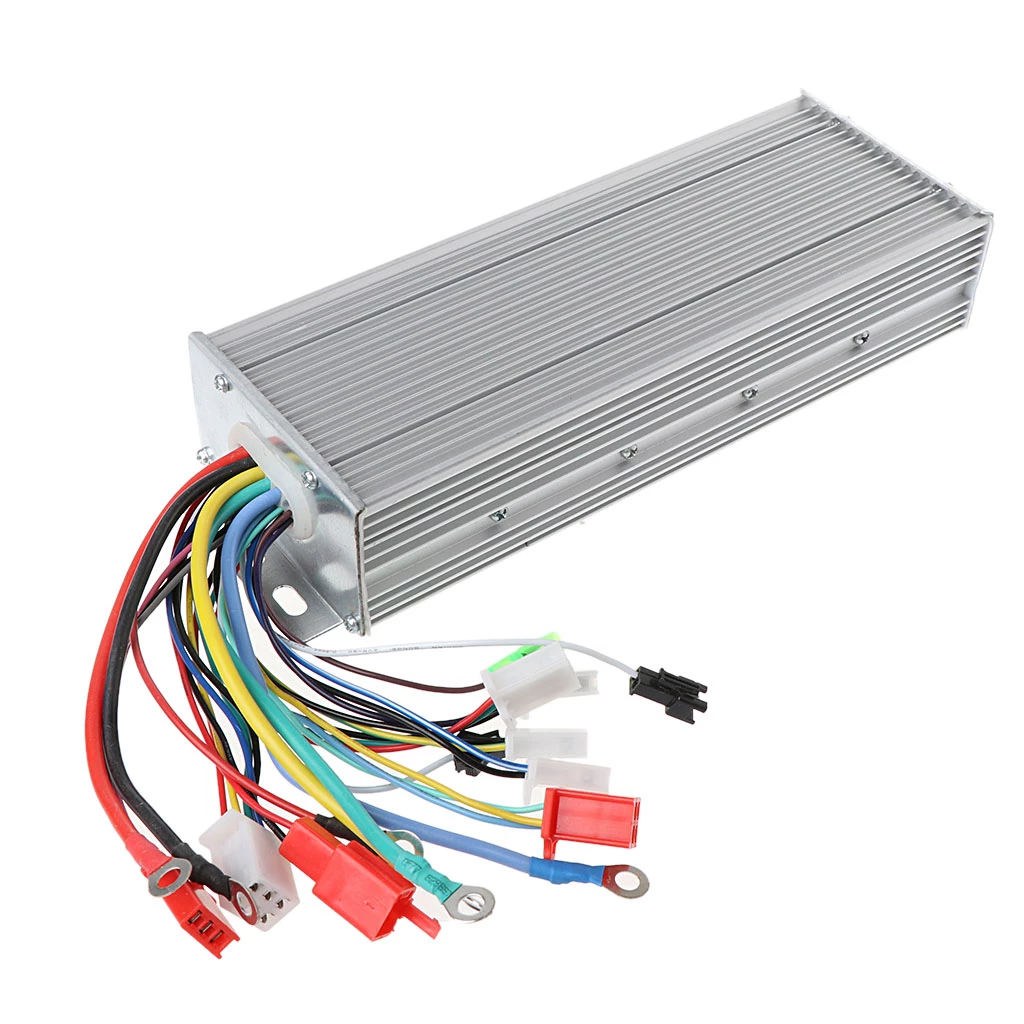
Contact DMKE for the Right Brushless Motor Controller
At DMKE, we offer brushless motor and control driver solutions that complement each other while also being completely stable for long-term use. All our devices are made with safe current ratings and are made to ensure consistent torque output.
Everything that we manufacture undergoes 8-step vigorous testing to ensure its quality before it is made available for sale. Beyond our ready-made motor solutions, the experts at DMKE are also capable of customizing motor and control solutions for you, depending on your needs and budget.
Whether you want stable systems for your AGVs, robotic arms, automation lines, or any other industrial equipment, DMKE has got you covered.
Visit our website and connect with us today to get your hands on the most suitable options. Along with the products, our support team makes sure to stay available for you throughout. In this way, we can help you with installation, maintenance, and any other questions that you might have.

 English
  English (Australia)
  English (Canada)
  Deutsch
  English (UK)
  Français