
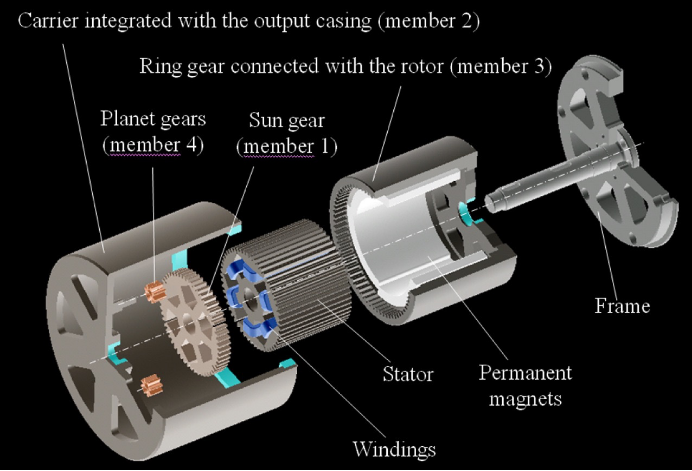
Industrial automation is evolving rapidly as manufacturers demand higher precision, faster cycle times, and improved energy efficiency from their production systems. Modern factories no longer measure performance only by output volume but by motion accuracy gains and operational stability. As machines become more intelligent and interconnected, even small inefficiencies in motion control can lead to production delays, increased energy consumption, and inconsistent product quality.
Many industrial buyers face challenges when traditional technologies fail to meet dynamic motion requirements. Systems that require rapid acceleration, precise positioning, or smooth low-speed control often expose the limitations of conventional designs. Servo applications demand units capable of instant response control, making motor selection one of the most critical engineering decisions in automation projects.
Permanent magnet motors have emerged as a preferred solution because they combine efficiency with precise controllability. Unlike older technologies that rely heavily on induced magnetic fields, these setups use embedded magnets to generate stable torque output with reduced energy losses. This design enables higher operational efficiency while supporting improved responsiveness and reduced thermal stress during continuous operation.
In 2026, industrial servo systems increasingly rely on permanent magnet units to support robotics, CNC machinery, packaging automation, and advanced manufacturing environments. Engineers and procurement teams must evaluate integration compatibility, thermal behavior, and long-term reliability alongside performance specifications. Understanding these factors helps buyers achieve long-term system stability and avoid costly mismatches during implementation.
Why Industrial Automation Is Shifting Toward Permanent Magnet Servo Motors
Industrial automation is advancing toward systems that require faster response times and tighter motion control tolerances. Manufacturers operating high-speed production environments can no longer rely on motor technologies designed primarily for constant speed applications. The growing need for adaptable machinery has pushed industries toward solutions offering precision-driven performance without compromising operational efficiency.
Energy consumption has also become a major concern for factories aiming to reduce operational costs and meet evolving efficiency standards. Permanent magnet units help address this challenge by minimizing electrical losses and maintaining strong torque output across varying speeds. Their ability to operate efficiently under partial loads makes them especially valuable in automation systems where motion profiles constantly change, supporting energy-efficient operation across production cycles.
Another driving factor is the rapid expansion of robotics and compact machine design. Modern equipment demands smaller units capable of delivering higher power density while fitting into limited installation spaces. Permanent magnet servo motors provide strong torque in compact frames, enabling machine builders to design lighter and more flexible automation systems. This shift allows manufacturers to achieve compact machine integration without sacrificing performance reliability.
The transition is further accelerated by smart manufacturing trends where real-time feedback and adaptive control systems are becoming standard. Servo-driven platforms require motors that respond instantly to control signals and maintain stable positioning accuracy. Permanent magnet designs naturally support these requirements, making them increasingly preferred across advanced industrial applications focused on high-precision automation.
What Are Permanent Magnet Motors? Understanding the Core Technology
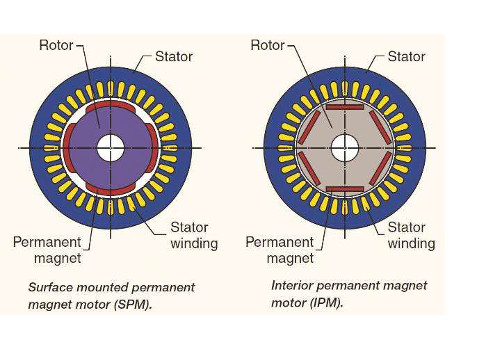
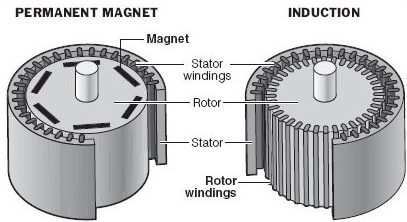
Permanent magnet motors are electric motors that use fixed magnets embedded within the rotor to create a constant magnetic field. Instead of generating magnetism through electrical induction alone, these motors rely on magnetic materials that continuously produce flux, allowing torque to be generated more efficiently. This fundamental design enables consistent torque production even at lower operating speeds.
The interaction between the stator’s rotating magnetic field and the rotor’s permanent magnets creates smooth and controlled motion. Because magnetization does not depend on additional electrical current within the rotor, energy losses are significantly reduced compared to traditional motor types. This results in improved efficiency, reduced heating, and better responsiveness during acceleration and deceleration cycles, supporting stable motion control in demanding environments.
Compared with conventional induction motors, permanent magnet units eliminate rotor slip, which improves synchronization between electrical input and mechanical output. This characteristic allows precise speed regulation, making them highly suitable for servo systems where exact positioning is essential. Engineers benefit from predictable performance characteristics that simplify tuning and integration into automated equipment requiring accurate speed synchronization.
Advancements in magnetic materials and design have further enhanced durability and performance consistency. Modern permanent magnet units are engineered to withstand continuous industrial operation while maintaining efficiency over extended periods. These improvements have positioned them as a foundational technology behind modern servo-driven machinery focused on reliable industrial automation.
How Permanent Magnet Units Power Modern Servo Systems
Modern servo systems rely on continuous feedback and precise control to regulate motion in real time. Permanent magnet setups play a central role in this process by converting electrical commands into accurate mechanical movement with minimal delay. Their rotor design enables immediate torque generation, allowing machines to respond quickly to changing load conditions and positioning requirements, which supports real-time motion control in automated environments.
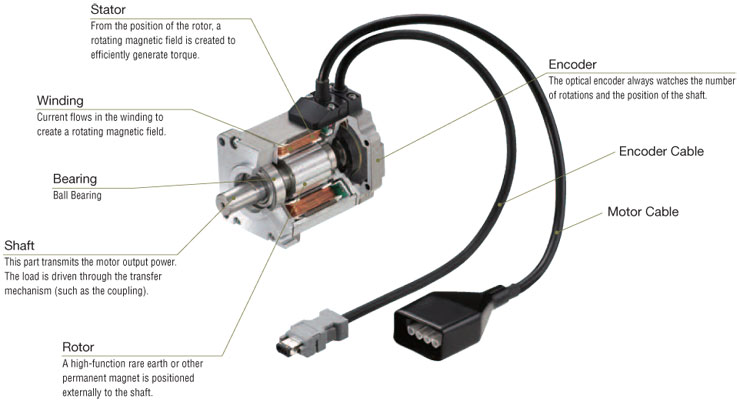
A servo system typically operates through coordination between the motor, encoder, and servo drive. The drive sends electrical signals based on programmed commands, while the encoder continuously measures position, speed, and direction. Permanent magnet motors respond efficiently to these adjustments because their magnetic field remains constant, enabling smoother corrections and reducing oscillations during operation. This interaction ensures closed-loop accuracy across complex motion cycles.
Dynamic response is one of the defining advantages in servo applications. Manufacturing equipment often requires frequent start-stop actions, rapid acceleration, and precise deceleration without losing stability. Permanent magnet motors deliver high torque instantly, which helps maintain consistent positioning even during sudden load variations. This capability improves machine productivity while minimizing mechanical stress, contributing to fast dynamic response in demanding industrial processes.
Another important aspect is controllability at low speeds. Many industrial operations, such as robotics or precision assembly, depend on smooth motion even at near zero speed conditions. Permanent magnet units maintain torque without efficiency loss in these ranges, allowing servo systems to achieve stable and vibration-free operation. This characteristic makes them especially suitable for applications requiring high positioning precision.
Key Advantages of Permanent Magnet Units in Industrial Servo Applications
One of the most significant advantages of permanent magnet motors is their high torque density. These setups can produce greater torque output relative to their size, allowing machine designers to reduce motor dimensions while maintaining performance levels. Smaller units contribute to lighter equipment structures and improved mechanical efficiency, enabling space-optimized design in modern automation systems.
Energy efficiency remains another major benefit, particularly in applications operating under variable speeds and loads. Permanent magnet motors reduce electrical losses because rotor magnetization does not require additional current input. Lower losses translate into reduced power consumption and operating costs over time, making them attractive for industries focused on long term energy savings.
Thermal performance also improves compared to conventional technologies. Reduced internal losses generate less heat, which helps maintain stable operating temperatures during continuous duty cycles. Lower heat buildup enhances component lifespan and reduces the need for extensive cooling solutions, supporting improved thermal stability in intensive production environments.
Precision and responsiveness further strengthen their suitability for servo applications. The ability to deliver smooth torque with minimal delay enables accurate motion tracking and repeatable positioning. Machines operating with permanent magnet servo motors achieve better product consistency and reduced error margins, ultimately contributing to enhanced production accuracy across automated manufacturing processes.
Critical Selection Factors Industrial Buyers Must Evaluate
Selecting a permanent magnet unit for servo applications requires more than comparing rated power or speed values. Industrial buyers must evaluate how the setup behaves within the complete motion system rather than as an isolated component. Incorrect selection often leads to overheating, unstable positioning, or inefficient operation, even when specifications appear suitable on paper. A structured evaluation process helps ensure application-specific matching and long-term operational reliability.
Servo systems operate under dynamic conditions where load variations, duty cycles, and environmental factors significantly influence performance outcomes. Buyers who analyze real operating requirements instead of relying solely on catalog data are more likely to achieve stable integration and reduced maintenance issues. Understanding the following technical factors allows engineers and procurement teams to make performance-driven decisions aligned with actual industrial demands.
- Torque and Speed Requirements
Torque and speed form the foundation of servo motor selection because they directly determine whether the system can handle operational loads. Buyers must evaluate both continuous torque and peak torque requirements, especially in applications involving rapid acceleration or sudden load changes. Selecting a motor based only on rated torque can result in performance limitations during demanding motion cycles, making load profile analysis essential during planning.
Speed requirements must also align with application dynamics rather than maximum motor capability alone. High-speed ratings may appear beneficial, but excessive speed margins can reduce efficiency and increase system complexity. Engineers should calculate operating speed ranges, acceleration needs, and inertia ratios to ensure balanced performance. Proper evaluation ensures optimal motion response without unnecessary energy consumption.
- Feedback Device Compatibility
Servo performance depends heavily on accurate feedback systems that monitor position and velocity in real time. Permanent magnet units must be compatible with encoders or feedback devices required by the servo drive architecture. Mismatched feedback systems can lead to unstable motion, positioning errors, or communication faults between components, affecting control system stability.
Buyers should consider resolution requirements, signal interfaces, and environmental durability when selecting feedback devices. High precision applications such as robotics or CNC machining often require advanced encoders capable of delivering detailed motion data. Ensuring compatibility between motor, encoder, and controller simplifies commissioning and supports precise motion synchronization across automated processes.
- Thermal Performance and Cooling
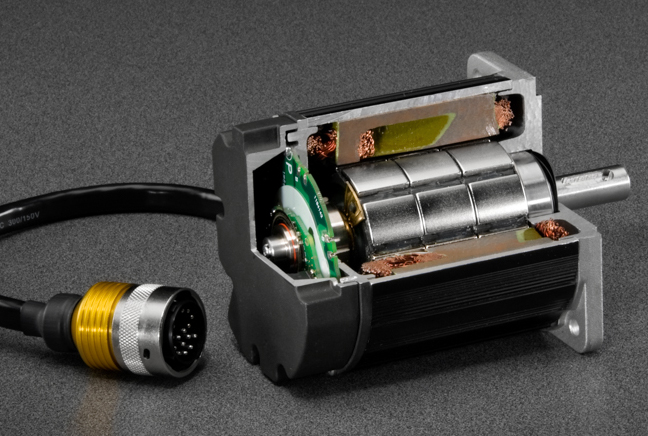
Thermal management plays a critical role in maintaining the servo setup’s lifespan and efficiency. Even highly efficient permanent magnet units generate heat during continuous operation, particularly under high load or frequent acceleration cycles. Buyers must evaluate duty cycles, ambient temperatures, and enclosure conditions to prevent thermal overload, ensuring stable operating temperature throughout production.
Cooling methods such as natural convection, forced air cooling, or liquid cooling should be selected based on application intensity. Oversights in thermal planning often cause premature component wear and unexpected downtime. Proper thermal evaluation allows devices to maintain consistent torque output while protecting internal components from degradation, contributing to extended equipment lifespan.
- Voltage and Controller Matching
Electrical compatibility between the motor and servo drive is another critical selection factor. Voltage ratings, current capacity, and control algorithms must align to ensure efficient communication and power delivery. Using incompatible drives can reduce efficiency, limit performance capabilities, or cause system instability during operation, making drive motor alignment a key purchasing consideration.
Buyers should verify supply voltage availability, switching frequency compatibility, and controller tuning flexibility before finalizing selection. Matching electrical characteristics allows smoother commissioning and reduces setup time during installation. Proper integration ultimately results in efficient power utilization and predictable system behavior.
- Environmental Protection Ratings
Industrial environments often expose setups to dust, moisture, vibration, or chemical contaminants that can affect long-term reliability. Evaluating protection ratings helps buyers select units capable of operating safely within specific environmental conditions. Choosing insufficient protection levels frequently leads to early failures despite correct mechanical sizing, highlighting the importance of environmental suitability assessment.
Ingress protection ratings, sealing quality, and material durability should be reviewed according to installation location. Applications in food processing, outdoor automation, or heavy manufacturing may require enhanced protection features. Selecting setups designed for environmental challenges ensures consistent performance and reduces maintenance frequency, supporting reliable industrial operation over extended service periods.
Common Mistakes Buyers Make When Selecting Servo PM Motors
Even experienced industrial buyers encounter performance issues when selection decisions rely mainly on specification sheets instead of application analysis. Servo systems function as tightly integrated motion platforms where motor behavior directly influences accuracy, efficiency, and reliability. Small mismatches between a unit’s characteristics and operational requirements often create long-term problems that are difficult to diagnose later, making a proper selection strategy essential from the beginning.
One of the most common mistakes is oversizing the unit in an attempt to create a safety margin. While larger motors appear safer, excessive capacity increases rotor inertia and reduces responsiveness within servo systems. This can negatively impact acceleration control and positioning precision, especially in high-speed automation environments. Correct sizing based on calculated load profiles ensures balanced system dynamics rather than unnecessary power reserves.
Another frequent oversight involves ignoring real duty cycle conditions. Many buyers evaluate motors using continuous ratings even though servo applications operate through repeated start-stop cycles and varying loads. Without analyzing these operating patterns, motors may experience overheating or efficiency losses despite meeting nominal specifications. Understanding actual motion cycles allows engineers to maintain thermal performance stability under realistic working conditions.
Feedback compatibility is also underestimated during procurement decisions. Servo accuracy depends heavily on encoder communication and signal resolution, yet mismatched feedback devices can introduce instability and tuning challenges. Ensuring alignment between motor, encoder, and servo drive simplifies commissioning while improving motion consistency, supporting precision control reliability across automated operations.
Environmental and thermal conditions present another area where buyers often miscalculate requirements. Dust, humidity, vibration, or elevated ambient temperatures can gradually degrade motor components if protection ratings are insufficient. Evaluating installation environments early helps prevent premature failures and reduces maintenance interruptions, contributing to long term operational durability.
Finally, focusing only on initial purchase cost frequently leads to higher expenses over time. Motors with lower upfront pricing may lack efficiency optimization or the durability required for demanding industrial servo applications. Energy consumption, downtime risks, and maintenance costs ultimately define system value, making lifecycle evaluation a more reliable approach for achieving sustainable investment value.
Industrial Applications Where Permanent Magnet Servo Motors Excel
Permanent magnet servo motors are critical in CNC machinery for precise torque control and fast dynamic response, ensuring smooth tool paths and tighter tolerances.
In robotics and automation arms, these motors deliver instant torque and maintain accuracy across rapid cycles, supporting flexible and reliable robotic operations.
Packaging equipment benefits from fast acceleration and consistent speed, allowing smooth handling of products with minimal downtime.
In semiconductor manufacturing, motors provide ultra-precise motion control, maintaining torque under variable loads for tasks requiring micron-level accuracy.
Textile automation systems gain from consistent speed and torque, improving fabric quality and reducing mechanical stress on machinery.
Material handling systems achieve smooth load transport, with high torque density and efficient energy use for conveyors, AGVs, and sorting equipment.
Future Trends: Permanent Magnet Motors in 2026 and Beyond
Industrial automation in 2026 increasingly relies on AI-assisted motion control, enabling real-time optimization of speed, torque, and positioning.
Energy-optimized performance is a key focus, with motors designed to reduce electrical losses and improve efficiency across variable loads.
Integrated smart diagnostics help predict maintenance needs, detect anomalies, and reduce downtime, extending motor life.
Compact high-power designs allow space-efficient automation, delivering higher torque in smaller packages for modular and reconfigurable production lines.
Get High-Precision Permanent Magnet Servos by connecting with DMKE today for expert consultation and optimized motor selection.
Get High-Precision Permanent Magnet Servos – Connect With DMKE Today!
DMKE products are engineered with high-efficiency designs, premium materials, and advanced thermal protection to ensure reliable performance in demanding industrial environments.
Whether you need guidance on selecting the right ready-made permanent magnet motor or want custom solutions to improve energy efficiency, our experts are ready to help you identify the ideal motor for your operation.
Every product undergoes a rigorous quality test before being delivered, giving you confidence in long-term reliability and performance.
Avail our expert services by visiting our website and contacting our team today to receive professional guidance, support, and setups that are built to last.

 English
  English (Australia)
  English (Canada)
  Deutsch
  English (UK)
  Français