
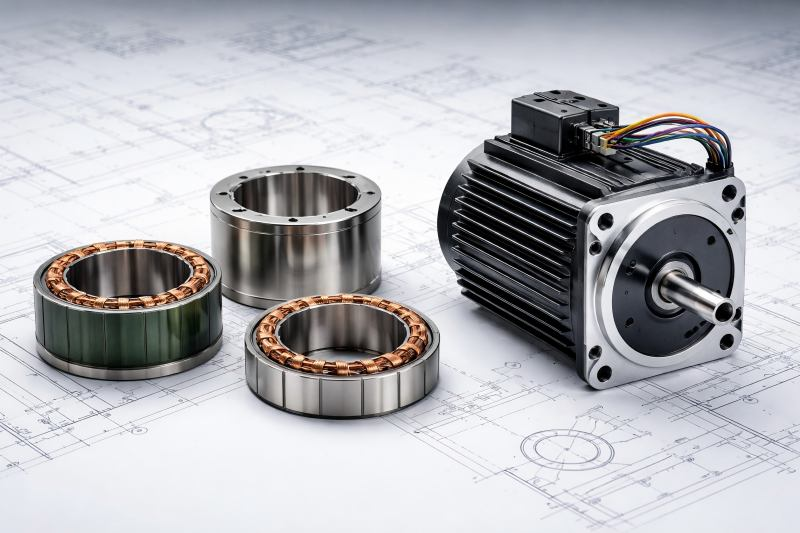
Industrial automation is rapidly moving toward smaller, lighter, and more efficient motion systems. Robotics, medical equipment, aerospace platforms, and precision manufacturing machines now require compact designs without sacrificing torque, accuracy, or reliability. Traditional housed motor assemblies often create limitations in space utilization and mechanical flexibility, which is why the frameless brushless motor is becoming increasingly important in advanced servo integration.
Unlike conventional servo motors, a frameless brushless motor is supplied as separate rotor and stator components without an external housing, shaft, or bearing system. This allows engineers to integrate the motor directly into the machine structure itself, creating more compact and lightweight motion systems. By eliminating unnecessary mechanical components, frameless designs support higher integration efficiency and improved system optimization.
This direct integration approach offers major advantages in applications where every millimeter of space matters. Robotic joints, surgical devices, aerospace actuators, and gimbal systems often require high torque density within extremely compact assemblies. A frameless brushless motor helps designers achieve these goals by reducing weight, lowering inertia, and improving motion smoothness while maintaining strong performance under demanding operating conditions.
Another factor driving adoption is the growing demand for customized servo systems. Modern automation no longer relies only on standard off-the-shelf motor packages. Manufacturers increasingly need motion systems tailored to specific machine geometries, torque requirements, and performance targets. Frameless technology supports this trend through flexible servo integration, allowing engineers greater freedom in mechanical and thermal design.
Despite these advantages, integrating a frameless brushless motor also introduces engineering challenges. Proper alignment, cooling, encoder integration, and bearing selection all become critical for ensuring reliable operation and long-term durability. Buyers and system designers must therefore understand both the opportunities and technical demands involved in frameless servo integration.
This guide explores how frameless brushless motor technology works, its advantages and challenges, and how industrial buyers can choose the right solution for custom servo integration with better engineering confidence.
How Frameless Brushless Motors Work in Custom Servo Integration
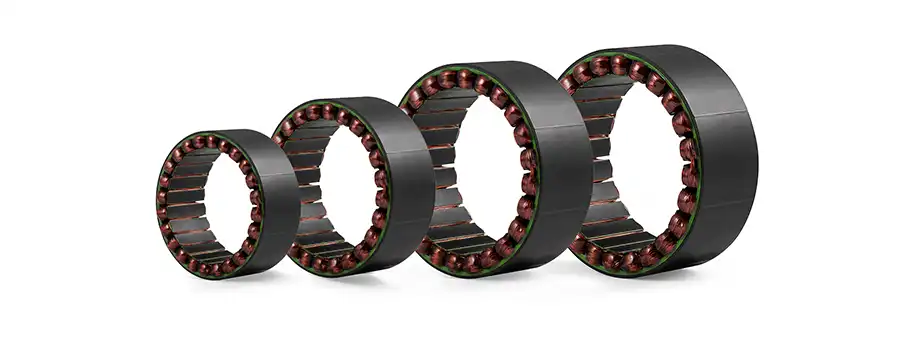
A frameless brushless motor operates differently from a conventional servo motor because it is designed to become part of the machine itself rather than functioning as a standalone unit. Instead of mounting a complete housed motor onto a system, engineers integrate the rotor and stator directly into the mechanical structure. This creates a more compact and efficient motion system while improving torque density and reducing unnecessary mechanical components. Because of this architecture, the frameless brushless motor plays a major role in advanced custom servo integration.
Direct Drive Motion Architecture
One of the biggest advantages of frameless technology is direct drive integration. Traditional servo systems often rely on couplings, belts, or gear assemblies between the motor and the load. A frameless brushless motor can eliminate many of these intermediate components by connecting motion directly to the application structure itself.
This direct drive approach reduces backlash, vibration, and mechanical losses while improving responsiveness. Fewer moving parts also mean lower maintenance requirements and better system reliability. In robotics and precision automation, this creates smoother motion performance and more accurate movement control under dynamic operating conditions.
Rotor and Stator Integration Process
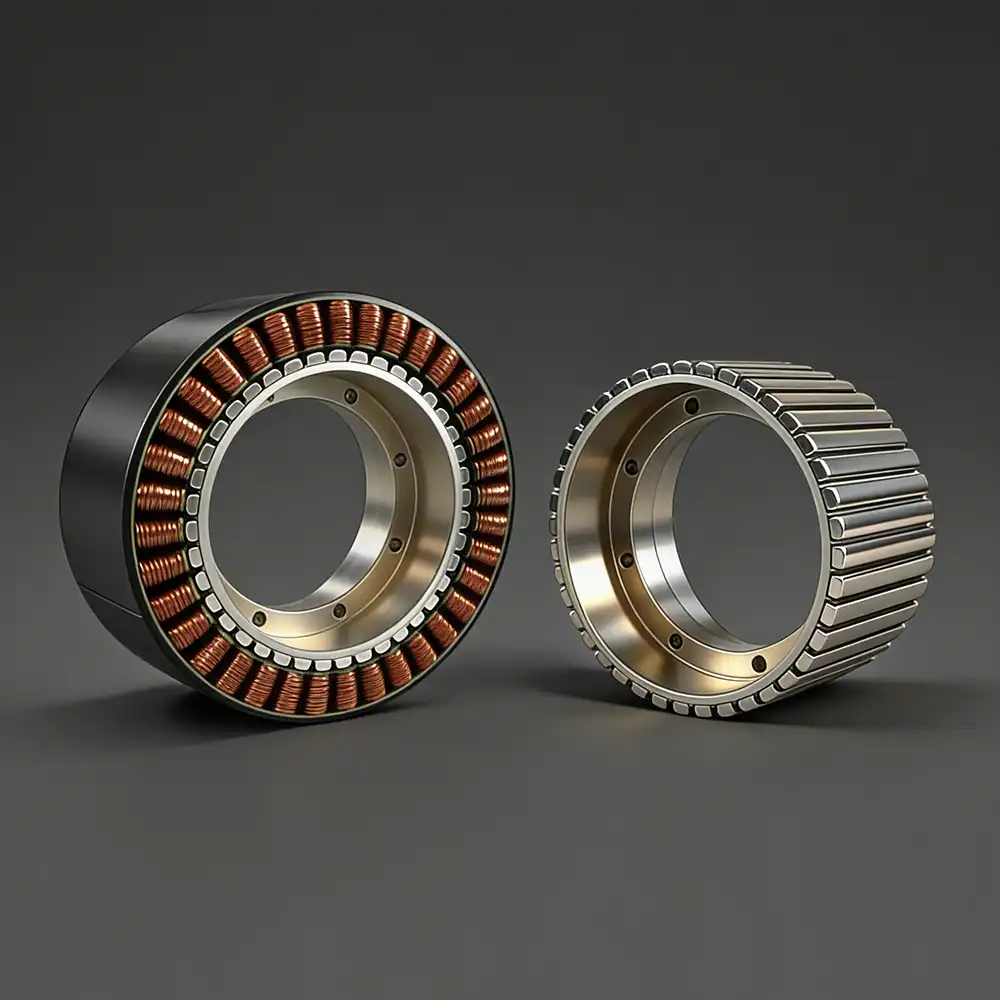
The integration process requires the precise installation of both the rotor and stator into the machine assembly. The stator is typically mounted in a fixed housing structure, while the rotor attaches directly to the rotating shaft or load-bearing component. Proper spacing and alignment between these components are essential for maintaining stable electromagnetic performance during operation.
Incorrect alignment can reduce efficiency, increase vibration, and create uneven magnetic forces that affect motion accuracy. Engineers must also carefully design shaft support and bearing systems because the frameless brushless motor itself does not include built-in bearing assemblies. This makes mechanical precision a critical part of successful servo integration.
Encoder and Feedback System Integration
Custom servo systems require accurate position feedback to maintain precise motion control. In most applications, frameless brushless motors operate within closed-loop systems using encoders or feedback sensors integrated directly into the machine design. These feedback systems continuously monitor position, speed, and rotational behavior to ensure high-precision motion accuracy.
Encoder selection and placement are extremely important because improper integration can reduce responsiveness and create positioning errors. Advanced robotic and aerospace systems often use high-resolution encoders to maintain stable performance during complex motion sequences and synchronized multi-axis operation.
Thermal Management in Frameless Motor Systems
Thermal management is one of the biggest engineering challenges in frameless servo integration. Since the motor is integrated directly into the machine structure, heat dissipation becomes more dependent on the surrounding assembly design. Without proper cooling, continuous operation can lead to temperature buildup and reduced motor efficiency and stability.
To address this, engineers often use aluminum structures, cooling channels, or external heat dissipation methods to manage thermal load effectively. Proper thermal planning is especially important in high-torque and continuous-duty applications where the frameless brushless motor operates under sustained electrical load.
Torque Density and Space Optimization
A major reason industries adopt frameless motors is their ability to deliver high torque within very compact spaces. By eliminating external housings and unnecessary mechanical components, engineers can maximize torque density while reducing total system size and weight. This creates significant advantages for robotics, aerospace actuators, medical devices, and compact automation equipment requiring space-efficient motion systems.
Reduced inertia also improves dynamic response and acceleration performance. Lightweight motion assemblies allow faster and smoother operation, supporting advanced servo integration where speed, precision, and compact design must work together within limited installation space.
| Feature | Frameless Brushless Motor | Traditional Servo Motor |
| Structure | Rotor and stator only | Fully enclosed motor assembly |
| Integration Style | Direct machine integration | External mounting |
| Space Efficiency | Very high | Moderate |
| Torque Density | High | Standard |
| Maintenance | Lower mechanical wear | Moderate |
| Installation Complexity | High | Lower |
| Best Applications | Robotics, aerospace, and medical systems | General industrial automation |
Advantages of Using Frameless Brushless Motors
One of the biggest advantages of a frameless brushless motor is its compact design flexibility. Since the motor does not include an external housing or integrated shaft assembly, engineers can integrate it directly into machine structures and robotic joints. This allows manufacturers to reduce system size while improving overall motion efficiency, making the frameless brushless motor highly valuable in compact automation systems.
Another major benefit is high torque density. Frameless motors can deliver strong torque output within a much smaller footprint compared to many traditional motor systems. This is especially important in robotics, aerospace, and medical applications where lightweight construction and space optimization directly affect performance and operational flexibility. The result is higher power efficiency without unnecessary mechanical bulk.
Reduced weight and inertia also improve system responsiveness. Lighter rotating assemblies allow faster acceleration and smoother motion transitions, helping machines achieve better dynamic control during high-speed or precision operations. This creates advantages for advanced servo systems requiring fast and stable movement under changing load conditions.
Finally, frameless motor systems offer greater customization potential. Engineers can design the surrounding structure, cooling system, and feedback integration based on specific application needs rather than adapting the machine around a standard motor package. This flexibility makes frameless technology highly suitable for custom servo integration projects where optimized machine architecture is critical.
Challenges of Frameless Brushless Motor Integration
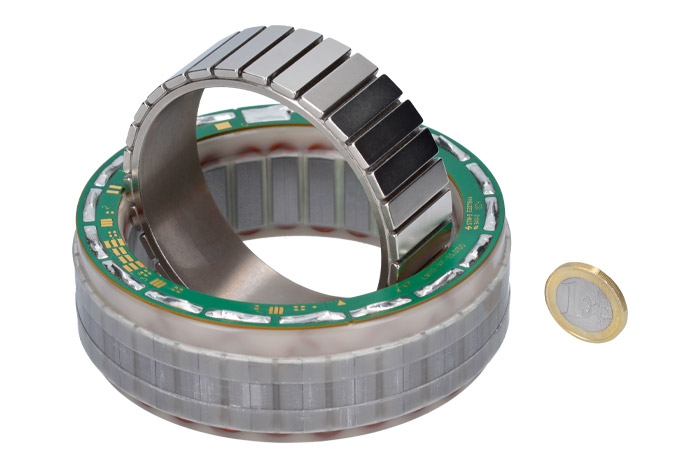
While frameless motor technology offers major performance advantages, integrating these systems is more complex than installing a standard housed servo motor. Because the rotor and stator are supplied separately, engineers must handle alignment, thermal management, and structural integration with high precision. Without proper planning, the benefits of a frameless brushless motor can be reduced by instability, vibration, or performance inefficiencies.
One of the biggest challenges is mechanical alignment. The rotor and stator must maintain extremely accurate spacing during operation to ensure stable electromagnetic performance. Even small alignment errors can increase vibration, reduce efficiency, and create uneven magnetic forces that negatively affect motion accuracy and reliability.
Thermal management is another critical issue. Traditional servo motors often include built-in cooling structures, but frameless systems rely heavily on the surrounding machine design for heat dissipation. Poor thermal planning can lead to overheating during continuous operation, reducing torque performance and shortening component lifespan. Effective cooling design is essential for maintaining stable, continuous operation under industrial load conditions.
Encoder and feedback integration can also become more complicated. Since the motor is directly integrated into the machine, engineers must carefully position encoders and feedback systems to maintain accurate closed-loop control. Improper encoder installation may cause positioning errors, unstable motion response, or reduced synchronization performance in precision automation systems.
Bearing selection is equally important because frameless motors do not include integrated bearing assemblies. The surrounding mechanical structure must provide proper shaft support and load handling capability. An incorrect bearing configuration can increase friction, reduce motion smoothness, and affect long-term mechanical system durability.
Finally, frameless integration often requires higher engineering expertise and longer development time. Unlike standard motor installations, custom servo integration involves detailed coordination between electrical, thermal, and mechanical system design. This makes engineering support essential for achieving optimized frameless motor performance in advanced automation applications.
Industrial Applications of Frameless Brushless Motors
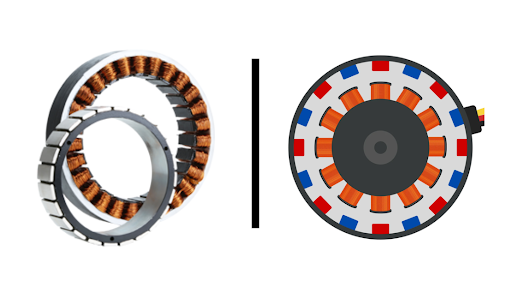
Frameless motor technology is widely used in industries where compact size, lightweight construction, and precise motion control are essential. Because a frameless brushless motor can integrate directly into machine structures, it allows engineers to create highly optimized automation systems with improved performance and reduced mechanical complexity.
One of the largest application areas is robotics and collaborative robots. Robotic joints require compact motors capable of delivering high torque within a limited installation space. Frameless motors support smoother movement, reduced inertia, and better dynamic response, making them ideal for advanced robotic motion systems used in manufacturing, inspection, and assembly automation.
Aerospace systems also benefit significantly from frameless motor integration. Aircraft actuators, satellite positioning systems, and drone stabilization platforms require lightweight motion components that maintain reliable operation under demanding conditions. The high torque density and compact structure of frameless designs help improve aerospace system efficiency while minimizing overall equipment weight.
Medical devices represent another major application area. Surgical robots, imaging equipment, and precision laboratory systems often require extremely smooth and accurate movement within compact assemblies. Frameless motors allow direct integration into medical mechanisms, supporting high-precision medical automation with reduced vibration and quieter operation.
Frameless brushless motors are also widely used in gimbal systems and camera stabilization platforms. These applications demand rapid response, smooth rotational control, and minimal mechanical backlash. Direct integration improves movement stability and supports accurate stabilization performance in both industrial and commercial imaging systems.
In semiconductor manufacturing equipment, frameless motors help maintain clean and highly controlled motion environments. Their compact structure and reduced mechanical wear minimize contamination risks while supporting fast and accurate positioning for high-precision production systems used in electronics manufacturing.
How to Choose the Right Frameless Brushless Motor
Selecting the right frameless brushless motor requires careful evaluation of both electrical and mechanical integration requirements. Unlike standard servo motors, frameless systems become part of the machine structure itself, which means every design decision directly affects motion performance, efficiency, and long-term reliability. Proper selection ensures the frameless brushless motor delivers stable operation under real industrial conditions.
The first factor to evaluate is torque and speed requirements. Buyers must determine both continuous and peak torque needs based on the application load profile. High acceleration systems or heavy dynamic loads require motors capable of maintaining stable torque without overheating. Matching motor output correctly helps achieve balanced motion performance and prevents unnecessary stress on the system.
Space and mounting constraints are also critical. One of the biggest advantages of frameless motors is compact integration, but the surrounding machine structure must provide enough room for proper rotor and stator installation. Engineers should evaluate shaft dimensions, housing geometry, and bearing placement to ensure accurate mechanical alignment during operation.
Thermal management planning is equally important. Since frameless motors rely on external structures for heat dissipation, cooling capability must be evaluated early in the design process. Applications involving continuous operation or high torque output may require aluminum mounting structures, liquid cooling, or additional thermal pathways to maintain stable operating temperatures.
Encoder compatibility should also be considered carefully. Closed-loop servo systems depend on accurate feedback for position and speed control. Buyers must verify that encoder resolution, mounting methods, and communication compatibility align with overall automation requirements for high-precision servo integration.
Finally, engineers should evaluate long-term reliability rather than focusing only on compact size or initial cost. A properly selected frameless brushless motor improves efficiency, motion smoothness, and system durability, making engineering-based evaluation essential for optimized industrial automation design.
Get Frameless Motion Solutions With Expert Engineering Support – Connect With DMKE
A frameless brushless motor offers major advantages in compact servo integration, including higher torque density, reduced weight, smoother motion, and greater design flexibility. However, achieving these benefits depends heavily on proper mechanical alignment, thermal management, and feedback integration. Careful engineering evaluation is essential for ensuring reliable motion performance in demanding industrial applications.
As automation systems continue moving toward lighter, smaller, and more precise designs, frameless motor technology is becoming increasingly important across robotics, aerospace, medical equipment, and advanced manufacturing. Selecting the right solution helps improve efficiency, motion accuracy, and long-term system integration reliability.
At DMKE, we support industrial buyers with customized frameless motion solutions backed by testing, engineering expertise, and application-focused guidance. Visit our website or contact us today to explore servo integration solutions designed for high-performance automation systems.

 English
  English (Australia)
  English (Canada)
  Deutsch
  English (UK)
  Français