
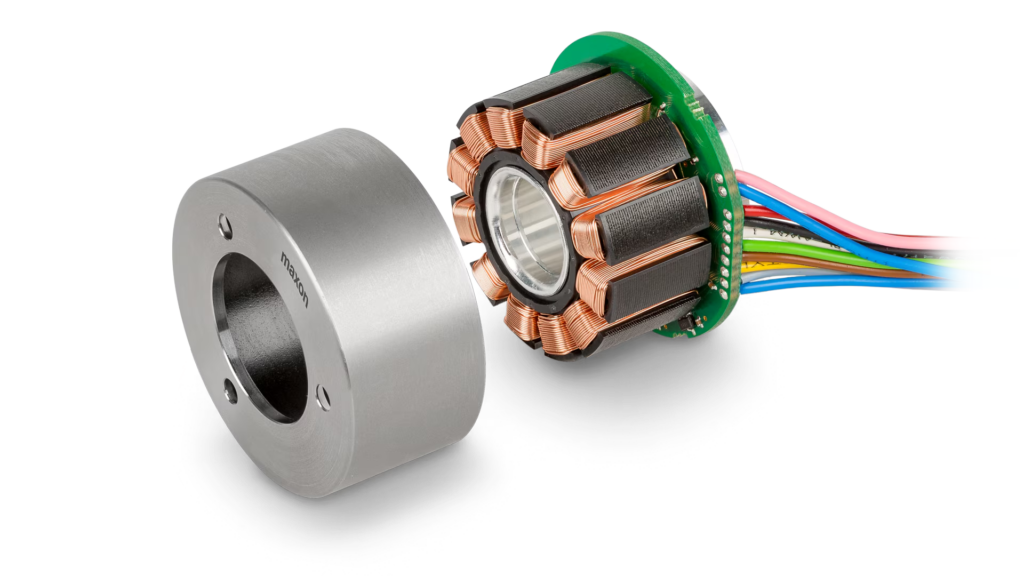
Herausforderungen bei der Auswahl von Industriemotoren werden immer komplexer, da der Betrieb eine höhere Effizienz, geringere Ausfallzeiten und eine bessere Kontrolle über alle Anwendungen verlangt. Von Fertigungsstraßen bis hin zu HLK-Systemen wird von den Käufern erwartet, dass sie Leistung und langfristige Betriebskosten in Einklang bringen. In vielen Fällen bietet ein herkömmlicher Elektromotor nicht mehr das Maß an Präzision oder Effizienz, das in modernen industriellen Umgebungen erforderlich ist.
Gleichzeitig hat die zunehmende Automatisierung und der energiebewusste Betrieb die Industrie dazu gebracht, nach Alternativen zu suchen, die mehr Zuverlässigkeit bieten. Dies ist der Punkt, an dem die Elektromotor BLDC-Technologie gewinnt zunehmend an Aufmerksamkeit. Seine Fähigkeit, konstante Leistung bei geringerem Wartungsaufwand zu liefern, macht ihn zu einem starken Kandidaten für Anwendungen, bei denen sich die Zuverlässigkeit direkt auf die Produktivität auswirkt.
Allerdings, Es herrscht immer noch Verwirrung was BLDC eigentlich bedeutet, wie es funktioniert und ob es die richtige Wahl für bestimmte Anwendungsfälle ist. Fragen wie die, ob es sich bei einem BLDC-Elektromotor um einen Wechselstrom- oder Gleichstrommotor handelt, wie lange er hält und ob er irgendwelche Nachteile hat, sind in der Evaluierungsphase häufig. Ohne klare Antworten fällt es Käufern oft schwer, eine sichere Entscheidung zu treffen.
Dieser Artikel enthält eine praktische Anleitung, käuferorientierte Aufschlüsselung von BLDC-Motoren, wie sie funktionieren, wo sie am besten arbeiten und welche Einschränkungen zu beachten sind. Außerdem werden reale industrielle Anwendungsfälle untersucht, BLDC-Motoren mit konventionellen Motoren verglichen und Entscheidungshilfen gegeben, um zu entscheiden, ob ein Elektromotor BLDC-Lösung mit Ihren betrieblichen Anforderungen übereinstimmt.
Am Ende dieses Leitfadens werden Sie ein klares Verständnis von BLDC, sowie die erforderlichen Erkenntnisse zur Bewertung von Leistung, Lebensdauer und Eignung für industrielle Anwendungen. Also, lesen Sie weiter:
Was bedeutet BLDC und warum ist es wichtig?
BLDC steht für Brushless Direct Current (bürstenloser Gleichstrom), Dieser Begriff bezieht sich auf eine Motorkonstruktion, die ohne mechanische Bürsten auskommt und stattdessen eine elektronische Kommutierung zur Steuerung des Stromflusses verwendet. Diese Konstruktion ist nicht nur eine technische Variante, sondern ein grundlegender Wandel in der Funktionsweise von Motoren in industriellen Umgebungen, insbesondere dort, wo Effizienz und langfristige Zuverlässigkeit entscheidend sind.
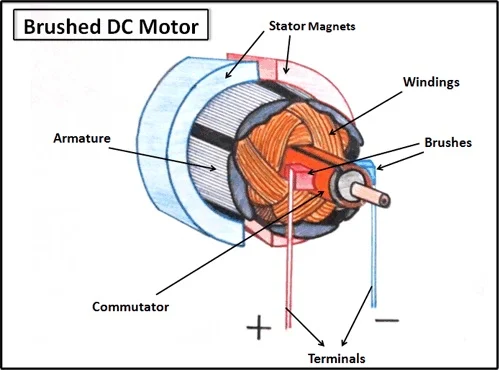
In herkömmlichen Motorsystemen sind Bürsten für die Stromübertragung auf die drehende Teile, was zu Reibung, Wärmeentwicklung und schließlich zu Verschleiß führt. Mit der Zeit führt dies zu Wartungsbedarf, Leistungsabfall und unerwarteten Ausfallzeiten. Im Gegensatz dazu ist eine Elektromotor BLDC-System ersetzt diese physischen Komponenten durch eine elektronische Steuerung, die einen reibungsloseren Betrieb ermöglicht und die mechanischen Verluste erheblich reduziert.
Für industrielle Abnehmer, dieser Unterschied wirkt sich unmittelbar aus Betriebskosten und Wartungsplanung. Ein Motor, der verschleißanfällige Komponenten eliminiert, kann über längere Zeiträume ohne Eingriffe betrieben werden und eignet sich daher hervorragend für Anwendungen, die einen Dauerbetrieb erfordern. Dies ist besonders in automatisierten Produktionslinien, HLK-Systemen und Präzisionsmaschinen von Bedeutung, wo die Zuverlässigkeit nicht beeinträchtigt werden darf.
Ein weiterer wichtiger Grund, warum BLDC-Technik ist die Fähigkeit, bei unterschiedlichen Lastbedingungen eine gleichbleibende Leistung zu erbringen. Im Gegensatz zu konventionellen Systemen, die bei Teillasten mit der Effizienz zu kämpfen haben, kann ein Elektromotor BLDC-Konfiguration sorgt für eine bessere Energieausnutzung und Drehmomentstabilität. Dies führt zu einem geringeren Energieverbrauch und einer verbesserten Prozesssteuerung - beides wichtige Aspekte in modernen Industriebetrieben.
Mehr als Effizienz, Flexibilität bei der Kontrolle ist ein großer Vorteil die Kaufentscheidungen beeinflussen. BLDC-Motoren können in fortschrittliche Steuerungen integriert werden, die präzise Drehzahlanpassungen, programmierbaren Betrieb und Leistungsüberwachung in Echtzeit ermöglichen. Dieses Maß an Kontrolle ist in Branchen wie der Robotik unerlässlich, CNC-Bearbeitung, und automatisierte Materialhandhabungssysteme, bei denen sich schon geringe Abweichungen auf die Qualität der Produktion auswirken können.
Vom strategischen Standpunkt aus betrachtet, die Einführung der BLDC-Technologie spiegelt eine Verlagerung hin zu intelligenteren und effizienteren Systemen. Da sich die Industrien weiter in Richtung Automatisierung und Energieoptimierung bewegen, steigt die Nachfrage nach Motoren, die diese Ziele unterstützen können. Aus diesem Grund prüfen viele Käufer aktiv, ob eine BLDC-Elektromotorlösung ihre bestehende Motorinfrastruktur ersetzen oder ergänzen kann.
Wie BLDC-Motoren in industriellen Systemen funktionieren
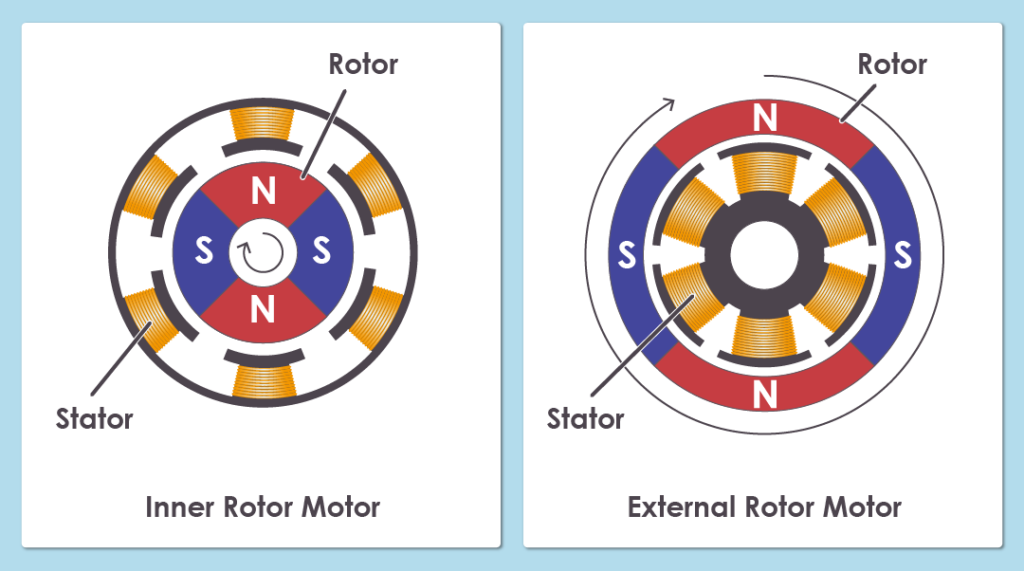
Verstehen des internen Motorbetriebs ist für Käufer, die Leistung, Integrationsanforderungen und langfristige Zuverlässigkeit bewerten müssen, von entscheidender Bedeutung. Im Gegensatz zu herkömmlichen Systemen, die sich auf einen mechanischen Kontakt stützen, arbeiten BLDC-Motoren durch elektronisch gesteuerte Schaltvorgänge, was die Effizienz und Präzision in industriellen Umgebungen erheblich verbessert.
Das Herzstück einer Elektromotor BLDC-System, Die Interaktion zwischen den Statorwicklungen und einem Permanentmagnetrotor wird durch elektronische Signale gesteuert. Dadurch werden keine physischen Kommutierungskomponenten benötigt, was zu einem reibungsloseren Betrieb und geringerem mechanischen Verschleiß führt. Bei industriellen Anwendungen führt dies direkt zu einer stabileren Leistung unter kontinuierlichen oder variablen Lastbedingungen.
Elektronische Kommunikation erklärt
Elektronische Kommutierung ersetzt die Bürsten durch kontrolliertes elektrisches Schalten, um die Statorwicklungen in einer bestimmten Reihenfolge zu erregen. Dieser Prozess erzeugt ein rotierendes Magnetfeld, das den Rotor antreibt und eine kontinuierliche Bewegung ohne physischen Kontakt zwischen beweglichen Teilen gewährleistet.
In den meisten Industriebetrieben, Sensoren spielen eine entscheidende Rolle bei der Erkennung der Rotorposition. Hall-Effekt-Sensoren werden in der Regel verwendet, um dem Regler eine Echtzeit-Rückmeldung zu geben, die ein präzises Timing der Stromschaltung ermöglicht. In fortschrittlichen Systemen werden sensorlose Steuerungsmethoden implementiert, um die Hardwarekomplexität zu reduzieren und gleichzeitig die Leistungsgenauigkeit zu erhalten.
Das Fehlen von Bürsten wirkt sich direkt auf die Lebensdauer aus. Ohne reibungserzeugende Komponenten kann ein Elektromotor BLDC-Konfiguration erfährt mit der Zeit deutlich weniger Verschleiß. Dies verlängert nicht nur die Lebensdauer, sondern verringert auch die Wartungshäufigkeit, was ein großer Vorteil bei Anwendungen ist, bei denen Ausfallzeiten kostspielig sind.
Die Rolle der Motorsteuergeräte
Motorsteuerungen sind das Rückgrat von BLDC-Betrieb, Sie steuern Spannung, Strom und Schaltfolgen, um eine optimale Leistung zu gewährleisten. Im Gegensatz zu herkömmlichen Motoren, die direkt mit einer Stromversorgung betrieben werden können, sind BLDC-Motoren für die ordnungsgemäße Funktion vollständig auf Steuerungen angewiesen.
Diese Steuerungen ermöglichen eine präzise Geschwindigkeitsregelung, so dass die Bediener die Leistung an die Prozessanforderungen anpassen können. In einer Elektromotor BLDC-System, Die Geschwindigkeit kann dynamisch gesteuert werden, ohne dass der Wirkungsgrad beeinträchtigt wird, was besonders bei Automatisierungs- und Anwendungen mit variabler Last von Vorteil ist.
Die Integration ist ein weiterer wichtiger Faktor für die Käufer. Die Steuerungen müssen mit den bestehenden Systemen kompatibel sein, einschließlich der Stromquellen und Steuerungsschnittstellen. Dies erhöht zwar die Komplexität bei der Einrichtung, es bietet auch Flexibilität für fortschrittliche Funktionen wie programmierbarer Betrieb, Fernüberwachung und Energieoptimierung.
Drehmoment und Leistungsmerkmale
Konstante Drehmomentabgabe ist ein entscheidender Vorteil von BLDC-Motoren, insbesondere in industriellen Umgebungen, in denen sich die Lastbedingungen häufig ändern. Im Gegensatz zu konventionellen Motoren, bei denen es zu Schwankungen kommen kann, halten BLDC-Systeme das Drehmoment über einen großen Drehzahlbereich stabil.
Dadurch eignen sie sich hervorragend für Präzisionsanwendungen wie z. B. Robotik, CNC-Maschinen und automatisierte Förderanlagen. Ein Elektromotor BLDC-Einrichtung kann schnell auf Lastschwankungen reagieren und eine sanfte Beschleunigung und Abbremsung gewährleisten, ohne die angeschlossenen Geräte mechanisch zu belasten.
Ein weiterer wichtiger Vorteil ist die Verringerung von Vibrationen und Lärm. Da es keine Bürsten und weniger mechanische Reibung gibt, arbeiten BLDC-Motoren gleichmäßiger, was die Stabilität des Gesamtsystems verbessert. Für industrielle Käufer, dies führt zu einer besseren Leistung und eine besser kontrollierte Betriebsumgebung, insbesondere bei empfindlichen oder hochpräzisen Anwendungen.
Ist ein BLDC-Elektromotor AC oder DC?
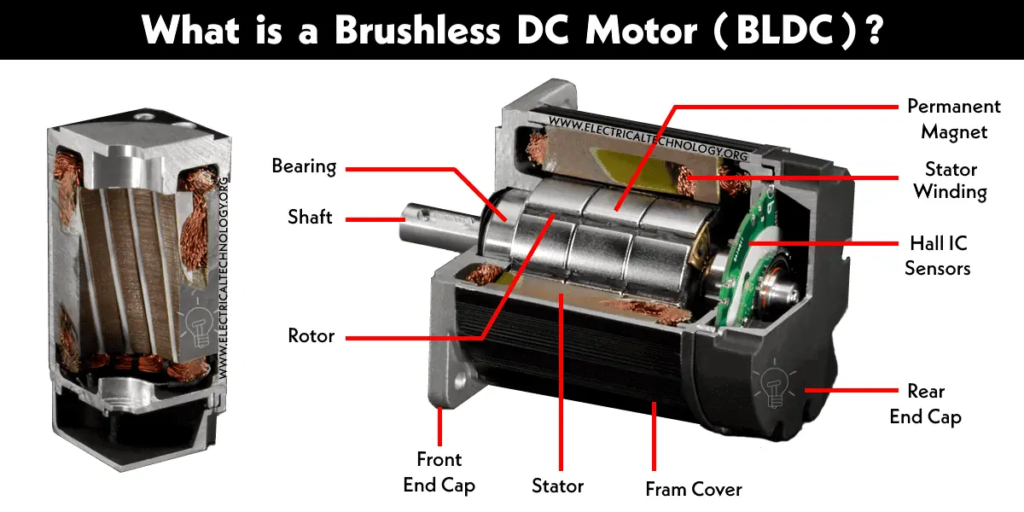
Dies ist eine der häufigsten technische Fragen, die Käufer bei der Bewertung moderner Motortechnologien stellen. Oberflächlich betrachtet steht BLDC für Brushless Direct Current (bürstenloser Gleichstrom), was darauf hindeutet, dass es sich um eine Gleichstrommotor. Die tatsächliche Funktionsweise ist jedoch nuancierter, und das Verständnis dieser Unterscheidung ist für eine korrekte Systemintegration wichtig.
In einem Elektromotor BLDC-System, Die Eingangsleistung ist Gleichstrom, aber der Motor arbeitet nicht wie ein herkömmlicher Gleichstrommotor. Stattdessen wandelt ein elektronisches Steuergerät die Gleichstromversorgung in eine kontrollierte dreiphasige Wechselstromwellenform um, die die Statorwicklungen versorgt. Auf diese Weise wird das für die Bewegung erforderliche rotierende Magnetfeld erzeugt, ähnlich wie bei der internen Funktionsweise von Wechselstrommotoren.
Dieses hybride Verhalten führt oft zu Verwirrung, aber aus Sicht der Klassifizierung werden BLDC-Motoren immer noch als Gleichstrommotoren betrachtet, da ihre primäre Energiequelle Gleichstrom ist. Für industrielle Käufer, wird diese Unterscheidung wichtig bei der Planung von Stromversorgungssystemen, insbesondere bei Anwendungen mit Batterien, Solaranlagen oder gleichstrombetriebener Infrastruktur.
In der Praxis wirkt sich dies auch auf die Auswahl des Reglers und die Systemkompatibilität aus. Da der Motor in hohem Maße von der elektronischen Kommutierung abhängt, wirken sich die Qualität und die Fähigkeiten des Reglers direkt auf die Leistung aus. Ein Elektromotor BLDC-Konfiguration mit einem gut abgestimmten Regler einen hohen Wirkungsgrad, eine präzise Drehzahlregelung und eine stabile Drehmomentabgabe bei wechselnden Lasten erreichen.
Ein weiterer wichtiger Aspekt ist die Integration in bestehende Systeme. In Anlagen, in denen eine AC-gespeiste Infrastruktur vorherrscht, können zusätzliche Umwandlungskomponenten erforderlich sein, um den BLDC-Betrieb zu unterstützen. In modernen Anlagen, die bereits über Leistungselektronik und Automatisierung verfügen, ist dies nicht der Fall, die Integration wird deutlich einfacher, was BLDC-Motoren zu einer praktikableren Option macht.
Letztlich ist es wichtig zu verstehen, ob ein BLDC-Elektromotor ist AC oder DC geht es weniger um die Etikettierung als vielmehr um die Systemgestaltung. Käufer, die wissen, wie die Leistungsumwandlung im Motor funktioniert, sind besser in der Lage, die Installationsanforderungen, die Leistungserwartungen und die langfristige Betriebseffizienz zu beurteilen.
Sind BLDC-Motoren gut oder schlecht?
BLDC-Motoren sind weithin anerkannt als Hochleistungslösung, aber wie jede Technologie sind sie nicht generell für jede Anwendung ideal. Die Entscheidung, sie einzusetzen, sollte auf betrieblichen Erfordernissen, Kostenerwägungen und der Systemkomplexität beruhen und nicht auf allgemeinen Vorstellungen.
Einer der größten Vorteile ist die Effizienz. Eine Elektromotor BLDC-System arbeitet in der Regel mit einer höheren Energieeffizienz als herkömmliche Motoren, insbesondere unter variablen Lastbedingungen. Dadurch eignet er sich hervorragend für Branchen, in denen sich der Energieverbrauch direkt auf die Betriebskosten auswirkt, z. B. in den Bereichen HLK, Automatisierung und kontinuierliche Produktion.
Die Wartung ist ein weiterer wichtiger Faktor, der für BLDC-Motoren spricht. Da es keine Bürsten gibt, kommt es im Laufe der Zeit zu einem deutlich geringeren Verschleiß. Dies führt zu kürzeren Wartungsintervallen und geringeren Ausfallzeiten, was für Branchen, die auf einen ununterbrochenen Betrieb angewiesen sind, von entscheidender Bedeutung ist. Für Käufer, dies führt zu niedrigeren Lebenszykluskosten, auch wenn die Anfangsinvestitionen höher sind.
BLDC-Motoren sind jedoch nicht ohne Einschränkungen. Die Notwendigkeit elektronischer Steuerungen erhöht die Komplexität des Systems, sowohl in Bezug auf die Installation als auch auf die Fehlersuche. Bei kostensensiblen Projekten oder einfachen Anwendungen ist diese zusätzliche Komplexität möglicherweise nicht gerechtfertigt. Ein Elektromotor BLDC-Lösung kann daher für Anwendungen, die keine präzise Steuerung oder hohe Effizienz erfordern, zu hoch sein.
Eine weitere Überlegung ist Vorabkosten. BLDC-Motoren und die dazugehörigen Steuerungen sind im Allgemeinen teurer als herkömmliche Motorsysteme. Während die langfristigen Einsparungen diese Investition ausgleichen können, müssen Käufer abwägen, ob die betrieblichen Vorteile mit ihrem Budget und ihren Anwendungsanforderungen übereinstimmen.
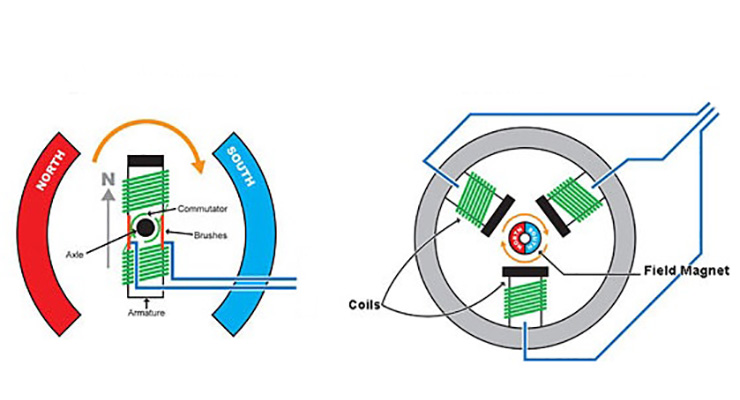
Um einen besseren Vergleich zu ermöglichen, werden in der folgenden Tabelle die praktischen Unterschiede aufgeführt, die Käufer berücksichtigen sollten:
| Faktor | BLDC-Motor | Konventioneller Motor |
| Effizienz | Höher bei variablen Lasten | Mäßig |
| Wartung | Niedrig, da keine Bürsten | Höher aufgrund von Verschleißkomponenten |
| Anschaffungskosten | Höher | Unterer |
| Kontrolle | Präzise und programmierbar | Begrenzte Kontrolle |
| Lebensdauer | Länger in den meisten Fällen | Kürzer aufgrund von Verschleiß |
Zusammengefasst, die richtige Wahl hängt ab wie der Motor eingesetzt werden soll. BLDC-Motoren sind eine hervorragende Option für Anwendungen, die Effizienz, Präzision und Zuverlässigkeit erfordern. Für einfachere Anwendungen oder bei begrenztem Budget können konventionelle Motoren jedoch immer noch eine praktische Lösung darstellen. Käufer sollten die Leistungsanforderungen, die Gesamtbetriebskosten und die Systemkomplexität bewerten, bevor sie eine endgültige Entscheidung treffen.
Wie lange ist die Lebensdauer eines BLDC-Motors?
Einer der überzeugendsten Vorteile von BLDC-Motoren ist ihre verlängerte Betriebslebensdauer. Da es keine Bürsten gibt, die sich im Laufe der Zeit abnutzen, wird der mechanische Verschleiß minimiert, was der langfristigen Zuverlässigkeit industrieller Systeme direkt zugute kommt.
In einem ordnungsgemäß konzipierten Elektromotor BLDC-Einrichtung, kann die erwartete Lebensdauer Zehntausende von Betriebsstunden übersteigen. Beispielsweise halten Motoren in HLK-Systemen, automatischen Förderanlagen oder Roboterarmen oft deutlich länger als herkömmliche Bürstenmotoren, wodurch die Häufigkeit von Wartungs- und Austauschzyklen verringert wird.
Die Lebensdauer wird jedoch nicht allein durch das Fehlen von Bürsten bestimmt. Betriebsbedingungen, Lastzyklen und Reglerqualität spielen eine entscheidende Rolle. Übermäßige Hitze, häufige Überlastung oder suboptimales Spannungsmanagement kann die effektive Lebensdauer eines Motors verkürzen. Die Käufer sollten sicherstellen, dass das Wärmemanagement und die Umgebungsbedingungen bei der Spezifikation und Installation berücksichtigt werden.
Außerdem wirkt sich die Qualität der elektronischen Steuergeräte auf die Lebensdauer aus. Eine hochwertige BLDC-Regler sorgt für eine gleichmäßige Stromschaltung und verhindert so elektrische Belastungen, die den Motor im Laufe der Zeit beschädigen könnten. Die Investition in zuverlässige Steuersysteme verlängert nicht nur die Lebensdauer, sondern sorgt auch für höchste Effizienz während des gesamten Betriebs.
Für industrielle Abnehmer, dies führt zu Kosteneinsparungen und reduziertes Betriebsrisiko. Eine längere Motorlebensdauer verringert die Ausfallzeiten, den Wartungsaufwand und die Anforderungen an den Ersatzteilbestand, was besonders in Umgebungen mit hoher Produktion oder 24/7-Betrieb von Vorteil ist.
Was sind die Nachteile von BLDC-Ventilatoren?
BLDC-Ventilatoren sind weit verbreitet, aber sie sind nicht ohne Einschränkungen. Das Wissen um diese Nachteile hilft den Käufern, fundierte Entscheidungen zu treffen, bevor sie sich für eine Systemaufrüstung oder Nachrüstung entscheiden.
Erstens, die die Anfangsinvestition ist höher im Vergleich zu herkömmlichen AC- oder bürstenbehafteten DC-Lüftern. Während die Energieeinsparungen und die geringere Wartung diese Kosten im Laufe der Zeit ausgleichen, können die anfänglichen Kosten ein Hindernis für budgetbewusste Projekte sein.
Zweitens: BLDC-Ventilatoren sind stark abhängig von elektronischen Steuerungen. Jede Fehlfunktion des Steuergeräts kann die Leistung des Ventilators beeinträchtigen oder den Betrieb sogar ganz einstellen. In industriellen Anlagen erfordert dies eine zuverlässige Steuerungshardware und eine Notfallplanung, um Produktionsunterbrechungen zu vermeiden.
Die Komplexität der Reparatur ist ein weiterer Aspekt. Im Gegensatz zu einfachen AC-Lüftern erfordern BLDC-Lüfter besondere technische Fähigkeiten für Diagnose und Reparatur. In Umgebungen ohne geschultes Personal kann dies zu höheren Servicekosten oder längeren Ausfallzeiten führen.
| Ausgabe | Auswirkungen auf den Käufer |
| Höhere Anfangskosten | Haushaltsplanung erforderlich |
| Controller-Abhängigkeit | Komplexität des Systems |
| Schwierigkeiten bei der Reparatur | Anstieg der Wartungskosten |
Trotz dieser Einschränkungen, die Vorteile von BLDC-Ventilatoren-Energieeffizienz, präzise Drehzahlregelung und lange Lebensdauer - überwiegen in industriellen Anwendungen oft die Nachteile, vor allem dort, wo es auf langfristige Betriebssicherheit ankommt.
Wichtige Überlegungen bei der Auswahl eines BLDC-Motors für den Käufer
Die Auswahl des richtigen BLDC-Elektromotors hängt von den betrieblichen Anforderungen, der Systemkompatibilität und dem langfristigen Wert ab. Käufer sollten zunächst Folgendes berücksichtigen AnwendungstypBLDC-Motoren eignen sich hervorragend für Robotik, automatisierte Anlagen, HLK und Präzisionsmaschinen, können aber für einfache Systeme überdimensioniert sein.
Belastung und Arbeitszyklen sind entscheidend. Eine Elektromotor BLDC-System bewältigt variable Lasten effizient, aber eine Überlastung oder häufige Start-Stopp-Zyklen können die Lebensdauer verkürzen, wenn die Steuerungen nicht richtig konfiguriert sind.
Qualität der Steuerung und Integration der Stromversorgungssysteme sind ebenfalls wichtig, um eine stabile Leistung zu gewährleisten. Umweltfaktoren wie Temperatur und Staub beeinflussen die Haltbarkeit.
Bewerten Sie schließlich die Gesamtbetriebskosten und nicht der Anschaffungspreis. Energieeinsparungen, geringerer Wartungsaufwand und eine längere Lebensdauer machen BLDC oft zu einer strategischen Wahl für industrielle Käufer.
Erhalten Sie zuverlässige Motoren für den industriellen Einsatz - Verbinden Sie sich mit DMKE
Die Wahl des richtigen Motors ist eine wichtige Entscheidung. Dabei geht es nicht nur um die Überprüfung der Spezifikationen, sondern auch um die Abstimmung von Leistung, Effizienz und Zuverlässigkeit auf die betrieblichen Anforderungen. BLDC-Motoren bieten lange Lebensdauer, präzise Steuerung und Energieeffizienz, Damit sind sie eine gute Wahl für industrielle Anwendungen, bei denen Ausfallzeiten und Wartungskosten kritisch sind.
Bei DMKE, wir Konzentration auf die Produktqualität und Personalisierung, Dadurch wird sichergestellt, dass jede Elektromotor-BLDC-Lösung auf die spezifischen industriellen Anforderungen zugeschnitten ist. Unser Prüf- und Zuverlässigkeitsprotokolle den Käufern die Gewissheit geben, dass ihre Investition im Laufe der Zeit eine konstante Leistung erbringen wird.
Für Ingenieure und industrielle Einkäufer ist das Verständnis Kompatibilität der Regler, Lastbedingungen und Umweltfaktoren ist entscheidend für die Auswahl des optimalen Motors. Ein gut abgestimmter BLDC-Motor kann die Effizienz verbessern, Betriebsrisiken verringern und fortschrittliche Automatisierungsstrategien unterstützen.
Besuchen Sie unsere Website oder Kontaktieren Sie uns noch heute um Ihren Bedarf an Industriemotoren zu besprechen. Unser Team berät Sie praxisnah und hilft Ihnen dabei, fundierte Entscheidungen für Ihren langfristigen betrieblichen Erfolg zu treffen.

 English
  English (Australia)
  English (Canada)
  Deutsch
  English (UK)
  Français