
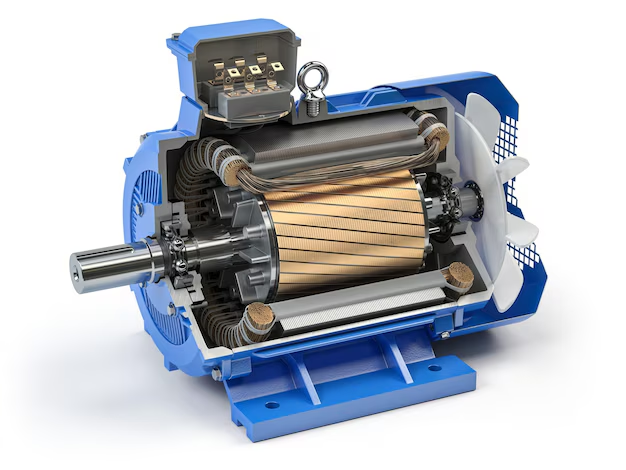
Whenever one starts to list down the core elements of technology that are driving modern automation and integration across almost all industries, electric motors will undoubtedly top the list. These amazing and powerful drivers are at the heart of almost every technology, working quietly in the background, driving machinery, and creating the force that is necessary to power machinery, automation systems, electric vehicles, AGVs, HVAC units, and countless other simple and complex devices we encounter in our everyday lives.
Mostly, motors are defined and evaluated based on their external specifications, which include their power rating, speed, ability to hold torque, as well as the application for which they are meant to be used. Similarly, one may also evaluate different motorised units depending on whether they run on direct current or alternating current, and whether they come with brushes or are brushless.
However, many times when people are evaluating these amazing devices, they often forget that the true value is determined by what is inside the assembly. When we speak about the inside, we are talking about the assemblies in a cross-sectional manner.
An electric motor cross section view provides detailed feedback and a clear outlook of the structure. It shows how the motor looks from its inside, along with the sequence of events that take place inside to convert electrical input into mechanical motion. This view also helps one see the carefully engineered technology, as well as the electromagnetic and mechanical components inside the assembly that power it through and through.
For engineers, labourers, technicians, stakeholders, and anybody working in industrial manufacturing, as well as generic buyers, understanding this electric motor cross-section is extremely important. This proper understanding is what really aids the selection of the most suitable assembly that ensures reliability as well as longevity for the application it is being bought for.
Below, we are going to explain the internal construction of an electric motor through a cross-sectional perspective. Undoubtedly, it can get a little difficult to visualise things in depth and understanding such an intangible view can be hard. However, we will try our best to break down each component and help you gain an understanding of each part and its impact on the overall equipment performance. So, read on.
How an Electric Motor Cross-Sectional View Helps Engineers and Buyers
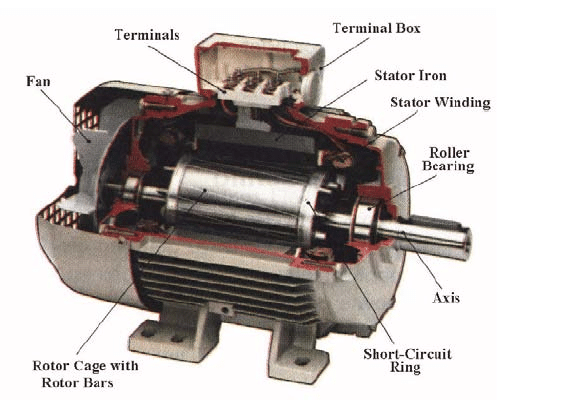
While you are just beginning to read this article, you might question yourself as to why this understanding of the electric motor cross section is important and how it can help you as a buyer.
Before we go into the benefits and advantages, it is important to understand what exactly we mean by the cross-sectional view of an electric motor. An electric motor cross-section view essentially is a visual or diagrammatic representation of the motor sliced through.
To understand it, you can imagine that somebody has used a sharp knife to cut the motor either longitudinally or radially from the centre and then exposed its internal assembly. Unlike any external inspection, a cross-sectional view is what helps people examine the internal geometry of something.
It helps one deeply look at the component placement, tolerances, as well as the interaction of different materials inside. All these factors directly influence the performance of the overall setup and help one in defining its reliability.
In a typical analysis of motorised assemblies, two major types of electric motor cross section views are used. The first one is a longitudinal cross-section, which shows the setup along its length. This view is capable of revealing critical elements, including the shafts, bearings, and rotor alignment. It also shows the cooling paths inside the assembly.
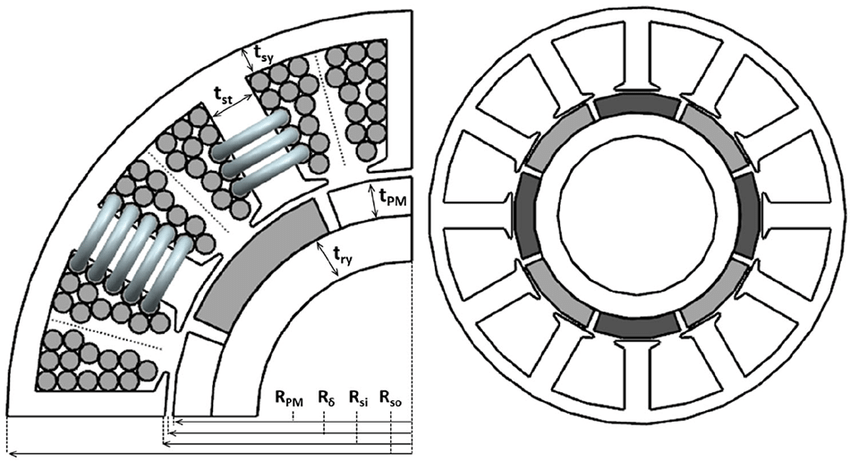
The second one is a radial cross-section that, as its name indicates, displays the circular relationship between the rotor, stator, air gap, and other components. This view makes it easier for the viewer to understand the electromagnetic behaviour of the system.
Engineers and automation industry technicians often rely on both these cross-sectional views to understand, optimise, and customise the electromagnetic behaviour of an assembly. These views also help them improve the overall cooling efficiency of a motor and diagnose the reason behind its vibration and noise. Moreover, these views uncover the overheating issues to help users ensure maintenance and assess the manufacturing quality.
For professional manufacturers of motors, cross-sectional analysis is an extremely important design and validation tool that helps them see whether or not their products are worth marketing.
For industrial buyers as well as system integrators, an understanding of this motor’s cross-sectional view has several practical advantages. This understanding enables one to select the most suitable form of motor for themselves and also get their hands on something that reduces the long-term maintenance risks and strengthens the ROIs.
This understanding also helps one confidently use and customise a system without worrying about ruining its longevity and reliability. Ultimately, choosing the right electric motor is not just about specification in a theoretical sense; rather, it is about trusting and knowing what is inside and how it will work to enhance your overall operations.
Core Components Visible in an Electric Motor Cross-Section
Although there is so much that one can see when looking at the electric motor cross-section view, some of the components are very important and cannot be ignored. Some components are usually the first ones to catch one’s eye.
A typical first look at a motor cross-section will precisely reveal the integration of components that work together in a connected manner. Each component, no matter how small it looks, has a direct influence on the efficiency, speed, mechanical output power, and service life of the system. Below are some of the major parts that you will see upon cutting it through either diagonally or horizontally.
1. Stator
A stator is the stationary outer magnetic part of the motor, which is undoubtedly one of the most common and critical elements that first catches your eye when you cut through the assembly.
Typically, a stator will have a laminated silicon steel core with precisely machined slots. You can also see the copper windings housed within the slots, along with insulation layers that separate the conductors.
While we are at it, it is ideal to talk about the function of the stator as well. A major role of a stator is to generate a rotating magnetic field. When electric current flows through its windings, a magnetic field is created that is responsible for inducing motion in the rotor.
From a cross-sectional viewpoint, the quality of laminations, slot geometry, winding placement, and a few other elements cannot be missed. In case a stator is poorly designed, there will be higher losses, excessive heat, and reduced efficiency.
2. Rotor
The rotor is the second most important part of the motor that is visible in its cross-section. It sits concentrically inside the stator and rotates in response to the magnetic field that is generated by the stator.
In cross-section, you will see a squirrel cage rotor in induction motors as well as a permanent magnet rotor in servomotor and BLDC appliances. In some types, it is also common to come across a wound rotor. Closely looking at it, you can see the bar placement of the rotor, along with the magnetic material distribution, as well as the quality of balance.
All these systems directly affect the torque production and the dynamic response to changing loads. The design of the rotor is important, as it determines the AC motor or DC motor’s capability of accelerating and decelerating, along with its overall load-handling performance and noise or vibration behaviour.
3. Air Gap
This is a main component in all big and small motors, pole motors, torque motors, and more, that is commonly overlooked. However, it serves a critical function and must be given proper attention. An air gap, simply defined, is a narrow space between the stator and the rotor that might look like nothing more than a cavity. However, this small space is what plays a decisive role in the overall motor output and performance.
The air gap performs the critical function of controlling the magnetic flux transfer, along with influencing torque production. It is also what solely decides most of the noise and vibration output of the system. A cross-sectional view will highlight how even minor deviations in the air gap and a lack of uniformity can lead to electrical energy losses as well as mechanical instability in a system.
Mechanical Output Power Transmission Components
An electric motor cross section will reveal the mechanical and transmission components that power the entire assembly. The first component in this regard is the shaft that runs through the rotor circuit and determines the torque transfer path in the assembly. The shaft usually transmits mechanical power to the external load.
Looking at it from a cross-section, engineers and technicians can easily assess its alignment with the rotor core, its diameter and material strength, along with whether or not it is fitted with bearings and coupling points. If a shaft is poorly designed, it can lead to misalignment, premature failures, as well as bending during external load changes, thus ruining the overall mechanical reliability of the setup.
The second important component visible in this regard is the bearings, which are known for ensuring smooth rotation inside the assembly. These often support the shaft in its functionality, ensuring minimal friction. The commonly used bearing types are ball bearings and roller bearings.
In a cross-sectional view, bearings are visible at both ends of the housing, providing radial as well as axial support. The use of high-quality bearings in setups can reduce mechanical losses, minimise noise and vibration production, and also extend the maintenance interval, thus reducing the wear of the system, whether it is in stepper motors or any other electric machines.
Structural and Protective Elements
The most apparent structural and protective element inside a linear motor cross-sectional view is its housing and the frame, or skeleton, on which the entire assembly is built. This housing encloses and protects almost all internal components, and cross-sectional analysis will reveal the thickness of the wall, along with the materials, quality, and rigidity.
You can also see the cooling fin geometry as well as the mounting provisions from a cross-sectional point of view. The housing also plays an important role in the heat dissipation and mechanical stability of the overall assembly. Quality frames are engineered to withstand long-term industrial stresses, long-term usage, and support efficient thermal dissipation management.
The second element that becomes obvious in this regard is the seals and end covers that are there to further protect the internal components. They play a role in keeping away dust, moisture, and contaminants, hence improving the overall working and lifespan of the setup. In a cross-sectional view, these elements will show the seal placement, lubrication container design, as well as the IP or environmental protection level of the electromagnetic motors or electrostatic motors.
Cooling and Thermal Management
Regardless of their nature, almost all motors are bound to generate some sort of heat due to electrical resistance as well as mechanical losses. This is the reason that all these assemblies have a heat management system which internally takes care of heat dissipation and ensures smooth working of the system.
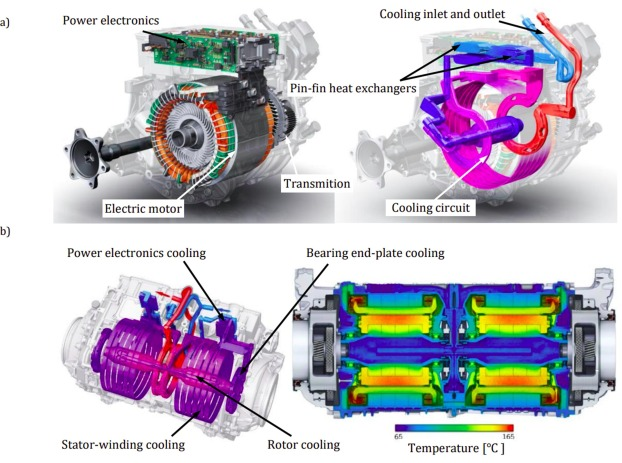
A cross-sectional view will clearly show how the motor manages heat internally. You can either find a natural air-cooling method, forced air cooling using fans, or internal airflow channels that ensure efficient cooling to preserve insulation integrity. Good-quality heat dissipation and cooling also ensure that the setup will not overheat and will maintain consistent performance across years.
Electric Motor Components in Cross-Section
| Component | Primary Function | Impact on Performance | Precision Requirement |
| Stator | Magnetic field generation | Efficiency & torque | Very high |
| Rotor | Mechanical rotation | Speed & stability | Very high |
| Air Gap | Flux transfer | Noise & efficiency | diCritical |
| Bearings | Smooth rotation | Vibration & lifespan | High |
| Cooling System | Heat dissipation | Reliability | High |
Common Issues Seen in Cross-Sections
Sometimes, even the most flawlessly looking motor can have issues concealed in its critical design, along with some manufacturing shortcomings. All these shortcomings are only visible through a detailed and critical view of an electric motor cross-section. Such an in-depth view often brings all the hidden factors to the surface. It exposes internal relationships between the different core components and the problems in their connection.
If you want to evaluate the true manufacturing quality of any assembly, it is best to look through its cross-sections and then make a decision on whether or not you want to purchase that assembly.
One of the most common issues that a cross-sectional analysis often reveals is the uneven air gap distribution. Although it may look like a simple flaw, it can lead to excessive vibration, noise, reduced working efficiency of the system, as well as a short impact on its overall life.
Similarly, poorly designed cooling channels are also something that a cross-section can easily reveal when internal airflow paths are examined. This issue is often the core reason behind overheating problems that do not have their roots in any other obvious operational component.
Cross-sections also expose the use of poor insulation material, which compromises the overall electrical safety and shortens the lifespan of the setup. If ignored, it can lead to short circuits and quick electrical motor failure.
You can also see bearing misalignments, as well as other component mismatches, in a cross-sectional view that often cause premature mechanical failure.
Other than just identifying the faults, you can also utilise a proper cross-sectional view to serve as a reflection on the manufacturer’s engineering capabilities, as well as their commitment to the craft. Precise component alignment, consistent tolerances, as well as properly integrated insulation and thermal systems, indicate that the manufacturer knows what they are doing.
These proper designs often indicate that the manufacturers have engineering judgment and value precision and rigorous quality control over anything else. Experienced motor manufacturers will always optimise the internal elements rather than simply relying on polishing the outer surface of the assembly for enhanced cosmetic looks.
All of this explains why cross-sectional inspections are often more than just a diagnostic tool. When utilised properly, these can help buyers make valuable decisions and invest only with manufacturers who can deliver more than what they promise.
For engineers, stakeholders, and procurers who want to purchase flawless motors for industrial automation and other operations, looking at cross-sectional views before making a bulk purchase decision can really help invest in systems that really matter.
Get Motors Engineered With Excellence At Their Core: Connect With DMKE
By now, you would have understood how, in any motorised setup, the true value, performance, and power requirements lie beyond its cosmetic looks and outer casing.
A cross-sectional view is what really reveals the intricate engineering decisions and the use of quality components, along with ensuring proper manufacturing standards, that can help you evaluate the reliability and longevity of any device or any setup.
At DMKE, our experts are capable of manufacturing solutions that go beyond sleek looks. We leverage our deep understanding of critical internal components to design solutions that perfectly meet demanding industrial standards.
Our engineers are ready to provide you with impeccable, ready-made as well as custom motor solutions that are made with a focus on truly acing the interior assemblies rather than just the exterior. Everything we make undergoes rigorous quality tests before sale to ensure that we are delivering something that you can rely on for years to come.
Visit our website and connect with us today to get your hands on the most professionally manufactured solutions that can break barriers and provide ROIs like none other.

 English
  English (Australia)
  English (Canada)
  Deutsch
  English (UK)
  Français