 跳到内容
跳到内容 
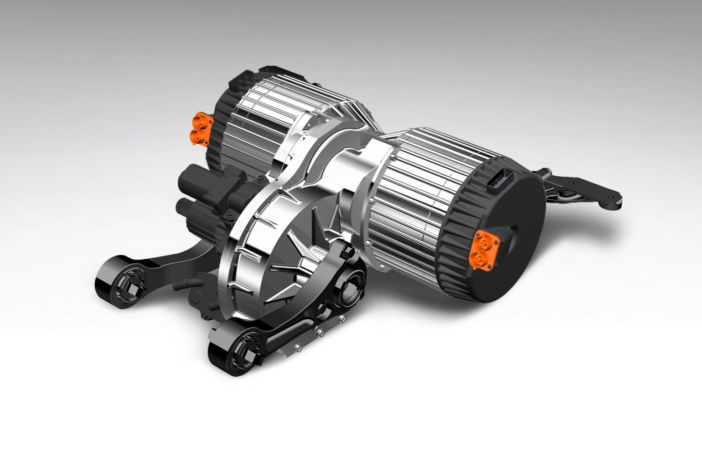
Gone are the days when smooth rotation was the only requirement for any mechanical device. Now, advanced systems have requirements that cannot be fulfilled by simple rotatory devices alone. As a result, the modern, powerful motor-driven systems have evolved in a magnificent manner. Today, these systems do not just ensure simple rotational motion.
Rather, they are required to keep up with the advanced requirements of modern applications such as industrial automation, robotic CNC machines, electric vehicles, and AGVs. Motors are now expected to deliver more than just basic speed. They must also ensure accurate repeatability, smooth motion control, unmistakable torque delivery, fast dynamic response, and high efficiency, even while operating continuously under changing conditions and harsh environments.
Meeting all these demands is not possible unless engineers, procurers, and industry owners move from traditional motor techniques to advanced motor control solutions.
Traditional methods typically rely on simple speed regulation and fixed parameters. While these methods are easy to implement, they remain efficient only when systems are not required to maintain performance under load variations, temperature fluctuations, or changing operating conditions. Upon using these conventional drivers, systems experience inefficient energy usage, unstable motion, excessive heat generation, and reduced accuracy. In high-performance environments, these limitations directly impact productivity, reliability, and overall equipment lifespan.
Luckily, advanced solutions now available can address all these challenges in a systematic manner. These solutions focus on precise torque, intelligent feedback mechanisms, and real-time adaptability to ensure quick, reliable, and repeatable results in industrial automation and other advanced setups. By implementing such advanced solutions, systems no longer suffer from inefficient energy usage, jitter, vibration, excessive heating, or reduced accuracy, even under continuous load changes and extended operating shifts.
Some of the most common advanced solutions currently used in industrial automation include field-oriented control (FOC) and direct torque control (DTC). Both of these, along with other modern techniques, enable systems to respond quickly and accurately to external command changes while ensuring smooth and predictable motion, even in harsh operating environments. Multi-loop control architectures further enhance overall system performance by coordinating current, speed, and position control in a structured and feedback-driven manner.
Moreover, modern motor drives are increasingly capable of integrating intelligent algorithms, thermal-aware protection mechanisms, and load-adaptive strategies. These features allow motorised setups to operate efficiently while simultaneously protecting critical motor components from electrical stress and thermal overload.
By moving beyond basic rotational control and embracing advanced methodologies, engineers, procurers, and industry owners can now achieve peak system performance, improved energy efficiency, long-term reliability, and stable operation under changing external conditions across today’s demanding industrial applications.
Below, we are going to look into these advanced control solutions in detail, along with discussing how these solutions can help achieve enhanced control for modern systems.
Limitations of Traditional Motor Control Methods
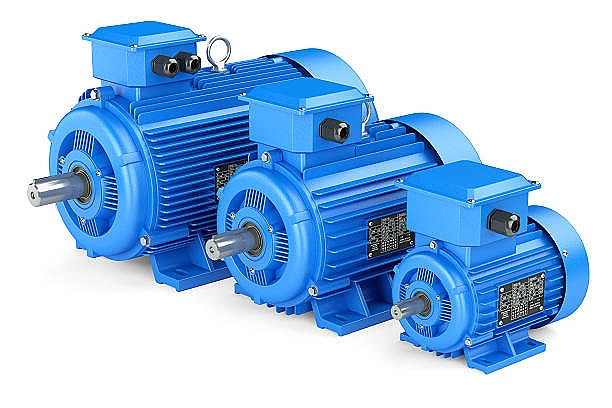
Conventional systems used in motorised setups are designed mainly for simple applications. In such applications, operating conditions remain relatively stable, external disturbances are minimal, and performance requirements from the setup are limited. Most of these systems focus primarily on regulating overall system speed by adjusting either the frequency or the voltage of the supplied current.
This approach works well for basic tasks; however, it overlooks torque behaviour and fails to respond effectively when load conditions change or when required results depend on more than just rotational motion. As a result, the system may maintain speed but deliver inconsistent torque output, leading to inefficient and unstable operation.
Another well-known limitation of conventional setups and their control systems is the use of fixed parameters. These parameters are typically tuned for specific operating points. Because they are optimised for limited conditions, they are unable to deliver consistent performance in real-world systems. In practice, operating environments rarely remain constant. Variations in temperature, supply voltage, and mechanical wear significantly alter system behaviour over time. Fixed-parameter controllers cannot adapt to these variations, resulting in reduced accuracy, increased vibration, and degraded long-term performance.
Traditional methods also struggle under dynamic load conditions. Sudden changes in load demand cause delayed system response, excessive current draw, and increased energy losses. This not only reduces overall efficiency but also increases heat generation and mechanical stress on motor components.
Over extended periods of operation, these inefficiencies can shorten system lifespan while increasing maintenance requirements and downtime. In modern high-performance and precision-driven applications, these limitations make conventional approaches increasingly inadequate and unable to deliver the desired results.
| Aspect | Traditional Control | Advanced Control |
| Control Focus | Speed only | Torque + speed + efficiency |
| Response to Load Changes | Slow/unstable | Fast and adaptive |
| Accuracy | Low at low speed | High across range |
| Efficiency | Less optimized | Energy-aware control |
| Adaptability | Fixed parameters | Adaptive & self-tuning |
Advanced Control Objectives in High-Performance Motors
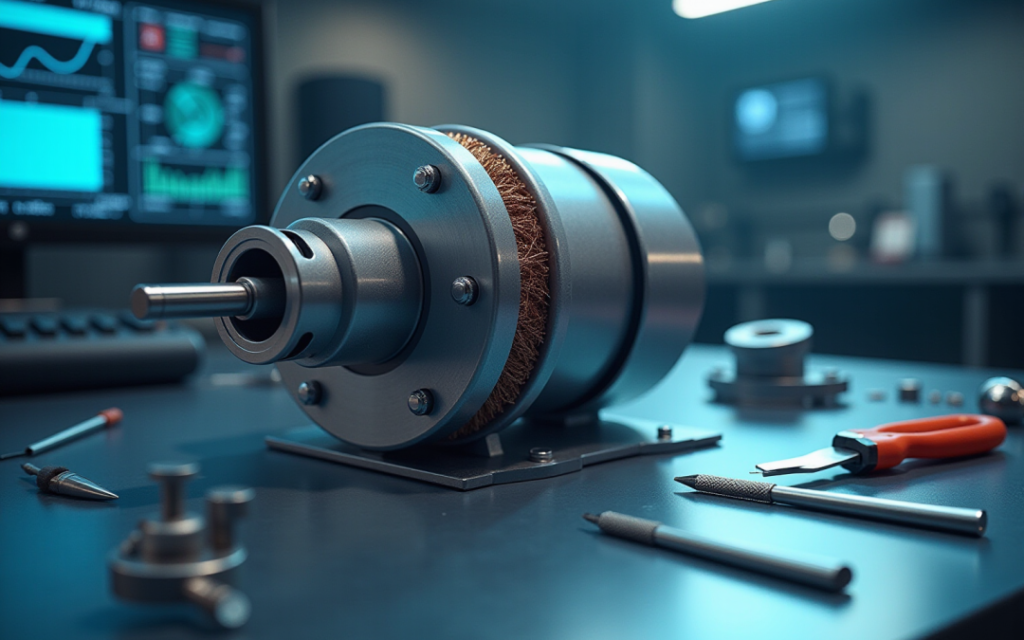
By now, you might be questioning why modern systems require advanced control. In high-performance systems, the primary objective of advanced control is to achieve accurate, predictable, and reliable torque delivery. Torque accuracy ensures that the system produces exactly the required force at the required time, while minimising energy losses and maintaining stable output regardless of changes in external conditions such as load and speed.
Precise torque control improves motion smoothness, reduces mechanical stress, and enhances the reliability of all connected components. This is especially important in precision applications such as CNC machinery and robotics, where even minor deviations can lead to errors that alter the overall system trajectory.
Another major objective of advanced control is to achieve fast and stable dynamic response. High-performance setups must react instantly to changes in external conditions as well as command inputs such as sudden acceleration, deceleration, or direction changes. Advanced strategies minimise delay, overshoot, and oscillations, allowing the system to follow speed and position commands with high precision. Strong dynamic response not only improves accuracy but also increases overall system productivity and enhances operational safety.
Energy optimisation is another important objective in modern setups. Advanced techniques aim to reduce power losses, minimise unnecessary current draw, and operate the motor at its most efficient point across varying operating conditions. Efficient energy management helps lower operating costs and reduce heat generation, thereby supporting a more sustainable system design. In battery-powered and high-duty-cycle applications, optimised energy usage directly translates into longer operating life, improved overall system performance, and minimal losses.
Advanced Motor Control Solutions
Overcoming the limitations of traditional setups while meeting the demands and objectives of high-performance modern-day applications is not easy. This is why modern drives rely not on just one method, but on a range of multiple advanced solutions paired together in an intelligent manner.
These solutions combine precise algorithms, real-time feedback, and intelligent system design to deliver accurate speed, reliable torque delivery, fast dynamic response, and optimised efficiency under varying external conditions. Each advanced technique addresses specific performance challenges, and when applied correctly, all of these techniques work together to push systems beyond basic rotation toward peak operational performance.
Below, we are going to look into the details of the most commonly used advanced motor solutions that are currently powering modern automation industries.
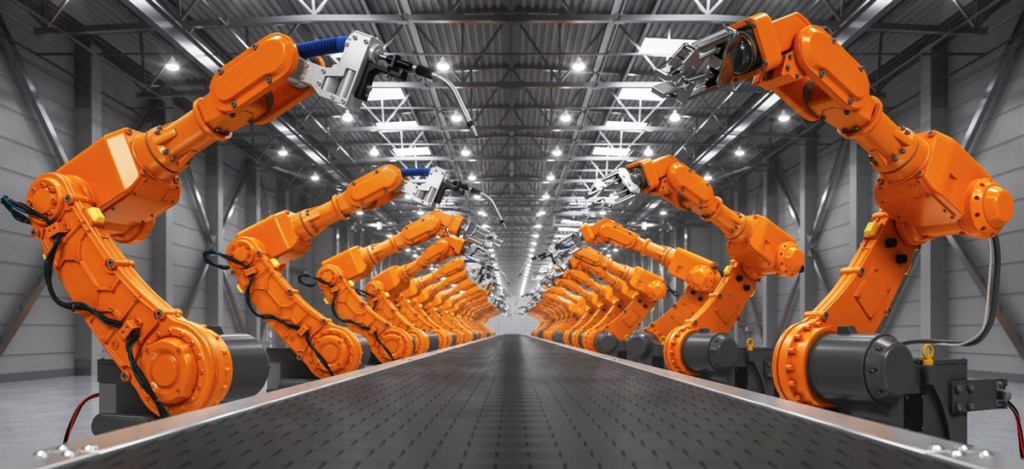
- Field-Oriented Control (FOC): The Foundation of Advanced Control
Field-oriented control, or FOC, is currently one of the most widely used advanced motor control solutions in modern automation. It is extensively applied in modern servo systems and BLDC motor setups.
The strength of FOC lies in its ability to independently control torque and magnetic flux by transforming motor currents into a rotating reference frame. This separation allows AC motors to be controlled with the same level of precision and smoothness traditionally associated with DC motors, while maintaining higher efficiency and durability.
Field-oriented control dominates modern applications because of its ability to deliver smooth torque output while ensuring minimal torque ripple across wide speed ranges. This also includes low-speed operation, where traditional methods typically struggle. By continuously adjusting current components based on real-time feedback within a closed-loop structure, FOC ensures accurate torque delivery and stable motion even under fluctuating external load conditions.
This makes FOC especially suitable for applications that require precise positioning, high repeatability, quiet operation, and consistent performance. Common applications include robotics, CNC machines, electric vehicles, AGVs, and various types of medical equipment.
- Direct Torque Control (DTC) and High-Speed Torque Response
Direct torque control, or DTC, offers an alternative approach to advanced control by regulating torque and flux directly rather than through multiple loops. Instead of relying on complex current controllers, the system selects optimal intervals in inverter switching states, which allows it to achieve the desired torque response and results in extremely fast system reactions.
The direct torque control method outperforms conventional control approaches in applications where rapid torque changes are critical. The fast response time of DTC makes it ideal for high-speed and high-power systems, including industrial drives and traction applications. Although DTC can introduce higher torque ripple compared to FOC, its simple structure and ability to respond quickly to dynamic demands make it an ideal choice in certain environments. It is especially useful where speed and responsiveness take priority over ultra-smooth motion.
- Sensor-Based vs Sensorless Motor Control Strategies
One can broadly divide modern motor control solutions into two categories: sensor-based and sensorless systems. Each of these offers distinctive advantages depending on the application requirements.
Sensor-based solution relies primarily on physical feedback devices such as drivers, encoders, resolvers, or Hall sensors to measure system position and speed. The direct feedback provided by these devices enables high accuracy, especially at low speeds and during precise positioning tasks.
Because of their fast and reliable nature, sensor-based systems are commonly used in servos, robotics, and other applications where motion precision and stability are extremely important. A downside of including sensors is that they increase overall system cost, add wiring complexity, and make the setup more susceptible to environmental factors such as dust, vibration, temperature extremes, and humidity.
On the other hand, sensorless control eliminates the need for mechanical feedback by estimating rotor position and speed using electrical measurements, including voltage and current. This approach reduces hardware cost, improves system robustness, and enhances reliability in harsh operating environments where sensors might fail or degrade over time.
The trade-off between accuracy, cost, and reliability is a key consideration when choosing between these strategies. Sensor-based control delivers superior low-speed performance and positional accuracy, but at a higher cost and complexity. Sensorless setup provides a more economical and durable solution, but may experience reduced accuracy during startup or low-speed operation. Selecting the appropriate strategy depends on performance expectations, operating conditions, and long-term reliability requirements.
- Thermal-Aware and Load-Adaptive Motor Control Solutions
Modern systems are required to operate under varying loads and environmental conditions. This directly affects temperature, efficiency, and long-term reliability. Traditional controllers often ignore temperature changes, which leads to overheating and premature wear. The modern, thermal-aware control is introduced as a solution. It is designed to continuously monitor temperature and adjust performance accordingly, ensuring safe operation while maintaining optimal efficiency.
A thermal-aware system utilises temperature feedback from motor windings, driver electronics, or ambient environment to protect the motor from excessive heat. When the temperature rises, the controller can reduce torque or limit current to prevent overheating. This protective adjustment not only prevents damage but also extends the system’s lifespan by reducing thermal stress.
In high-duty-cycle applications like industrial drives and electric vehicles, thermal-aware control is essential for maintaining continuous operation without failures.
Load-adaptive control is another key feature that improves efficiency and performance. By monitoring the load conditions in real time, the system’s controller can adjust its behaviour to match actual demand.
For example, under light loads, the controller can reduce power consumption as a way to avoid unnecessary energy losses. Under heavy loads, it can increase torque output while also ensuring that the current and temperature will remain below the safe limits. This adaptability improves energy efficiency and reduces mechanical strain, making the system more reliable and cost-effective.
Together, thermal-aware and load-adaptive strategies enable systems to perform optimally across varying operating conditions. They ensure that performance is not sacrificed for safety, and vice versa. By proactively managing temperature and load, these advanced solutions help achieve peak performance, longer component life, and more stable operation in demanding environments.
The Modern Control Architectures
In advanced systems, control architecture refers to how different control loops are structured and connected to achieve precise and stable performance.
Modern drives typically use a multi-loop approach. In such a setup, each loop is responsible for a specific part of the process. This layered structure helps the motor respond accurately to commands while maintaining stability under varying load conditions.
The innermost loop is usually the current loop, which directly controls the motor’s torque output by regulating current flow. Next comes the speed loop, which adjusts torque commands based on the difference between actual and desired speed. The outermost loop is the position loop, which manages the final motion and ensures accurate tracking of movement commands. Together, these loops work in a coordinated manner to deliver smooth motion and strong dynamic response.
However, multi-loop systems also introduce interaction and tuning challenges. If the loops are not properly tuned, the system can become unstable or respond too slowly. For example, a poorly tuned current loop can cause oscillations in the speed loop, while incorrect speed settings can lead to overshoot in position control. To achieve peak performance, engineers must carefully design and tune each loop, ensuring that they work harmoniously without interfering with each other.
Common Control Challenges and How to Overcome Them
Even the most advanced systems face practical challenges in real-world environments. One common issue is oscillations caused by poor tuning or incorrect feedback settings. These oscillations reduce motion smoothness and can damage mechanical components over time. Proper tuning, stable feedback design, and the use of damping techniques help eliminate oscillations and ensure stable performance.
Noise and electromagnetic interference (EMI) are also major challenges in high-speed systems. Electrical noise can distort sensor signals and disrupt accuracy, leading to unpredictable behavior. Effective filtering, shielded wiring, and proper grounding practices help reduce EMI and maintain signal integrity. In critical applications, advanced modulation techniques can further minimize noise and improve system stability.
Parameter drift is another issue that affects long-term performance. System characteristics are bound to change over time due to temperature, wear, or supply voltage variations. Fixed-parameter controllers lose accuracy as these changes occur. Adaptive control and self-tuning algorithms can compensate for parameter drift by continuously updating parameters based on real-time feedback, ensuring consistent performance over the setup’s lifespan.
Performance Metrics for Evaluating Advanced Motor Control
Evaluating advanced solutions requires much more than just speed ratings. Below are some common performance monitoring aspects to look for:
- Torque ripple is a key performance metric that indicates how smooth the torque output is during operation. Lower torque ripple means smoother motion, less vibration, and reduced mechanical stress on the system.
- Response time is another critical metric, especially for dynamic applications. It measures how quickly the motor reacts to command changes such as acceleration or direction shifts. Faster response time results in better tracking accuracy and improved system responsiveness.
- Efficiency under variable loads is also essential for modern systems. A high-performance setup should maintain efficiency across a wide range of operating conditions, not just at a single optimal point. Energy-efficient control reduces power loss, heat generation, and operating costs, making the system more sustainable and reliable in the long run.
Get Advanced Motor Control Solutions At DMKE Today!
The experts at DMKE are capable of formulating advanced control solutions with their years of experience, utilising quality components, followed by rigorous testing of each unit. Our customers can get their hands on any of our ready-made products or consult with us for advanced custom solutions.
Visit our website and contact us to get your hands on impeccable solutions that perform beyond your expectations and deliver performance like none other!

 English
  English (Australia)
  English (Canada)
  Deutsch
  English (UK)
  Français