
The times we are living in are marked by extreme advancement in complex systems and industrial automation, and an immense progress in industrial automation. Rotation motors, in this regard, are no longer just components that run a system; rather, they are the sole performance decision-makers of the system’s performance. A single wrong choice in terms of buying a rotary setup can lead to excessive heat buildup, immense downtimes, inconsistent torque and speed production, lags, as well as premature wear of the entire production system.
Whether you talk about robotic arms that demand micron-level accuracy or industrial machines that consume unnecessary power and build up and produce an excessive amount of heat, most of such failures are traced back to just one carelessness made in rotation motor quality and suitability.
The problem isn’t that there is a lack of the right options of rotary setups when it comes to choosing one for any specific system. It is rather the opposite of it. Today, there are so many rotary setups being offered by different manufacturers that getting the right one and choosing the right one becomes extremely difficult.
While brushless setups promise efficiency, sometimes, they have wild heat dissipation systems. Servo solutions, on the other hand, are made to offer precision, but sometimes fail under real-world changes in terms of load and output requirements. Steppers claim positional accuracy like none other, but sometimes are bound to lose torque at high speeds when made to perform at high speeds. Lastly, we have integrated motors that simplify everything in terms of integration and installation. These, however, sometimes come with rigid control ecosystems that are hard for users to avoid and let go of.
For engineers, system designers, and professionals working in automation industries, selecting a high-quality rotation motor in 2026 means navigating several trade-offs, dealing with multiple control compatibility confusions, and ultimately choosing something that provides long-term reliability without compromising on product performance.
All of this means that when you go about choosing a rotary setup, looking at a few data sets is not enough. Rather, this complex selection needs proper knowledge, experience, and information.
It goes without saying that modern applications now demand immense power, but they that is not all. Rather, they need support for advanced feedback systems, need to be able to handle high loads due to long-term duty cycles, and have the capability to integrate with digital controllers while maintaining efficiency under continuous operation.
Whether you talk about robotic assembly lines, UAV propulsion setups, CNC machines, or precision automation systems, the right motor selection is what directly affects productivity, consumption of energy, and the maintenance cost of the system.
Below, we are going to present you with a simple guide that cuts through the noise and helps you find the best proven high-quality rotation motors in 2026 for your specific cause and use case. We will be categorizing the types along with their performance requirements and real-world applications, and moreover, we will also help you understand the process of making the right choice.
Once you read this guide, you will be able to easily select options depending on industrial usage as well as the nature of the application. By the end, you will not just know which setup is better or more famous in the motorized world; rather, you will know why they perform better, where they perform well, and how. You will also know how to define whether or not they match your specific application with confidence.
Key Rotary Motor Performance Parameters to Consider
As already stated, choosing a good motorized rotary setup in 2026 means looking beyond the basic data and specs. Sure, power ratings are important, but you also need to consider that modern applications have demands like consistent performance under changing loads, seamless integration, and maintaining efficiency during long-duty cycles.
All these performance parameters and all these demands, can only be fulfilled if the setups come with certain performance parameters.
The first of these is torque, which refers to a motor’s ability to start, accelerate, maintain motion, and decelerate without any jitters or stalling. This parameter directly defines whether the system can perform these functions reliably. High-quality rotation motors are capable of delivering stable torque across multiple speeds of operation, not just at peak values that are listed on their data sheets.
In the world of robotics and industrial automation, continuous torque rating is way more important than peak torque rating because this is what reflects your system’s real-world performance under sustained operation.
Speed is another important factor that defines the power fastness of a setup while it maintains usable torque and balance. Many systems perform well when they run at low speeds but tend to lose their ability rapidly as their RPMs increase. Unfortunately, in 2026, applications will not work with such systems.
Modern day CNC machines, robotics, and UAV propulsion setups have advanced to such an extent that only a motor with a balanced torque-speed curve can help ensure smooth acceleration, precise motion, as well as high-speed operation without jitters or control instability.
Efficiency is also important, as it determines the amount of electrical energy that is converted into mechanical output in comparison to the energy lost as heat. High-efficiency setups reduce power consumption, minimize thermal output, and extend component lifespan while ensuring smooth performance. Brushless and servo setups typically outperform brushed alternatives, which makes them ideal for continuous-duty systems and energy-sensitive environments where heat losses are non-negotiable.
Control capability is another parameter to look for. Modern rotary solutions must support responsive and precise control. This means they must be compatible with advanced drivers, should have support for closed-loop operation, and must smoothly respond to command inputs. Servos excel in applications where dynamic torque adjustments are required along with positional control. High-end brushless motors are also great when you pair them with quality drivers and controllers. In such cases, they can deliver great speed, reliability, and stability.
Heat management is another important aspect to consider because, while you might ignore it, heat is one of the major causes of system failure. High-quality rotary setups will have efficient thermal dissipation designs, along with improved venting insulation, proper heat sinks, optimized housing material, and enhanced airflow with conduction paths. This way, they can maintain stable temperatures to offer higher reliability with less downtime and fewer maintenance requirements.
Lastly, it is important to go for setups where feedback and encoder support are taken seriously. Accurate feedback is essential for precision-driven modern applications. Support through encoders enables proper positioning and real-time response to loads in terms of speed and torque. This allows for closed-loop control and quick error correction in industrial automation as well as robotic industries, where setups with high-resolution encoder compatibility are capable of delivering better accuracy, repeatability, and keeping the overall system safe compared to open-loop setups.
| Parameter | Importance | Impact if Ignored |
| Torque | Determines load rotation capability | Motor stalls or underperforms |
| Speed | Defines max RPM under load | Inefficient or unstable motion |
| Efficiency | Energy converted vs lost | Excess heat, high power draw |
| Control | Responsiveness & compatibility | Jerky movement, poor precision |
| Cooling | Heat management | Shortened motor life, reliability issues |
| Feedback/Encoder | Accuracy & closed-loop control | Positional errors, instability |
Top Brushless Rotary Setup Picks for 2026
Below are some of the brushless rotary options that stand out in 2026 for their efficiency, torque stability, and reliability across robotics, automation, and industrial machinery. Each option below is selected based on real-world performance, thermal behavior, and long-term operational value rather than just datasheet claims.
- T-Motor U11 / X Series Brushless Solutions
When You Need A Top Choice for UAVs and Advanced Robotics
The T-Motor U11 and X-Series brushless setups are widely recognized for their exceptional torque output and power efficiency, particularly in UAV propulsion and high-load robotic systems. Their optimized electromagnetic design and effective cooling structure allow consistent performance under continuous operation. These solutions are ideal where power-to-weight ratio, stability, and reliability are critical.
- Planet-Hobby Joker Brushless Range
When You Need Balanced Performance with High-Quality Bearings
Planet-Hobby Joker brushless setups offer a strong balance between efficiency, smooth operation, and durability. Known for their high-quality bearings and refined construction, they perform well in robotics, hobby automation, and light industrial applications. Their consistent torque delivery and reduced vibration make them suitable for systems requiring controlled and stable rotation.
- Norck Robotics Brushless Rotary Setups
When You Need Industrial-Grade Design Focused on Low Heat and Maintenance
Norck Robotics provides brushless rotary setups specifically engineered for industrial automation and manufacturing environments. These solutions prioritize thermal stability, operational accuracy, and reduced maintenance requirements. With designs optimized for continuous duty cycles, Norck brushless motors are well-suited for machinery where uptime, efficiency, and long service life are non-negotiable.
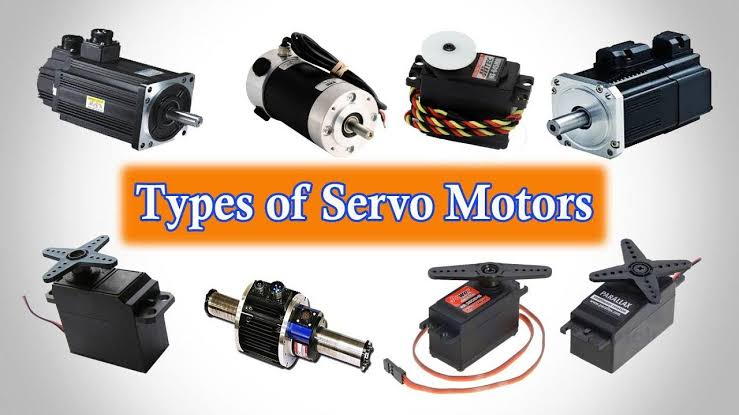
Best Rotary Servos for Precision & Industrial Control
Servos are the go-to choice where torque control, precision, and feedback are critical. Unlike standard brushless or steppers, servo rotary setups operate in closed-loop systems, continuously adjusting performance based on real-time feedback.
Such a functionality allows them to maintain accurate position, speed, and torque even under varying loads, thus making them ideal for robotics, CNC machinery, and high-end automation.
- FANUC αi / βi Series Servo Motors
When You Need The Top Choices For Industrial Productivity
FANUC servos are industry-standard for high-performance automation. Their robust construction, smooth acceleration, and high-resolution feedback systems ensure precise control for robotic arms, assembly lines, and CNC applications.
These systems are engineered for continuous operation with minimal heat generation and long service life, making them a reliable choice for demanding industrial environments.
- Mitsubishi MR-J4 / HG Series Servo Motors
When You’re Looking For Smooth Acceleration and Exceptional Precision
Mitsubishi’s MR-J4 and HG Series provide advanced servo control for industrial machinery. These setups feature integrated digital drives, high-resolution encoders, and optimized thermal management. They excel in precision positioning tasks, high-speed assembly operations, and automated manufacturing systems where accuracy and repeatability are paramount.
- Feetech 24V Brushless Servo w/ Modbus Control
When You Need Cost-Effective Robotics Servos
Feetech’s 24V brushless servos combine affordable pricing with reliable performance for robotics and educational automation projects. Supporting Modbus control, these servos offer easy integration, smooth torque delivery, and moderate precision, making them ideal for small-scale industrial applications or DIY robotics without compromising functionality.
High-Precision Stepper Rotary Motors
For setups where you need controlled step-wise movements along with precise positional control, stepper devices are more than ideal. These solutions are capable of operating in incremental steps, thus allowing precise positioning even in the absence of complex feedback. This makes them a reliable solution for automated industrial setups, robotic fields, and precision equipment.
- Leadshine Integrated Stepper Setups
When You Need High Torque for Automation Projects
Leadshine is a renowned manufacturer of stepper solutions. Their products are well-known for providing strong holding torque and maintaining a stable performance. This makes them well-known in circles of automated machinery, conveyor belts, and industrial robots.
Their offerings have integrated designs that make installation a breeze while also ensuring reliability under continuous operation. Leadshine motors are optimized for repeatable motion and low vibration, which is crucial for tasks demanding precision and consistency.
- MinebeaMitsumi Stepper Series
When You Require Reliability For Precision Robotics
MinebeaMitsumi steppers are widely used in robotics and precision automation due to their accuracy, compact design, and consistent torque output. These setups deliver smooth stepping motion with minimal backlash, making them suitable for laboratory automation, 3D printing, and fine-control robotic applications. Their proven reliability ensures long service life with minimal maintenance.
Application-Based Motor Recommendations
| Application | Recommended Motor Type | Key Reason |
| Robotics & Automation | Servo Motors (FANUC, Mitsubishi) | Precision, feedback, torque control |
| Industrial Manufacturing | Brushless/Norck, Leadshine Steppers | High durability, continuous operation |
| UAV / Drone Propulsion | T-Motor U11/X Series | High thrust-to-weight ratio, efficiency |
| DIY / Hobby | Planet-Hobby Joker, Feetech 24V Servo | Affordable, reliable, easy integration |
How to Choose the Right Motor for Your Project
Choosing an ideal rotation motor requires you to balance your application needs with performance requirements, as well as the environment or system in which the motor will operate. We advise engineers, hobbyists, as well as procurers and automation professionals to have a checklist ready whenever they want to make an informed motor purchase decision.
Firstly, you need to understand your application requirements and demands. See if your project needs high-speed automated precision, long-term operation, better torque output, or a blend of all these. Robotic and CNC systems, for example, will prioritize accuracy with feedback. On the other hand, UAVs will need lightweight and high-torque systems powering them. Industrial machinery requires durable, continuous-duty equipment. Make sure you make a choice that is suitable in the given situation.
Before making any decision, always try to clearly define your mechanical load and required speed profiles. Your choice must deliver enough continuous torque while maintaining performance at operational speeds and should be capable of handling peak loads without losing efficiency.
It is also important to choose a unit that is compatible with the control system and desired precision. Servos are perfect when you want dynamic torque in a closed-loop control, while brushless motors deliver high efficiency at variable speeds, and stepper motors provide simple and repeatable accuracy of positioning.
Lastly, it is important to determine whether or not you need real-time position, speed, or torque monitoring. High-resolution encoders in servo and integrated setups enable closed-loop control, providing real-time feedback and helping prevent overrun and other errors.
Maintenance & Longevity Tips
Regardless of how high-quality, how nicely built, and stable a motorized setup is, it only achieves maximum lifespan if proper care is taken while operating it, as well as when it is stationary. Below are some of the tips that we suggest you follow to ensure a longer lifespan, to maximize the lifespan, as well as the performance capabilities of any setup:
- Ensure proper ventilation through heat sinks and heat dissipation methods to keep the motors cool during long-hour operations.
- Prevent overloading and consistent load changes beyond what is stated as the setup’s rated torque and speed capability.
- Always route wiring so that interference and mechanical stress can be avoided.
- Use proper controllers and drivers that are compatible with the setup and match its specifications to avoid jittery motion, jitters, and lags.
These four factors alone, when considered and taken care of, can ensure that the setup you have selected will exceed your expectations, along with lasting long, and offer precise performance. Following these points also helps minimize downtime and maximize your production capabilities.
Get High-Quality Rotary Setups In 2026 – Connect With DMKE
At DMKE, our experts have been producing advanced and precision-focused motorized rotary solutions every passing day. Whether you want any of our ready-made products or are interested in a custom motor solution made specifically for your particular needs, we can help you.
You can consult with our experts to see which of our quality products can match your needs. All of our offerings and are made available to you only after rigorous testing of each of their components.
Visit our website or connect with us to begin consultations and place orders for your desired DC and AC rotation motors today.

 English
  English (Australia)
  English (Canada)
  Deutsch
  English (UK)
  Français