 跳到内容
跳到内容 
When novices speak about agile robotic motion, they often discuss it in terms of higher torque, better acceleration, and responsive algorithms of control. However, in reality, many robotic systems that look like they are very powerful on paper can immensely struggle with overshoot, vibration, thermal throttling, or sluggish response once you deploy them in real-world systems. The underlying problem is not related to the motor’s inabilities or lack of any kind of capabilities. Rather, it is an issue with the design approach that treats agility as a single performance metric instead of looking at it as a challenge, tightly coupled in the overall system.
Modern robots that include advanced collaborative arms, humanoids, mobile belts and platforms, or high-speed industrial manipulators, all have similar, increasingly dynamic conditions to operate under. All these advanced systems commonly come with rapid direction changes, intermittent peak loads, and precision positioning. Such things demand advanced motors that are capable of delivering high torque density without destabilising the structure. These systems must also avoid overheating under sustained operation or introducing excessive inertia.
Optimising one parameter alone means you will definitely degrade another. For example, ensuring a high torque density leads to an increase in thermal stress. Compact motors increase recoil effects, while an aggressively large size reduction raises structural and cooling limitations.
Such an interconnected nature of robot motor performance is the real explanation behind why many robotic designs fail at achieving agility in a true sense. A setup that is capable of producing exceptional torque cannot dissipate heat in a proper way and will be forced to derate. A lightweight and portable setup is often able to ensure faster acceleration. However, it can introduce vibrations that will then compromise accuracy and repeatability. Similarly, minimising recoil through mechanical damping alone can reduce efficiency or increase system complexity.
Achieving agile motion, therefore, is not about maximising torque, shrinking setup size, or pushing thermal limits independently. It requires a balanced understanding of how torque density, recoil, heat dissipation, and motor geometry interact within a complete robotic system. Below, we are going to explore all these relationships in detail. We will also be outlining the physical trade-offs, common design pitfalls, and integrated motor design strategies that enable fast, stable, and precise robotic motion in real-world applications. So, read on.
Defining Agile Motion in Robotic Motor Systems
In robotics, agility is often mistaken for simply achieving high speed or rapid acceleration. Undoubtedly, these factors do have their role, but they aren’t the ultimate determiners. Agile motion is more properly defined as any setup’s ability to respond quickly, accurately, and repeatably. It also refers to how the setup manages to work under changing commands and external disturbances without sacrificing stability or efficiency.
From a system-level perspective, agility emerges from the combined behaviour of dynamics, control, and hardware. This means it is not a result of any single component acting alone.
In a dynamic sense, agile motion requires low inertia, along with a fast response in terms of torque and controlled energy transfer between the load and the overall setup. The system must accelerate and decelerate quickly while maintaining smooth motion profiles and avoiding jitters.
Excessive inertia, even in the presence of high available torque, slows down the overall response time and increases stopping distances, which directly limits agility. Similarly, rapid torque and sudden torque changes can introduce recoil forces and vibrations that propagate through the structural mechanics, reducing positioning stability and, in turn, positional accuracy.
From a control-related perspective, agile motion heavily relies on how precisely torque can be modulated under real-world operating conditions. High-bandwidth current control, combined with accurate feedback from encoders or drives and well-tuned control loops, enables the system to respond quickly to command changes and handle disturbances. However, control algorithms alone cannot compensate for poor overall physical design. If the setup overheats, saturates rapidly, or excites structural resonances, control authority is inherently reduced.
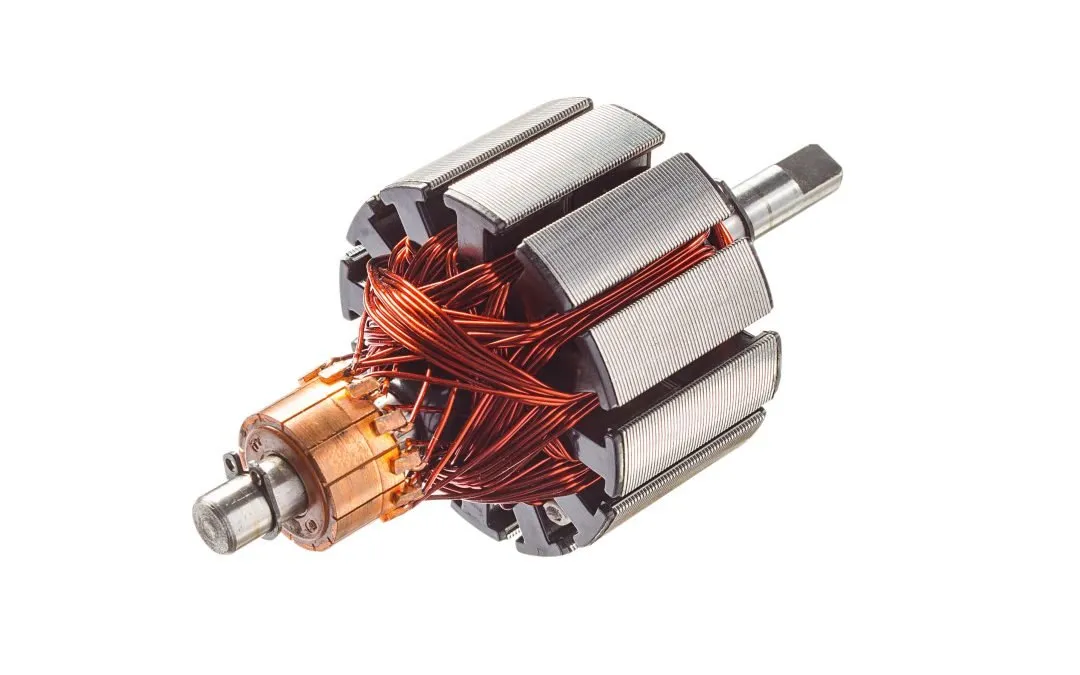
Hardware design forms another critical pillar of agile motion. Torque density, thermal pathways, overall system geometry, and mass distribution collectively influence motor effectiveness and how efficiently electrical input is converted into usable mechanical output. A compact and portable setup with insufficient cooling may deliver short bursts of agility but will fail under continuous dynamic operation.
Conversely, an oversized setup may remain thermally stable but compromise responsiveness due to increased mass and inertia. Therefore, true agile motion is a system-level outcome rather than an individually measurable attribute, reflecting how well motor dynamics, control strategies, and physical design are integrated and balanced to support reliable, stable, fast, and precise motion throughout the robot’s full operating cycle.
Balancing Torque Density for High Power Without Compromising Control
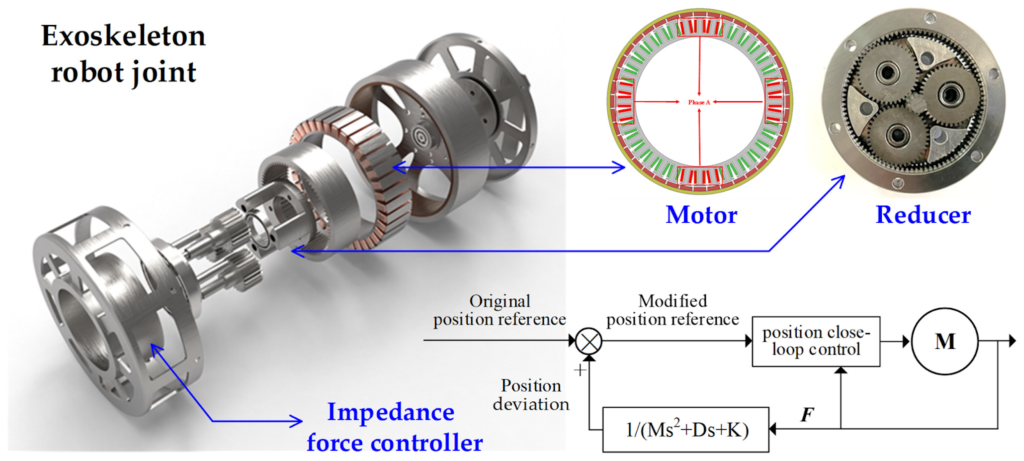
In modern robotic motors and their overall design, high torque density is a critical factor. Therefore, for engineers, achieving high torque density is often the central goal of motor and overall system design. This is particularly true for systems where space and weight constraints are tight. Increasing torque output per unit volume enables compact assemblies, higher payload-to-weight ratios, and improved overall system efficiency.
However, it is important to note that aggressively pursuing torque density without considering its secondary effects on the overall system often leads to reduced controllability, unstable and jittery motion, and several long-term reliability issues. A primary challenge in achieving high torque density is the concentration of electromagnetic forces within a smaller physical envelope.
Stronger magnetic fields and higher current densities increase the system’s ability to generate torque, but at the same time amplify nonlinear effects such as magnetic saturation and torque ripple. These effects directly influence motion smoothness, especially at low speeds or during fine positioning tasks. In precision robotics, even small torque irregularities can escalate into oscillations or limit-cycle behaviour, which undermines overall control accuracy.
High torque density also places increased mechanical stress on the structure and transmission interfaces of a setup. Rapid torque changes introduce reaction forces that interact with the robot’s mechanical compliance, increasing the likelihood of vibration and recoil. If structural stiffness and mounting design are not properly matched to the applied loads, the result is degraded repeatability and increased wear on bearings and couplings.
From a control perspective, setups with high torque density demand faster and more precise current regulation. As electrical time constants shrink and torque response becomes more aggressive, the margin for control error narrows. Inadequate current-sensing resolution, encoder latency, or insufficient control bandwidth can cause overshoot and destabilise the system, particularly during dynamic manoeuvres or contact-rich tasks. Therefore, effective torque-density optimisation requires engineers to combine intelligent hardware design with robust control strategies.
On the hardware side, techniques such as optimised magnetic circuit design, improved material selection, and distributed windings can increase usable torque while limiting ripple and saturation. Structurally, reinforcing housings and improving load paths reduce deformation during peak-torque events. From a control standpoint, feed-forward torque compensation, high-bandwidth current loops, and advanced filtering strategies help maintain predictable and smooth motion.
Rather than maximising torque density in isolation, agile robotic systems treat torque density as a variable within a broader performance envelope, ensuring that increased power capability enhances, rather than compromises, motion quality and controllability.
Controlling Recoil and Vibrations for Stable and Precise Motion
In the design and manufacturing of robot motors, recoil and vibration are often treated as secondary considerations and not given sufficient attention. However, they play a major role in determining the overall motion stability and precision of the system.
In agile robotic systems, where setups frequently undergo rapid acceleration, deceleration, and directional changes, unmanaged reaction forces can significantly degrade overall performance, even when torque and control capabilities appear seamless. Recoil in robot motors primarily originates from Newtonian reaction forces generated during rapid torque transients. When a motor applies torque to accelerate a load, an equal and opposite reaction acts on the system housing and surrounding structure.
In lightweight or compact robotic joints, these reaction forces can excite structural resonances, leading to oscillations that persist beyond the commanded motion. When gear trains are present, they further amplify recoil through backlash and compliance, particularly under bidirectional loading.
Vibrations can also arise from electromagnetic sources within the setup itself. Cogging effects, torque ripple, and current harmonics introduce periodic disturbances that propagate through the drivetrain. While these effects may be negligible during low-speed or steady-state operation, they become problematic during high-speed dynamic tasks such as pick-and-place operations, force-controlled manipulation, or legged locomotion.
If left unaddressed, vibration reduces positional accuracy, accelerates mechanical wear, leads to increased downtime, and limits achievable control bandwidth. The impact of recoil and vibration is most evident in tasks requiring high repeatability and fine force control. Oscillatory behaviour introduces measurement noise into feedback sensors, complicating controller tuning and increasing settling time after motion events.
In collaborative robotic systems, excessive vibration can also compromise safety and reduce perceived smoothness during human–robot interaction. If you want to mitigate all forms of recoil and vibration issues, you are required to ensure a proper combination of mechanical and control-level solutions. Mechanically, increasing structural stiffness alongwith optimising mass distribution and minimising compliance at mounting interfaces is the only sure way to suppress resonance.
Direct-drive motor architectures are capable of eliminating gearbox backlash. In this way, they can reduce all major sources of dynamic disturbance. The use of damped couplings or tuned passive dampers can also attenuate residual vibrations without even excessively complicating the system.
At the control level, strategies such as torque smoothing, notch filtering, and active vibration suppression are very important. These allow the system to counteract disturbances in real time. High-resolution feedback and fast control loops are also important to detect and respond to oscillatory behaviour before it escalates.
When you integrate them effectively, these approaches are capable of transforming recoil and vibration from limiting factors into manageable design variables. These can then enable stable, precise, and agile robotic motion.
Managing Heat Dissipation to Sustain Peak Motor Performance
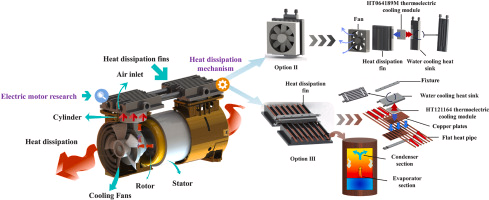
Heat management is an extremely important and yet often underestimated factor when we speak of achieving agile motion in robot motors. Fast speed, along with high-torque operations are capable of generating significant heat within the housing. This heat is especially produced in the windings, magnets, and other metallic, magnetic, and electronic components. If not properly taken care of and dissipated fully, this generated heat reduces overall operational efficiency.
Heat also speeds up the overall material degradation and forcefully derates torque. All these factors ultimately lead to compromised agility and a lack of long-term reliability.
The primary reason behind heat buildup is the loss of resistance in windings, also referred to by experts as the I²R losses. It is also caused by eddy currents in conductive components and hysteresis losses in magnetic materials. These losses are capable of scaling up with torque output, current density, and operating speed. This means that high torque density setups are more common and prone to thermal challenges.
Where agile motion is a primary concern, mostly the housings are very compact and portable. This is an added disadvantage since such assemblies are capable of exacerbating the heating issues. This is because there is limited available surface area for passive cooling. The smaller area also restricts internal airflow.
There are many consequences of inadequate heat dissipation. Increasing temperatures can lead to insulation breakdown, magnet demagnetisation, and lubricant degradation in bearings. Performance-wise, heat accumulation increases electrical resistance, reducing torque output and slowing acceleration. In extreme cases, thermal stress triggers safety shutdowns, effectively halting agile operations and reducing system reliability.
Effective thermal management requires both design and control strategies. From a hardware perspective, improving heat transfer paths is the key to achieving thermal stability. Some common techniques include the use of high-conductivity materials, integrating liquid or air-cooling channels, and optimising motor geometry for surface area.
Another proven choice is employing thermal interface materials to bridge contact surfaces. Frameless or hollow-shaft designs can also enhance heat dissipation with the help of better internal airflow and reduce thermal hotspots.
Control strategies complement hardware solutions by preventing excessive heat generation in the first place. Current limiting, torque scheduling, and duty-cycle management ensure motors operate within safe thermal margins. Advanced thermal sensing and predictive algorithms allow real-time adjustments to torque commands, balancing performance and temperature constraints without compromising agility.
By addressing heat dissipation in an active way, engineers can ensure that assemblies can maintain peak torque and responsiveness during dynamic, high-load operations. Effective thermal design transforms heat from a limiting factor into a predictable variable. This is ultimately what allows robot motors to sustain high-speed, precise, and reliable motion over extended operational periods.
Optimising Motor Size and Weight for Fast and Responsive Motion
The assembly’s size and weight are the major defining factors for the overall agility in all robotic motors. Large-sized assemblies, although capable of delivering higher torque and better thermal performance, tend to add more to the overall system’s inertia. The same factors also lead to slower acceleration, thereby complicating the overall dynamic control.
On the contrary, lightweight and portable assemblies are capable of enhancing responsiveness. However, in such setups, it is common to come across challenges like increased torque density. In such structures, achieving proper heat management and structural stability. Achieving the right balance is, hence, non-negotiable for fast, precise, and repeatable motion.
In robotic motion, inertia directly affects acceleration and deceleration. A heavyweight setup increases the effective rotational inertia of the joint, requiring more torque to achieve the same angular acceleration. This not only reduces responsiveness but also magnifies recoil forces and vibrations during rapid manoeuvres. Lightweight motors, on the other hand, reduce these effects, allowing quicker directional changes and improved energy efficiency.
Size reduction, however, has its own trade-offs. Smaller motors limit space for windings, magnets, and cooling channels. This can constrain torque output and exacerbate thermal stress.
Designers must carefully select materials with high strength-to-weight ratios, such as aluminium alloys, carbon-fibre composites, or advanced steels, to maintain rigidity without adding unnecessary mass.
Integrated design strategies further optimise motor weight and volume. Frameless motors, for example, eliminate excess housing while allowing direct mounting to robotic joints, minimising added mass. Hollow-shaft or axial-flux motor architectures reduce inertia without sacrificing torque density.
Common Design Mistakes That Reduce Robotic Agility
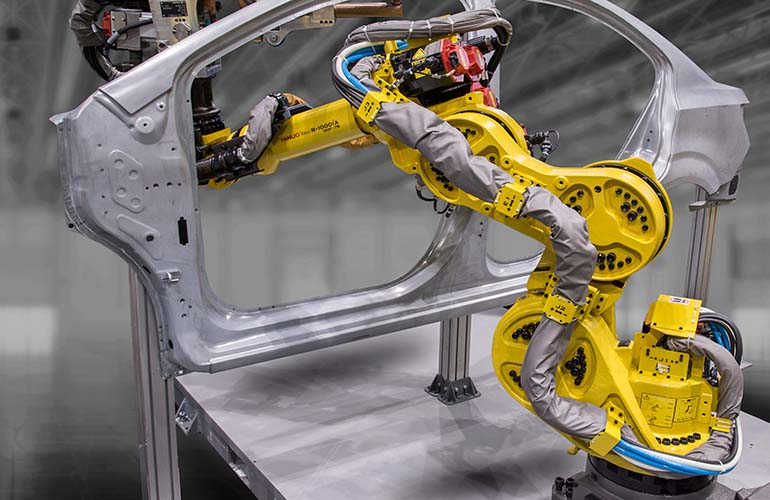
Many times, even the most experienced engineers, technicians, and industry owners can make choices that unintentionally limit the overall agility of robot motors. If you don’t want to be one of those unlucky individuals, below are some design mistakes you want to steer clear of:
- In any case, avoid over-optimising torque as much as you can.
- Don’t focus solely on maximum torque. Such a mistake can increase heat, recoil, and vibrations, which then reduces the control precision.
- Ignoring thermal pathways is another dire mistake. Unless there is proper cooling or heat management, the agile setup will overheat quickly, forcing derating and interrupting smooth motion.
- Avoiding poor size-to-load matching can compromise acceleration and responsiveness. This is because a setup that is too large increases overall inertia. On the contrary, a setup that is too small struggles to deliver sufficient torque or manage thermal loads.
Get Balanced Agile Robotic Solutions – Connect With DMKE
At DMKE, our experts are fully aware of deploying strategies and opting for design solutions that offer a balanced agility with no energy or performance losses. For decades, we have been manufacturing high-quality solutions under rigorous standards to be used in the robotics industry.
You can choose any of our ready-made solutions or consult us to build a custom motor setup for you. Visit our website and connect with us today to begin your agile setup’s sourcing!

 English
  English (Australia)
  English (Canada)
  Deutsch
  English (UK)
  Français