

In modern industrial operations, selecting the right electric motor is one of the most critical decisions for ensuring continuous productivity. Motors are the backbone of equipment ranging from conveyors and pumps to compressors and precision automation systems. Choosing the wrong motor can lead to unexpected downtime, frequent maintenance, energy inefficiency, and even damage to other machinery. Industrial buyers often face challenges such as balancing initial cost versus long-term reliability, evaluating efficiency under varying load conditions, and ensuring compatibility with existing systems.
Understanding the different types of motors is essential for engineers and procurement teams aiming to make informed decisions. Each motor type offers unique advantages and limitations, and its suitability depends on application-specific requirements such as speed, torque, duty cycle, and environmental conditions. Real-world examples demonstrate that a misaligned motor choice can increase operational costs by up to 20% in energy consumption and maintenance expenses.
This article provides a comprehensive guide to the five main motor types, including AC induction, brushless DC, brushed DC, synchronous, and stepper motors. We will also cover less common variants and specialized motors, highlighting where they offer a competitive advantage. Through practical buyer guidance, performance comparisons, and real industrial examples, readers will gain the knowledge needed to select the optimal motor for their operations.
Additionally, we will address frequently asked questions, such as the most common motor types, the role of multi-phase motors, and considerations for specialized applications. By the end of this guide, you will be equipped with actionable insights to enhance operational efficiency and leverage DMKE’s engineering expertise for reliable, high-performance motor solutions.
Understanding Electric Motors for Industrial Applications

Choosing the right motor type is one of the most critical decisions for any industrial operation. Motors are the backbone of equipment ranging from conveyors, pumps, and compressors to robotics and automated systems. Selecting an inappropriate motor can slow production, increase energy use, lead to unexpected downtime, and even damage connected machinery. Buyers often discover that a careful evaluation of torque, speed, and load requirements at the planning stage prevents costly mistakes later in the lifecycle.
Motors operate in varied industrial environments, many of which are harsh. Dust, humidity, heat, or chemical exposure can significantly affect motor performance and lifespan. For instance, a motor used in a cement factory must withstand abrasive dust, while one in a food processing plant must handle moisture and regular washdowns. Considering these environmental factors, along with proper duty cycle assessment, ensures that motors are robust enough to handle continuous operation and occasional overloads without failure.
Energy efficiency is another key operational consideration. Industrial motors consume a substantial portion of electricity in manufacturing facilities, sometimes accounting for 70% of a plant’s energy load. Choosing high-efficiency motors not only reduces operational costs but also minimizes heat generation, extends equipment life, and supports sustainability initiatives. For example, replacing older induction motors with modern high-efficiency BLDC or synchronous motors can reduce energy bills and maintenance frequency significantly.
Maintenance and reliability are equally important for long-term operational success. Motors designed for low-maintenance operation reduce unplanned downtime and extend service intervals. Brushless and synchronous motors, for example, require fewer inspections than brushed alternatives and are ideal for high-demand industrial setups. Evaluating a manufacturer’s testing procedures, quality certifications, and support services is essential, as these factors directly influence motor longevity and reliability.
Finally, understanding the interaction between motor type and application helps buyers select the most suitable solution. AC induction motors are preferred for heavy-duty pumps and fans, BLDC motors excel in automation and robotics, and stepper motors offer precise positioning for CNC machines. By matching motor characteristics to operational requirements, buyers can maximize efficiency, reduce energy consumption, and ensure reliable performance across the production line.
The 5 Main Types of Electric Motors
Industrial operations rely heavily on the right motor selection. Each motor type comes with unique benefits, limitations, and applications. Understanding these options helps buyers make informed decisions that improve efficiency, reduce downtime, and lower maintenance costs. Below, we explore the five main motor types commonly used in industrial environments.
1. AC Induction Motors
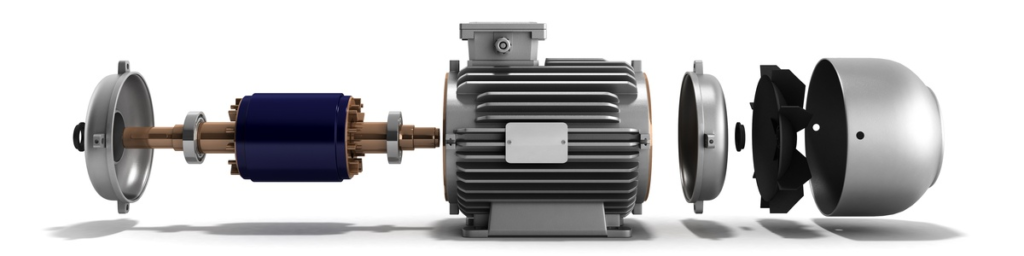
AC induction motors are among the most widely used motors in industry due to their reliability and simplicity. They operate by creating a rotating magnetic field in the stator, which induces current in the rotor to generate motion.
These motors are ideal for applications like pumps, fans, and conveyor systems, where continuous operation is required. They can handle high loads and are well-suited for environments where durability is more important than high-precision control.
Advantages include robust construction, low maintenance requirements, and long service life. However, they may not be the best choice for variable-speed applications unless paired with a variable frequency drive (VFD).
Buyers should consider AC induction motors when they need a durable, cost-effective solution for heavy-duty, continuous operations. They are particularly suitable for facilities where downtime is costly and simple maintenance is preferred.
2. Brushless DC (BLDC) Motors
Brushless DC motors are known for their high efficiency and precision. Unlike brushed motors, they do not rely on mechanical brushes, which reduces wear and maintenance requirements.
BLDC motors are widely used in automation, robotics, drones, and conveyor systems where precise speed control and energy efficiency are critical. For example, automated packaging lines often rely on BLDC motors for smooth, repeatable motion.
These motors offer low noise, minimal maintenance, and excellent torque-to-size ratios. However, their upfront cost is higher, and they require electronic controllers for operation.
Industrial buyers should select BLDC motors when precision and efficiency are top priorities, especially in applications that demand reliable, high-speed performance with minimal downtime.
3. Brushed DC Motors
Brushed DC motors are valued for their simplicity and low cost. They operate using brushes and a commutator to deliver electrical current to the rotor, creating motion.
They are commonly used in small machines, hand tools, and low-power industrial devices. The design allows for easy speed control and simple operation without complex electronics.
Maintenance is higher due to brush wear, and they are less efficient than BLDC motors. However, they remain a practical choice for applications where cost constraints outweigh efficiency, or where high precision is not required.
Buyers should consider brushed DC motors for small-scale operations or machinery where ease of use and affordability are more important than long-term efficiency.
4. Synchronous Motors

Synchronous motors operate by keeping the rotor synchronized with the AC supply, allowing precise speed control under constant loads. This makes them ideal for applications like compressors, pumps, and robotics where consistent speed is critical.
They offer high efficiency and excellent power factor control, which can reduce energy costs in large-scale industrial operations. However, they require careful setup and sometimes external excitation systems to maintain synchronization.
Industrial buyers should evaluate synchronous motors when stable speed and efficiency are required, particularly in continuous production lines where power factor improvement can have significant cost benefits.
5. Stepper Motors
Stepper motors are designed for precise motion control, moving in fixed increments, which makes them ideal for CNC machines, 3D printers, and automated systems. Each step corresponds to a specific angle of rotation, providing repeatable accuracy.
They are commonly used in applications where position control is more important than continuous rotation, such as robotic arms or pick-and-place machinery. Stepper motors offer high reliability and low maintenance, but they are less efficient at high speeds and may generate heat under heavy loads.
Buyers should select stepper motors when accuracy and repeatability are the primary requirements, balancing speed and torque for optimal performance in automated processes.
| Motor Type | Typical Use | Efficiency | Maintenance | Key Advantage |
| AC Induction | Pumps, fans | Medium-High | Low | Robust & simple |
| BLDC | Robotics, conveyors | High | Very Low | High precision & efficiency |
| Brushed DC | Small machines | Medium | High | Low cost & simple |
| Synchronous | Pumps, compressors | High | Medium | Stable speed & power factor |
| Stepper | CNC, robotics | Medium | Medium | Precise positioning |
Other Types of Electric Motors
Beyond the five main motor types, several less common motors serve specialized industrial applications. Universal motors, for example, can operate on both AC and DC power, making them ideal for small appliances, portable tools, and certain industrial devices where flexibility is required. Their compact size and high-speed operation allow for space-efficient solutions in confined equipment designs.
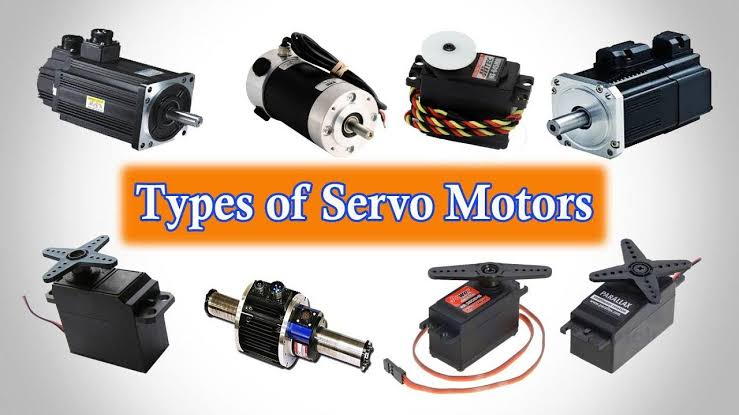
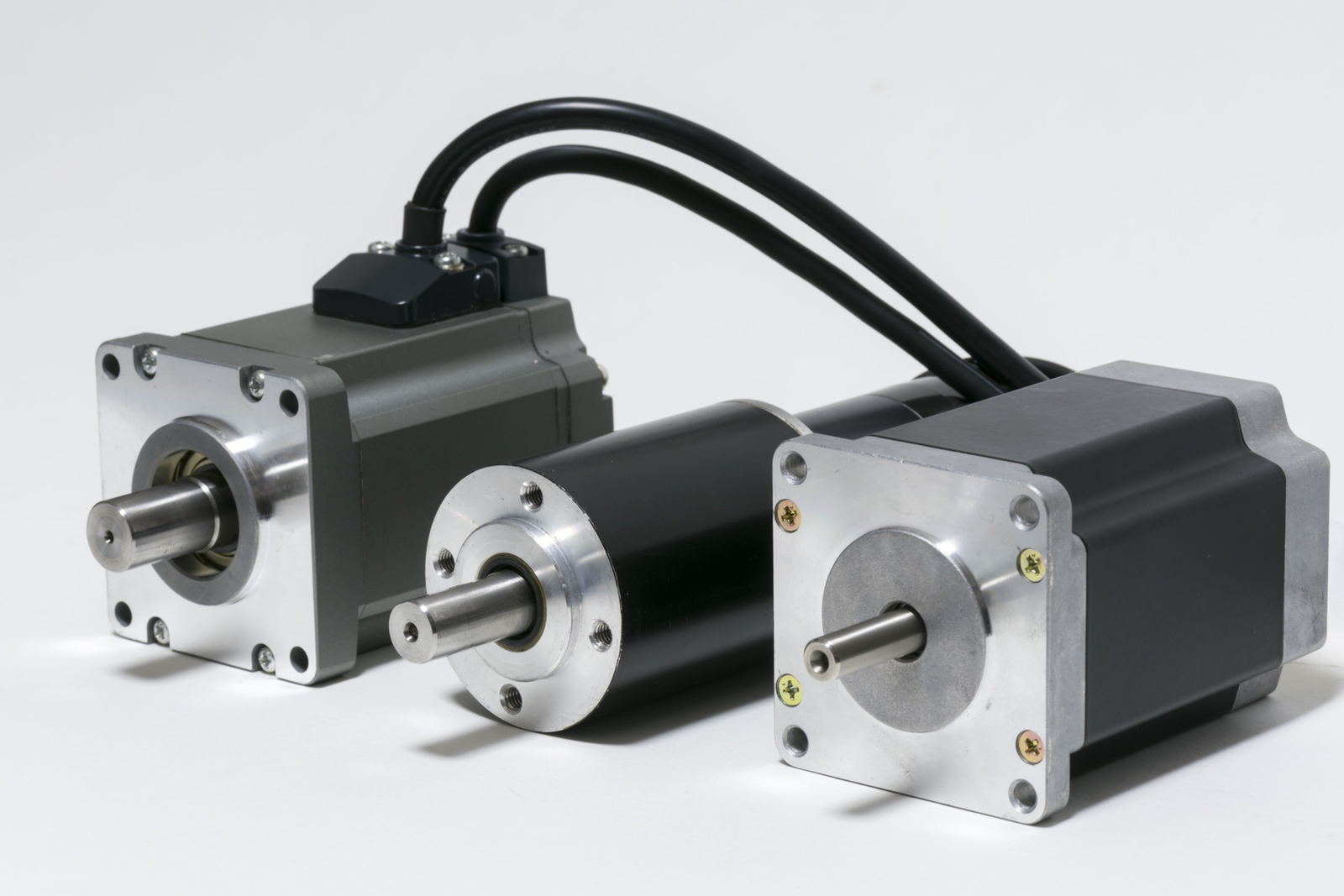
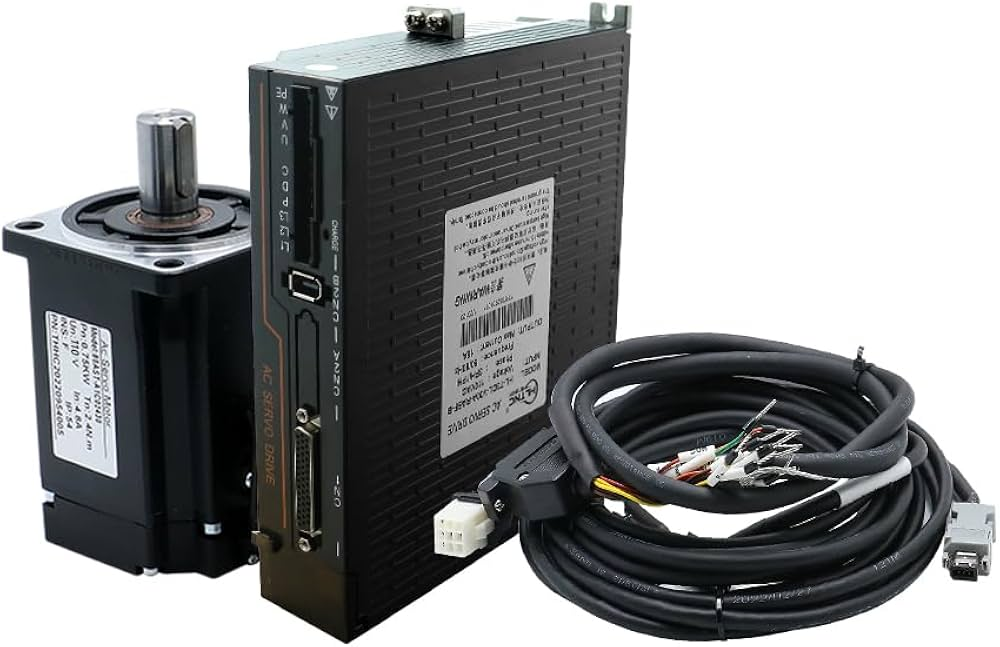
Servo motors are widely used in robotics and automation systems, where precise motion control is critical. These motors are paired with sensors to provide real-time feedback, ensuring accuracy in positioning and speed. In manufacturing, servo motors drive robotic arms, CNC machinery, and pick-and-place systems where exact movement is essential.
Reluctance motors, often overlooked, are designed for high-speed torque applications in industrial automation. They provide efficient performance for processes requiring fast, repeated motion, such as packaging machines or automated assembly lines. These motors are robust, simple, and cost-effective for repetitive tasks.
Other single-phase variants are used in small pumps, fans, and domestic machines where three-phase power is unavailable. While they are less common in heavy industry, they remain relevant in niche applications where power source limitations exist.
| Motor | Application | Unique Feature |
| Universal | Small appliances | Works on AC/DC |
| Servo | Robotics | Feedback-controlled motion |
| Reluctance | Industrial automation | High-speed torque |
Most Common Electric Motor in Industry

The AC induction motor dominates industrial applications due to its combination of reliability, efficiency, and cost-effectiveness. These motors are simple in design, rugged, and capable of handling continuous loads with minimal maintenance, making them a trusted choice for facilities across manufacturing, processing, and automation sectors.
AC induction motors are prevalent in pumps, fans, conveyors, and compressors, which represent the backbone of most industrial operations. Their widespread use also ensures easy availability of spare parts, service expertise, and compatibility with standard control systems, further reducing downtime and operational risk.
While AC induction motors meet most industrial requirements, certain scenarios benefit from alternatives. High-precision applications, robotics, or automated assembly lines may require BLDC or servo motors for improved efficiency, repeatability, and motion control. Similarly, stepper or synchronous motors may be preferred where exact positioning or stable speed under varying loads is critical.
By understanding where AC induction motors excel and where specialized alternatives offer advantages, buyers can make informed motor selections that balance efficiency, reliability, and operational performance. Proper evaluation ensures minimal downtime, reduced maintenance costs, and optimized energy use.
Are There 5-Phase Motors?
Multi-phase motors, including 5-phase motors, are a specialized class of electric motors designed for high-performance industrial applications. Unlike standard three-phase motors, five-phase systems provide smoother torque, lower vibration, and improved reliability in high-speed or precision equipment. These motors are commonly used in robotics, CNC machinery, and aerospace-grade industrial automation, where continuous, consistent torque is critical.
The key advantage of a 5-phase motor lies in its ability to deliver smoother rotation with reduced torque ripple, improving precision and reducing mechanical wear. This makes them ideal for operations that require highly controlled movement, such as automated assembly lines or advanced packaging systems.
Although less common than three-phase motors, 5-phase motors are gaining attention for industries seeking reliability under high loads and minimal downtime. They can also improve energy efficiency in certain high-speed applications, although their initial cost is higher and they require compatible controllers.
Industrial buyers should consider 5-phase motors when precision, smooth torque, and minimal vibration are priorities. For example, in robotics arms or printing machinery, the added control and efficiency can reduce maintenance frequency and extend equipment lifespan. While not necessary for general-purpose pumps or fans, understanding the capabilities of multi-phase motors helps buyers match motor type to the operational requirement effectively.
Practical Buyer Guidance & Selection Tips

Selecting the right motor for industry is a critical step that directly impacts operational efficiency, equipment lifespan, and energy costs. Many industrial buyers underestimate the importance of proper motor selection, focusing solely on price or availability. In reality, making an informed choice requires considering multiple factors: load type, speed requirements, environmental conditions, duty cycles, maintenance expectations, and long-term efficiency.
Start with load and speed evaluation. Every motor has a rated torque and speed, and matching these to your equipment’s needs is essential. Oversized motors can lead to wasted energy, unnecessary heat, and higher upfront costs, while undersized motors risk overheating and premature failure. For example, a conveyor system carrying variable loads requires a motor capable of sustaining peak torque without losing efficiency. By analyzing the expected load variations and operational cycles, buyers can identify the most appropriate motor class, whether it is AC induction for continuous heavy-duty work or BLDC for precision-controlled automation.
Environmental considerations are equally important. Motors may be exposed to dust, moisture, temperature extremes, or corrosive chemicals, depending on the facility. Choosing a motor rated for harsh industrial conditions ensures durability and minimizes downtime. For instance, a food processing plant or outdoor conveyor line requires motors with proper sealing and insulation to handle moisture and cleaning procedures, while a high-temperature steel processing line demands motors with thermal protection and enhanced cooling.
Energy efficiency is another critical factor. Motors often consume a substantial portion of facility electricity, and high-efficiency motors can significantly reduce operational costs over time. Buyers should evaluate efficiency curves, consider VFD compatibility, and look at lifetime energy savings rather than just initial cost. A BLDC or synchronous motor, for example, may have higher upfront costs but can save tens of thousands annually in energy for continuous operation.
Maintenance requirements must also guide decision-making. Brushless and synchronous motors typically require minimal attention, while brushed motors demand regular inspection and replacement of worn parts. Balancing maintenance and cost ensures that operational schedules remain uninterrupted and prevent unexpected downtime. Buyers should also consider service availability, ease of replacement, and the quality of spare parts.
Finally, industrial buyers should leverage manufacturer support and expertise. Working with a company like DMKE provides access to customized motor solutions, testing services, and engineering guidance. Early consultation allows buyers to simulate performance, verify compatibility with existing systems, and ensure the selected motor meets operational goals. Whether the goal is higher precision, improved energy efficiency, or long-term reliability, integrating expert advice into the selection process reduces risk and maximizes ROI.
By considering these practical factors, load, environment, efficiency, maintenance, and manufacturer support, industrial buyers can confidently select motors that enhance performance, reduce costs, and ensure reliable, long-term operation.

Choosing the Right Motor for Your Industrial Needs – Connect With DMKE
Selecting the right motor solution is a critical step in ensuring industrial efficiency and reliability. Proper evaluation of load, speed, and environmental conditions helps buyers avoid downtime, reduce energy consumption, and extend equipment lifespan.
DMKE motors are designed for precision and durability, rigorously tested under real-world conditions to perform consistently in demanding environments. This engineering approach gives buyers confidence in long-term reliability while optimizing operational performance.
Customization and expert support set DMKE apart. Buyers benefit from tailored motor solutions, guidance on sizing, and integration assistance, ensuring the motor meets unique operational requirements, whether for automation, heavy-duty pumps, or robotics.
Engaging DMKE’s team for consultation and evaluation allows industrial operators to make informed decisions that balance efficiency, performance, and cost. Visit our website or contact us today to explore solutions that maximize productivity, minimize maintenance, and ensure optimal motor performance.

 English
  English (Australia)
  English (Canada)
  Deutsch
  English (UK)
  Français