
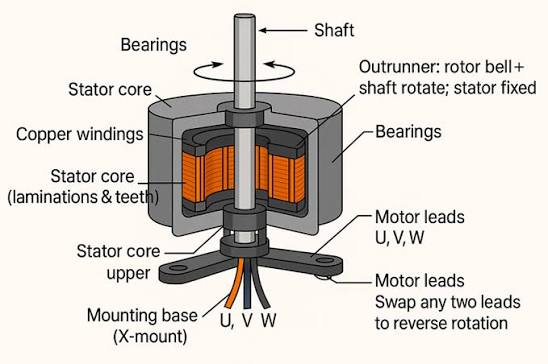
Affordable automation and robotics development have created a growing demand for compact, efficient, and customizable motor solutions. Many engineers, makers, and developers are now exploring alternative ways to achieve precise motion control without relying only on expensive servo systems. One popular approach is to adapt a drone brushless motor for low-cost DIY servo projects.
Originally designed for high-speed drone propulsion, these motors offer impressive power density, lightweight construction, and efficient performance. However, converting them into servo-style systems requires more than simply connecting a controller. Factors such as feedback integration, torque adjustment, and control tuning are essential for achieving accurate motion control in practical applications.
A drone brushless motor provides several advantages for experimental projects, including availability, compact size, and flexibility for customisation. With the right controller setup and mechanical adjustments, these motors can be used in robotics, camera systems, prototypes, and small automation projects where traditional servo motors may not be the most practical option.
This guide explains how drone brushless motors can be adapted for DIY servo projects, including required modifications, important selection factors, common challenges, and real-world applications. It also helps developers understand when a converted brushless motor is suitable and when a dedicated servo solution may be a better choice for reliable project performance.
Understanding Drone Brushless Motors
A drone brushless motor is a compact electric motor designed to deliver high-speed rotation, fast response, and efficient power conversion. Unlike brushed motors that rely on mechanical brushes for operation, brushless designs use electronic control systems to manage current flow and create smooth motor operation with reduced wear.
Most drone motors are BLDC motors, meaning they use permanent magnets and electronically controlled switching to generate movement. This design eliminates brush friction, allowing the motor to achieve higher efficiency, better durability, and improved performance in compact applications.
One of the biggest advantages of a drone brushless motor is its excellent power-to-weight ratio. These motors are engineered to produce strong output while remaining lightweight, making them ideal for drones where compact power delivery is a major requirement.
However, drone motors are different from traditional servo motors. They are mainly designed for continuous high-speed rotation rather than precise position control. A standard drone motor does not automatically know its position or angle without additional feedback components.
To use these motors in servo-style applications, developers need to add control elements such as sensors, suitable controllers, and tuning adjustments. With proper modification, a drone brushless motor can provide flexible motion control for a wide range of DIY and prototype systems.
Why Use a Drone Brushless Motor for DIY Servo Projects?
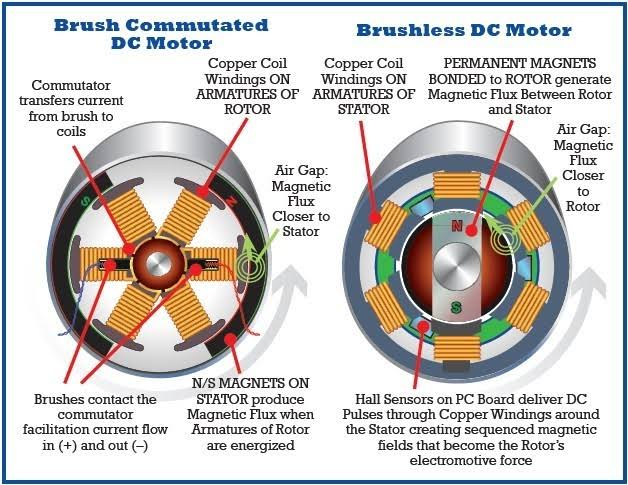
A drone brushless motor has become a popular choice for DIY servo projects because it provides a combination of affordability, efficiency, and customisation flexibility. For developers working on prototypes or experimental systems, these motors offer practical motion solutions without the higher cost of specialised servo hardware.
One of the biggest advantages is cost efficiency. Drone motors are widely available due to the rapid growth of the UAV industry, making them easier to source compared to many precision motion components. This allows engineers and makers to test new ideas while keeping development costs manageable.
Another benefit is their compact size and lightweight structure. Since drone applications require maximum output with minimum weight, these motors are designed with high power density that works well for small robotics, portable devices, and space-limited mechanical systems.
Efficiency is also an important reason for adapting these motors. The brushless design reduces friction losses and improves energy conversion, helping projects achieve longer operation times and better performance compared to traditional brushed motor alternatives.
A drone brushless motor also provides excellent customisation potential. Developers can combine different controllers, sensors, and mechanical designs to create a system that matches specific requirements. This flexibility supports custom servo development for applications where standard solutions may not provide the required size, speed, or control characteristics.
How to Convert a Drone Brushless Motor Into a Servo System
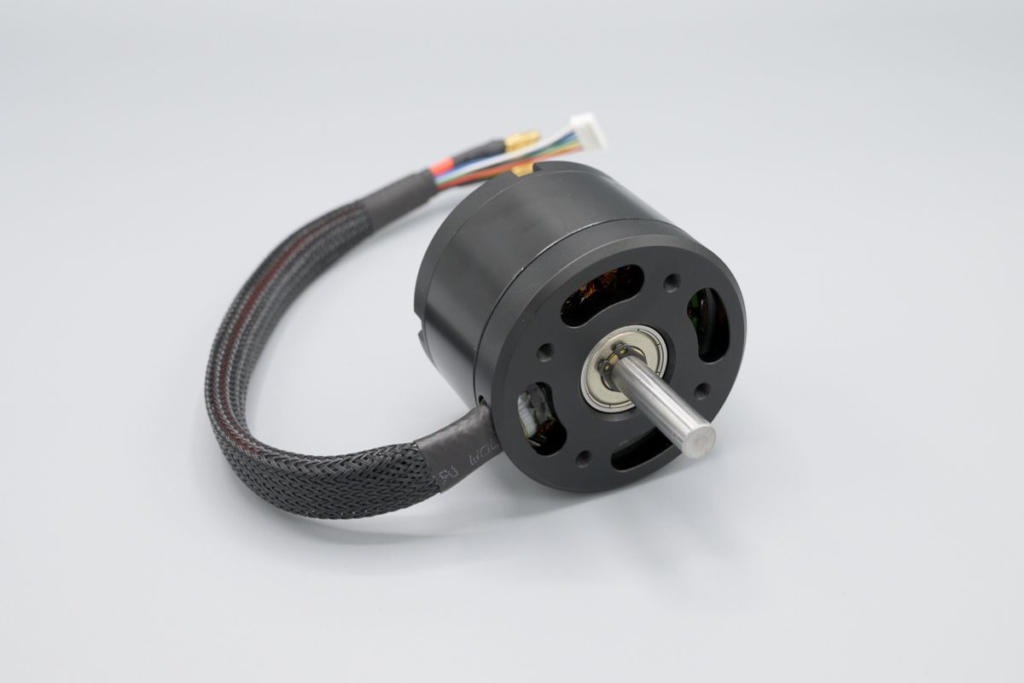
Converting a drone brushless motor into a servo system requires additional components that allow the motor to control position rather than only rotate continuously. The goal is to create a system where the motor, controller, and feedback device work together to achieve precise movement control for different applications.
Adding Position Feedback
A standard drone motor does not include built-in position awareness like a traditional servo motor. To achieve controlled movement, a feedback device must be added so the system can detect the exact motor position.
Common options include magnetic encoders, optical encoders, or other position sensors that provide continuous feedback to the controller. This allows the system to correct movement errors and maintain accurate position tracking during operation.
Choosing the Right Controller
The controller is one of the most important components when adapting a drone brushless motor for servo applications. Standard drone speed controllers are designed mainly for controlling rotation speed, not precise positioning.
For servo style performance, developers need controllers that support closed-loop operation, sensor feedback, and advanced tuning options. The right controller enables stable motor response and improves overall motion accuracy.
Adjusting Speed and Torque Output
Drone motors are usually optimised for high-speed operation, while servo applications often require controlled movement and stronger torque at lower speeds. Because of this difference, adjustments are usually needed.
Methods such as gear reduction, current tuning, and control parameter optimisation can help adapt the motor’s performance characteristics. These modifications improve low-speed performance and make the system more suitable for practical servo projects.
Important Factors Before Adapting Drone Brushless Motors
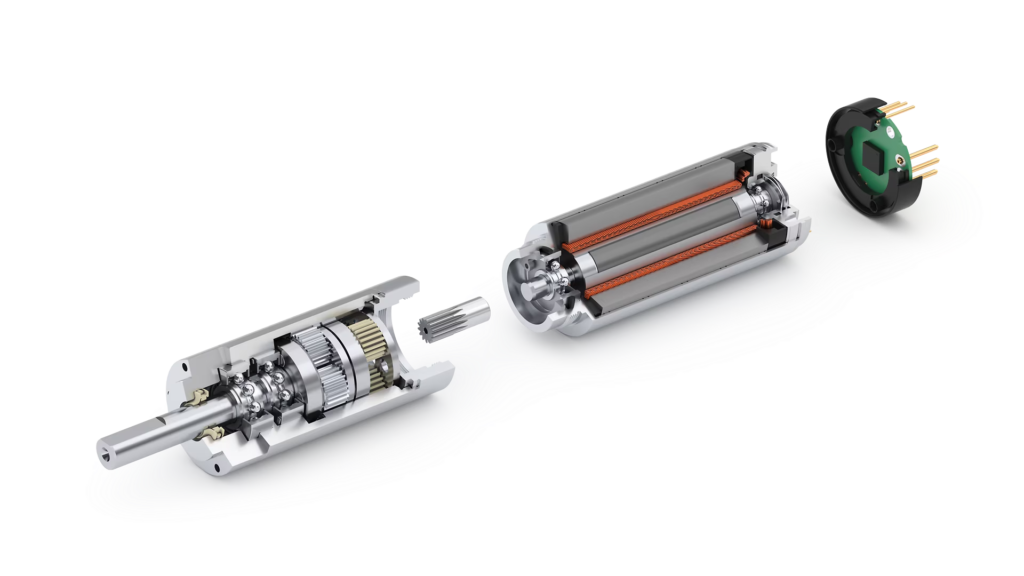
Before using a drone brushless motor in a servo project, it is important to understand the actual performance requirements of the application. Although these motors provide excellent efficiency and flexibility, successful adaptation depends on proper motor selection, controller matching, and system design. application-specific requirements
Torque Requirements
Torque is one of the first factors to evaluate because drone motors are usually designed for high-speed rotation rather than high torque output. A motor that performs well with a propeller may not directly provide enough force for mechanical movement.
For servo applications such as robotic joints or positioning systems, developers may need additional gearing or adjustments to achieve suitable torque output at lower operating speeds.
Motor Size and KV Rating
The KV rating of a drone brushless motor indicates how many revolutions per minute the motor produces per volt without load. Higher KV motors provide more speed, while lower KV motors generally offer better torque characteristics.
Choosing the correct KV rating helps balance speed and control requirements. This ensures the motor can deliver stable operating performance based on the project’s movement demands.
Thermal Management
Heat generation is an important consideration when adapting motors outside their original purpose. Drone motors are usually cooled by airflow from propellers, which may not exist in servo applications.
Without proper cooling, continuous operation can increase temperature and reduce reliability. Effective thermal planning helps maintain long-term motor durability during extended use.
Power Supply Compatibility
The motor, controller, and power supply must work within compatible voltage and current ranges. Incorrect power selection can cause unstable operation, overheating, or component damage.
Checking electrical requirements before installation ensures safe power delivery and improves the reliability of the complete servo system.
Control Accuracy Requirements
Not every DIY servo project requires the same level of accuracy. Simple mechanisms may only need basic movement control, while robotics and automation projects require precise feedback and positioning.
Understanding accuracy requirements helps determine the right sensors, controllers, and tuning methods needed for reliable motion control in the final system.
Common Applications of DIY Servo Systems Using Drone Brushless Motors
Adapting a drone brushless motor for servo applications has created new possibilities in affordable engineering projects, prototypes, and experimental automation systems. With the right controller and feedback setup, these motors can provide custom motion control for applications that require compact size and flexible performance.
One of the most common uses is in robotics development. Lightweight robotic arms, joints, and mobile platforms can benefit from the high efficiency and compact structure of drone motors. When converted into servo systems, they can support controlled movement and positioning for small-scale robotics projects.
Camera stabilisation systems are another popular application. Gimbals and tracking devices require smooth and responsive movement, making brushless motors suitable because of their low vibration and efficient operation. Proper tuning allows these systems to achieve stable and precise motion.
Drone brushless motors are also useful in prototype development, where engineers need to test new mechanical concepts quickly. Their availability and adaptability make them suitable for early-stage product testing before moving toward specialised motor solutions.
Educational and research projects frequently use these motors to explore motion control, robotics, and automation principles. Students and developers can experiment with controllers, sensors, and programming methods while building practical engineering experience.
Small automation systems can also benefit from adapted brushless motors, especially when projects require compact motor solutions with customised control features. These applications show how flexible BLDC technology can be beyond its original drone purpose.
Challenges When Using Drone Brushless Motors as Servos
Although adapting a drone brushless motor for servo projects offers many advantages, it also comes with several technical challenges. These motors were originally designed for high-speed rotation, so modifications are often required before they can deliver accurate servo performance in positioning applications.
One of the main challenges is the limited low-speed torque. Drone motors are optimised to spin propellers efficiently at higher speeds, but servo applications usually require controlled movement, holding force, and stable operation at lower speeds. Additional gearing or careful tuning may be needed to improve low-speed control for practical use.
Another limitation is the lack of built-in feedback. Traditional servo motors include feedback systems that allow the controller to track position and make corrections automatically. A standard drone brushless motor requires external sensors such as encoders to achieve precise position feedback during operation.
Controller complexity can also create difficulties for beginners. Standard drone ESCs are mainly designed for speed control rather than position-based movement. Achieving servo functionality usually requires a more advanced controller that supports closed-loop operation and customisation.
Mechanical adaptation is another important consideration. Mounting systems, shafts, and load connections may need modifications because drone motors are not originally designed for industrial motion applications. Proper mechanical integration ensures reliable system operation and prevents performance issues.
Despite these challenges, careful component selection and proper engineering adjustments can transform drone brushless motors into effective servo solutions for many DIY, research, and prototype applications.
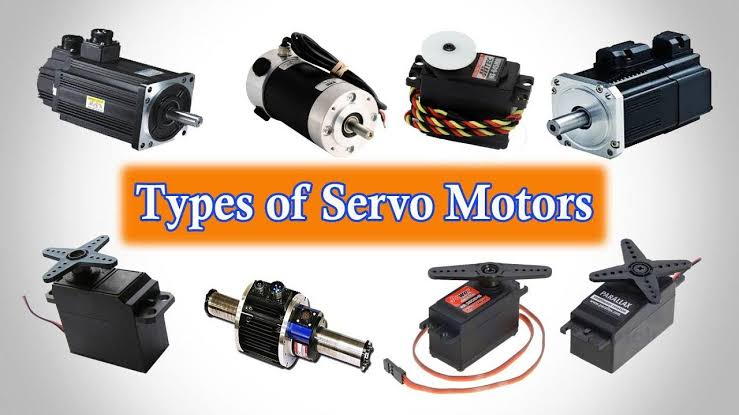
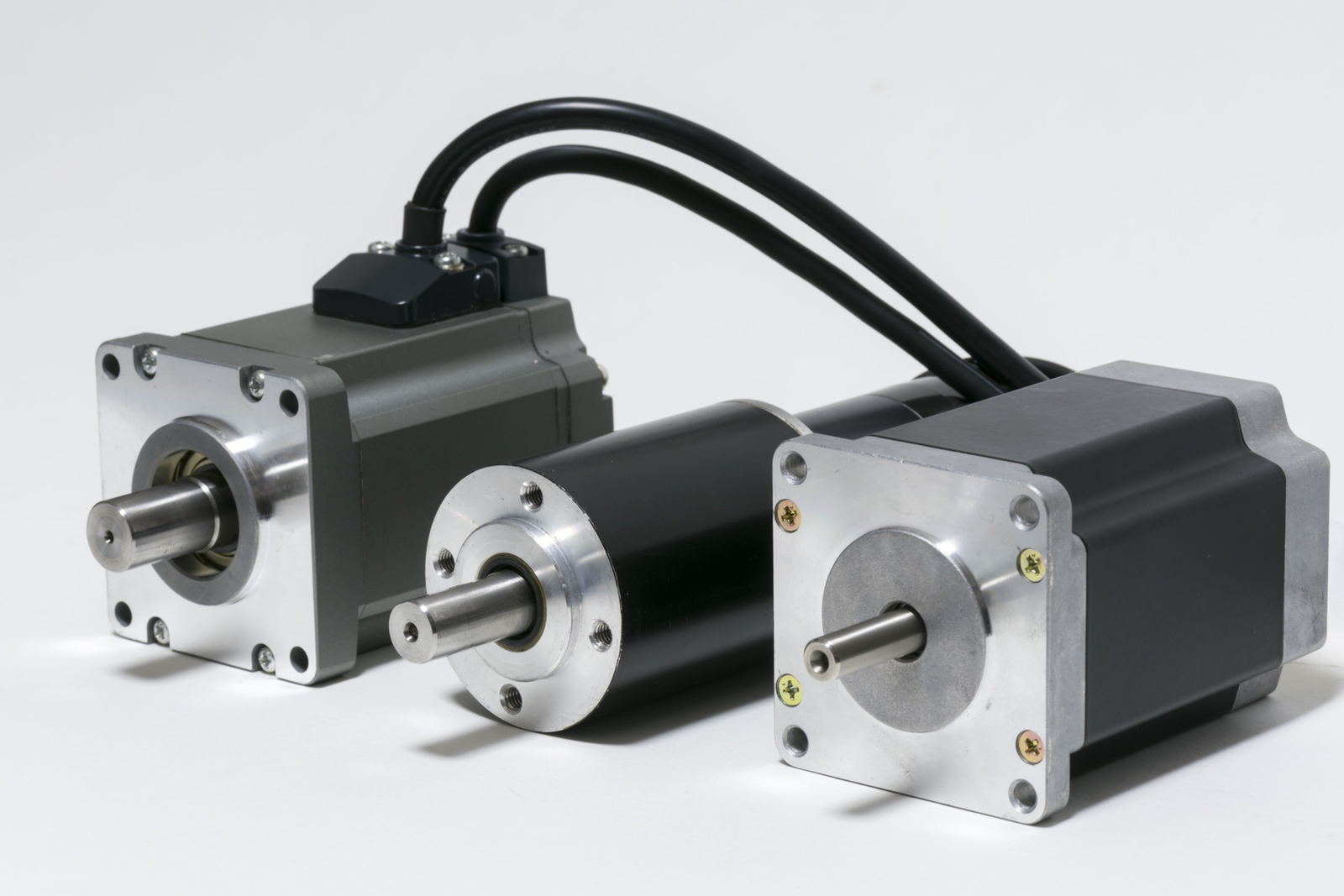
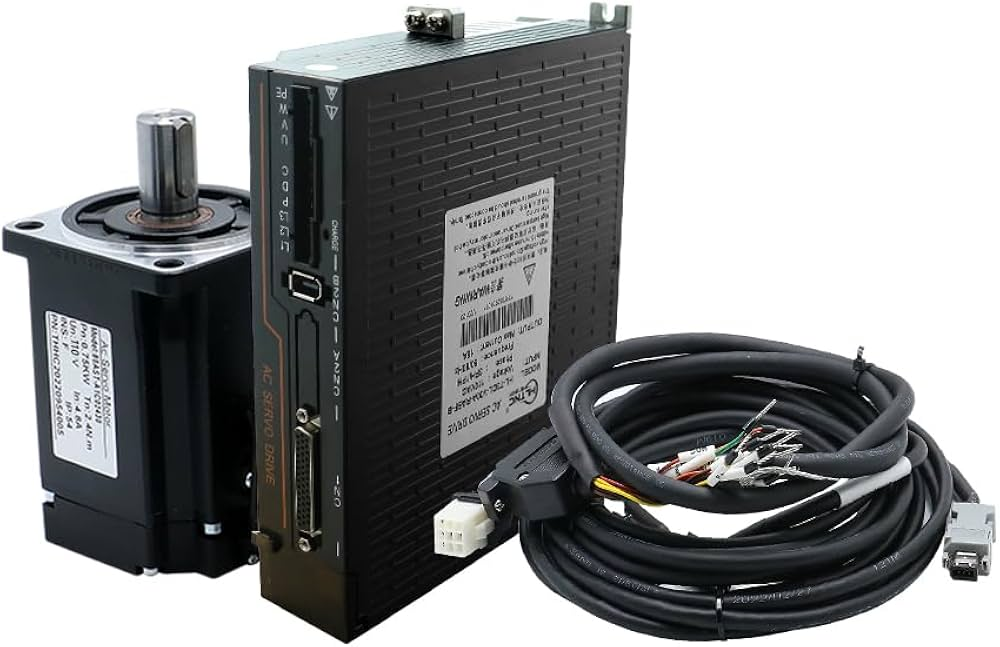
Drone Brushless Motor vs Traditional Servo Motor
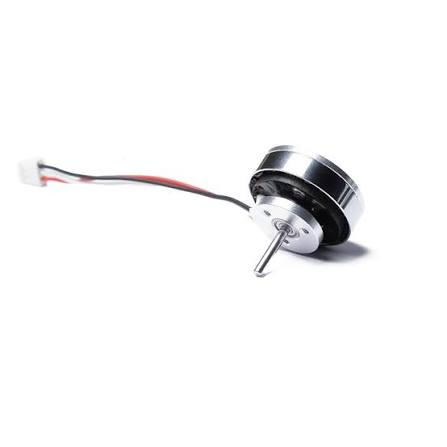
Both drone brushless motors and traditional servo motors can support controlled motion applications, but they are designed with different priorities. A drone brushless motor focuses mainly on high-speed efficiency, while a servo motor is built for accurate positioning, torque control, and repeatable movement.
Choosing between these two options depends on the project requirements. DIY developers often choose drone motors because of affordability and customisation flexibility, while industrial applications usually require the precision control features of dedicated servo systems.
| Factor | Drone Brushless Motor | Traditional Servo Motor |
| Cost | Usually, it is more affordable and widely available | Higher cost due to integrated control features |
| Speed | Designed for very high-speed rotation | Designed for controlled speed and positioning |
| Torque | May require gearing for higher torque output | Provides stronger controlled torque performance |
| Modification Need | Requires feedback sensors and controller adjustments | Comes with built-in servo control features |
| Precision | Depends on added feedback and tuning quality | Provides high accuracy from integrated systems |
| Best Applications | DIY robotics, prototypes, experimental projects | CNC machines, robotics, and industrial automation |
A drone brushless motor can be an excellent choice when flexibility, cost savings, and experimentation are the main priorities. However, applications requiring guaranteed accuracy, heavy loads, or continuous industrial operation may benefit from dedicated servo solutions designed specifically for those conditions.
The future of DIY servo systems using brushless motor technology is moving toward smarter, more accessible, and more efficient designs. As controllers, sensors, and software tools continue to improve, adapting a drone brushless motor for advanced projects is becoming a more practical option for developers and engineers. affordable automation development
Get the Right Motor Solutions With Expert Support – Connect With DMKE
Adapting a drone brushless motor for low-cost DIY servo projects provides an effective way to achieve compact, efficient, and customizable motion control. With the right combination of controllers, feedback sensors, and mechanical adjustments, these motors can move beyond their original drone applications and support innovative servo solutions in robotics, prototypes, and automation projects.
However, successful adaptation depends on understanding both the strengths and limitations of brushless motor technology. Factors such as torque requirements, controller compatibility, thermal management, and position feedback play an important role in achieving reliable motion performance for practical applications.
For developers and industrial users, drone brushless motors demonstrate the flexibility and potential of modern BLDC technology. While DIY conversions are useful for experimentation, professional applications often require properly engineered motor solutions designed for long-term stability and precision.
DMKE provides high-quality brushless motor solutions with a focus on customised engineering support, efficient performance, and reliable testing standards. For projects requiring advanced BLDC technology or application-specific motor guidance, DMKE can help develop solutions that match unique performance requirements.
For technical guidance or application-based recommendations, visit our website or contact us today to ensure a solution aligned with your operational needs.

 English
  English (Australia)
  English (Canada)
  Deutsch
  English (UK)
  Français