
Le développement abordable de l'automatisation et de la robotique a entraîné une demande croissante en solutions de motorisation compactes, efficaces et personnalisables. De nombreux ingénieurs, créateurs et développeurs explorent désormais des alternatives pour obtenir un contrôle précis des mouvements sans recourir exclusivement à des servosystèmes coûteux. Une approche très répandue consiste à adapter un moteur sans balais pour drone pour des projets de servomoteurs à réaliser soi-même à moindre coût.
Conçus à l'origine pour la propulsion de drones à grande vitesse, ces moteurs offrent une densité de puissance impressionnante, une construction légère et des performances efficaces. Cependant, leur conversion en systèmes de type servomoteur ne se résume pas à un simple branchement d'un contrôleur. Des facteurs tels que l'intégration du retour d'information, le réglage du couple et le réglage de la commande sont essentiels pour obtenir contrôle précis des mouvements dans les applications pratiques.
Un moteur sans balais pour drone offre plusieurs avantages pour les projets expérimentaux, notamment sa disponibilité, sa taille compacte et sa flexibilité en matière de personnalisation. Avec une configuration adéquate du contrôleur et les réglages mécaniques appropriés, ces moteurs peuvent être utilisés en robotique, dans des systèmes de caméras, pour des prototypes et dans de petits projets d'automatisation où les servomoteurs traditionnels ne constituent pas forcément l'option la plus pratique.
Ce guide explique comment adapter les moteurs sans balais de drones à des projets de servomoteurs à monter soi-même. Il aborde notamment les modifications nécessaires, les critères de sélection importants, les difficultés courantes et les applications concrètes. Il aide également les développeurs à déterminer dans quels cas un moteur sans balais adapté convient et dans quels cas une solution de servomoteur dédiée peut constituer un meilleur choix pour performance fiable des projets.
Comprendre les moteurs sans balais des drones
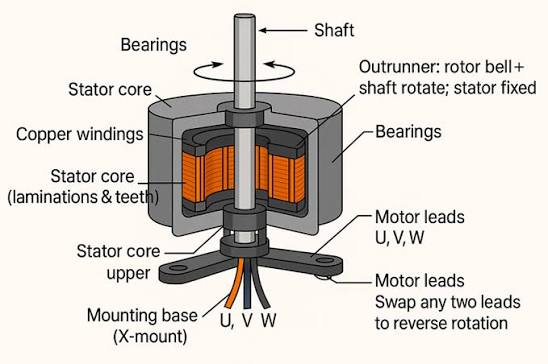
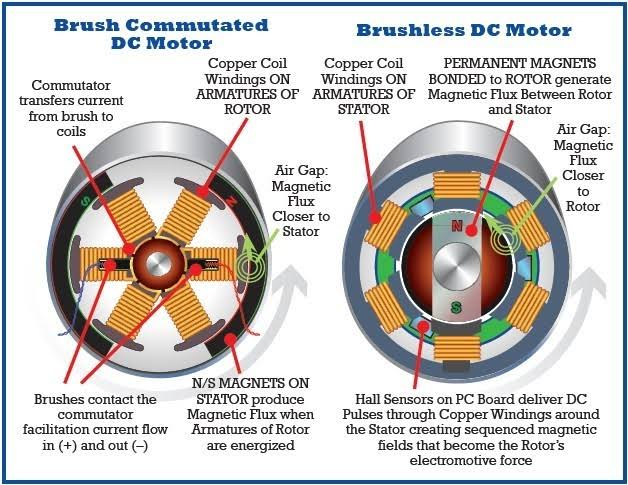
Un moteur sans balais pour drone est un moteur compact moteur électrique conçus pour offrir une rotation à grande vitesse, une réponse rapide et une conversion de puissance efficace. Contrairement aux moteurs à balais, dont le fonctionnement repose sur des balais mécaniques, les moteurs sans balais utilisent des systèmes de commande électroniques pour gérer le flux de courant et générer fonctionnement fluide du moteur avec une usure réduite.
La plupart des moteurs de drones sont Moteurs BLDC, ce qui signifie qu'ils utilisent des aimants permanents et une commutation à commande électronique pour générer le mouvement. Cette conception élimine le frottement des balais, ce qui permet au moteur d'atteindre un rendement plus élevé, une meilleure durabilité et des performances améliorées dans les applications compactes.
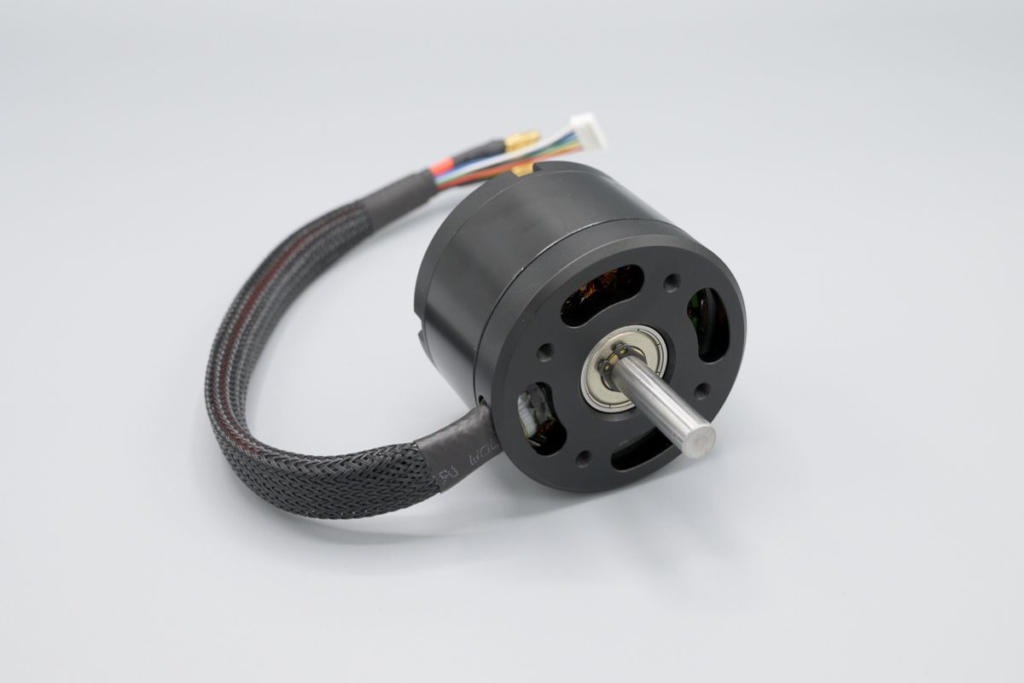
L'un des principaux avantages d'un moteur sans balais pour drone réside dans son excellent rapport puissance/poids. Ces moteurs sont conçus pour développer une puissance élevée tout en restant légers, ce qui les rend idéaux pour les drones où alimentation électrique compacte est une exigence majeure.
Cependant, les moteurs de drone diffèrent des servomoteurs traditionnels. Ils sont principalement conçus pour une rotation continue à grande vitesse plutôt que pour un contrôle précis de la position. Sans composants de rétroaction supplémentaires, un moteur de drone standard ne connaît pas automatiquement sa position ni son angle.
Pour utiliser ces moteurs dans des applications de type servo, les développeurs doivent y ajouter des éléments de contrôle tels que des capteurs, des contrôleurs adaptés et des réglages de mise au point. Avec les modifications appropriées, un moteur sans balais de drone peut offrir contrôle flexible des mouvements pour une large gamme de systèmes de bricolage et de prototypage.
Pourquoi utiliser un moteur sans balais de drone pour des projets de servomoteurs à monter soi-même ?
A drone Le moteur sans balais est désormais un choix très prisé pour les projets de servomoteurs « faites-le-vous-même », car il allie prix abordable, efficacité et flexibilité de personnalisation. Pour les développeurs travaillant sur des prototypes ou des systèmes expérimentaux, ces moteurs offrent solutions pratiques en matière de mouvement sans avoir à supporter le coût plus élevé du matériel servo spécialisé.
L'un des principaux avantages réside dans la rentabilité. Les moteurs de drones sont largement disponibles en raison de la croissance rapide du secteur des drones, ce qui facilite leur approvisionnement par rapport à de nombreux composants de mouvement de précision. Cela permet aux ingénieurs et aux créateurs de tester de nouvelles idées tout en maintenant les coûts de développement à un niveau raisonnable.
Un autre avantage réside dans leur taille compacte et leur structure légère. Les applications des drones exigeant une puissance maximale pour un poids minimal, ces moteurs sont conçus avec forte densité de puissance Cela convient particulièrement à la micro-robotique, aux appareils portables et aux systèmes mécaniques où l'espace est limité.
Le rendement est également une raison importante justifiant l'adaptation de ces moteurs. Le conception sans balais réduit les pertes par frottement et améliore le rendement énergétique, ce qui permet aux projets d'atteindre des durées de fonctionnement plus longues et de meilleures performances par rapport aux moteurs à balais traditionnels.
Un moteur sans balais pour drone offre également d'excellentes possibilités de personnalisation. Les développeurs peuvent associer différents contrôleurs, capteurs et conceptions mécaniques afin de créer un système répondant à des exigences spécifiques. Cette flexibilité permet de développement de servomoteurs sur mesure pour les applications dans lesquelles les solutions standard ne permettent pas toujours d'obtenir les caractéristiques requises en termes de taille, de vitesse ou de contrôle.
Comment transformer un moteur sans balais de drone en système de servomoteur
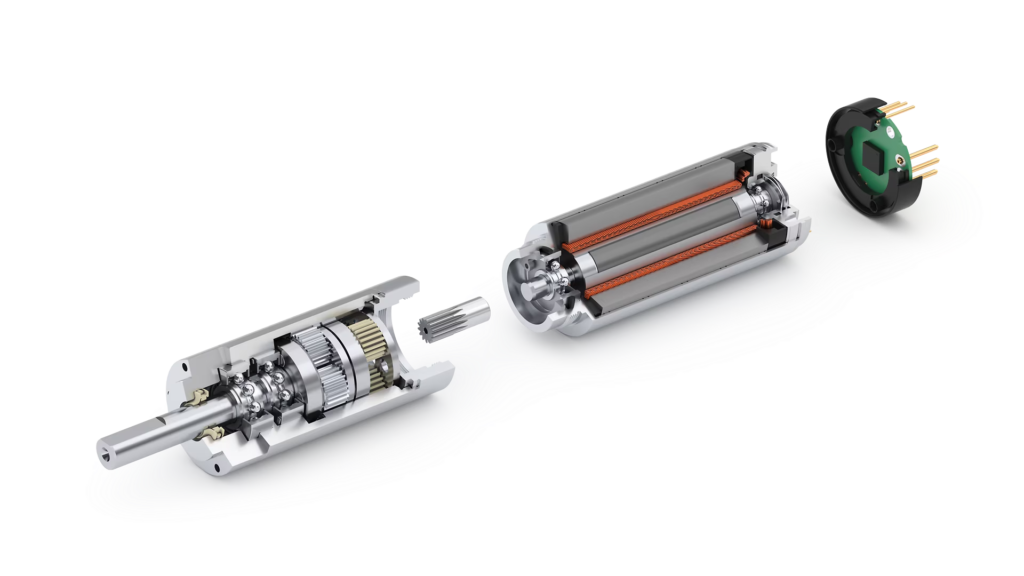
Transformer un moteur sans balais de drone en un servomoteur Le système nécessite des composants supplémentaires qui permettent au moteur de contrôler sa position plutôt que de simplement tourner en continu. L'objectif est de créer un système dans lequel le moteur, le contrôleur et le dispositif de rétroaction fonctionnent de concert pour atteindre contrôle précis des mouvements pour différentes applications.
Ajout d'un retour de position
Un moteur de drone standard ne dispose pas d'un système intégré de détection de position, contrairement à un servomoteur traditionnel. Pour obtenir un mouvement contrôlé, il faut ajouter un dispositif de rétroaction permettant au système de détecter la position exacte du moteur.
Parmi les options courantes, on trouve les aimants codeurs, des codeurs optiques ou d’autres capteurs de position qui fournissent un retour d’information continu au contrôleur. Cela permet au système de corriger les erreurs de mouvement et de maintenir suivi précis de la position pendant le fonctionnement.
Choisir le bon contrôleur
Le variateur est l'un des composants les plus importants lors de l'adaptation d'un moteur brushless de drone à des applications de servocommande. Les variateurs de vitesse standard pour drones sont principalement conçus pour contrôler la vitesse de rotation, et non pour assurer un positionnement précis.
Pour obtenir des performances de type servo, les développeurs ont besoin de contrôleurs prenant en charge le fonctionnement en boucle fermée, le retour d'information des capteurs et des options de réglage avancées. Un contrôleur adapté permet de réponse motrice stable et améliore la précision globale des mouvements.
Réglage de la vitesse et du couple de sortie
Les moteurs de drones sont généralement optimisés pour fonctionner à grande vitesse, tandis que les applications utilisant des servomoteurs nécessitent souvent des mouvements contrôlés et une puissance plus importante couple à basse vitesse. En raison de cette différence, des réglages sont généralement nécessaires.
Des méthodes telles que la réduction par engrenages, le réglage du courant et l'optimisation des paramètres de commande peuvent permettre d'adapter les caractéristiques de performance du moteur. Ces modifications améliorent performances à basse vitesse et rendre le système plus adapté aux projets concrets de servomécanique.
Facteurs importants à prendre en compte avant d'adapter des moteurs sans balais pour drones
Avant d'utiliser un moteur sans balais de drone dans un projet de servomoteur, il est important de bien cerner les exigences réelles de l'application en matière de performances. Bien que ces moteurs offrent un excellent rendement et une grande flexibilité, leur adaptation réussie dépend du choix judicieux du moteur, de la compatibilité avec le contrôleur et de la conception du système. exigences spécifiques à l'application
Couple requis
Le couple est l'un des premiers facteurs à évaluer, car les moteurs de drones sont généralement conçus pour une rotation à grande vitesse plutôt que pour un couple élevé. Un moteur qui fonctionne bien avec une hélice peut ne pas fournir directement une force suffisante pour un mouvement mécanique.
Pour les applications servo, telles que les articulations robotiques ou les systèmes de positionnement, les développeurs peuvent avoir besoin d'engrenages supplémentaires ou de réglages pour parvenir à couple de sortie adapté à des vitesses de fonctionnement plus faibles.
Taille du moteur et indice KV
Le Indice KV La valeur KV d'un moteur brushless de drone indique le nombre de tours par minute que le moteur produit par volt à vide. Les moteurs à KV élevé offrent une vitesse plus élevée, tandis que ceux à KV faible présentent généralement de meilleures caractéristiques de couple.
Le choix d'un indice KV adapté permet de trouver le juste équilibre entre les exigences de vitesse et de contrôle. Cela garantit que le moteur puisse fournir une performance opérationnelle stable en fonction des exigences du projet en matière de mouvement.
Gestion thermique
La production de chaleur est un facteur important à prendre en compte lors de l'adaptation de moteurs à des usages autres que ceux pour lesquels ils ont été initialement conçus. Les moteurs de drones sont généralement refroidi par circulation d'air provenant des hélices, ce qui n'est pas forcément le cas dans les applications à servomoteurs.
Sans refroidissement adéquat, un fonctionnement continu peut entraîner une hausse de la température et nuire à la fiabilité. Une conception thermique efficace permet de maintenir durabilité à long terme du moteur en cas d'utilisation prolongée.
Compatibilité des blocs d'alimentation
Le moteur, le variateur et l'alimentation électrique doivent fonctionner dans des plages de tension et de courant compatibles. Un choix d'alimentation inapproprié peut entraîner un fonctionnement instable, une surchauffe ou l'endommagement des composants.
Vérifier les exigences électriques avant l'installation permet de s'assurer que alimentation électrique sécurisée et améliore la fiabilité de l'ensemble du système d'asservissement.
Exigences en matière de précision de contrôle
Tous les projets de bricolage impliquant des servomoteurs ne nécessitent pas le même niveau de précision. Les mécanismes simples peuvent se contenter d'un contrôle de base des mouvements, tandis que les projets de robotique et d'automatisation exigent un retour d'information et un positionnement précis.
Comprendre les exigences en matière de précision permet de déterminer les capteurs, les régulateurs et les méthodes de réglage adaptés nécessaires pour un contrôle fiable des mouvements dans le système final.
Applications courantes des systèmes de servomoteurs à monter soi-même utilisant des moteurs sans balais de drones
Adaptation d'un moteur brushless pour drone moteur destiné aux applications servo a ouvert de nouvelles perspectives en matière de projets d'ingénierie, de prototypes et de systèmes d'automatisation expérimentaux à coût abordable. Avec un contrôleur et un système de rétroaction adaptés, ces moteurs peuvent offrir contrôle de mouvement sur mesure pour les applications nécessitant un format compact et des performances adaptables.
L'une de leurs applications les plus courantes concerne le développement de la robotique. Les bras robotiques légers, les articulations et les plateformes mobiles peuvent tirer parti du rendement élevé et de la structure compacte des moteurs de drones. Une fois transformés en servomoteurs, ils permettent de contrôler les mouvements et le positionnement de robotique à petite échelle projets.
Les systèmes de stabilisation des caméras constituent une autre application très répandue. Les cardans et les dispositifs de suivi exigent des mouvements fluides et réactifs ; les moteurs sans balais sont donc particulièrement adaptés en raison de leurs faibles vibrations et de leur fonctionnement efficace. Un réglage adéquat permet à ces systèmes d'assurer des mouvements stables et précis.
Les moteurs sans balais pour drones sont également utiles dans le cadre du développement de prototypes, où les ingénieurs doivent tester rapidement de nouveaux concepts mécaniques. Leur disponibilité et leur adaptabilité en font des solutions idéales pour tests de produits en phase initiale avant de s'orienter vers des solutions motorisées spécialisées.
Ces moteurs sont souvent utilisés dans le cadre de projets pédagogiques et de recherche pour étudier les principes du contrôle de mouvement, de la robotique et de l'automatisation. Les étudiants et les développeurs peuvent ainsi mener des expériences avec des contrôleurs, des capteurs et des méthodes de programmation, tout en acquérant une expérience pratique en ingénierie.
Les petits systèmes d'automatisation peuvent également tirer parti de moteurs sans balais adaptés, notamment lorsque les projets nécessitent solutions de moteurs compacts dotées de fonctions de commande personnalisées. Ces applications illustrent à quel point elles sont flexibles BLDC Cette technologie peut aller au-delà de sa fonction initiale liée aux drones.
Difficultés liées à l'utilisation de moteurs sans balais de drones comme servomoteurs
Bien que l'adaptation d'un moteur sans balais de drone à des projets de servomoteurs présente de nombreux avantages, elle s'accompagne également de plusieurs défis techniques. Ces moteurs ayant été initialement conçus pour une rotation à grande vitesse, des modifications sont souvent nécessaires avant qu'ils puissent fournir performances précises du servomoteur dans les applications de positionnement.
L'un des principaux défis réside dans la vitesse réduite à basse vitesse couple. Les moteurs de drones sont optimisés pour faire tourner efficacement les hélices à des vitesses élevées, mais les applications utilisant des servomoteurs nécessitent généralement des mouvements contrôlés, une force de maintien et un fonctionnement stable à des vitesses plus faibles. Il peut être nécessaire d'ajouter un système d'engrenages ou de procéder à un réglage minutieux pour améliorer commande à basse vitesse à des fins pratiques.
Une autre limite réside dans l'absence de système de rétroaction intégré. Les servomoteurs traditionnels intègrent des systèmes de rétroaction qui permettent au contrôleur de suivre la position et d'effectuer automatiquement des corrections. Un moteur sans balais standard de drone nécessite des capteurs externes, tels que des codeurs, pour parvenir à retour d'information de position précis pendant le fonctionnement.
La complexité des contrôleurs peut également poser des difficultés aux débutants. Les contrôleurs de vitesse (ESC) standard pour drones sont principalement conçus pour contrôler la vitesse plutôt que les mouvements basés sur la position. Pour bénéficier des fonctionnalités d'un servomoteur, il faut généralement un contrôleur plus avancé, prenant en charge le fonctionnement en boucle fermée et la personnalisation.
Adaptation mécanique est un autre aspect important à prendre en compte. Les systèmes de fixation, les arbres et les raccords de charge peuvent nécessiter des modifications, car les moteurs de drones ne sont pas initialement conçus pour des applications de mouvement industriel. Une intégration mécanique adéquate garantit un fonctionnement fiable du système et évite les problèmes de performances.
Malgré ces défis, une sélection rigoureuse des composants et des adaptations techniques appropriées peuvent transformer les moteurs sans balais des drones en solutions de servomoteurs efficaces pour de nombreuses applications de bricolage, de recherche et de prototypage.
Moteur sans balais pour drone vs servomoteur traditionnel
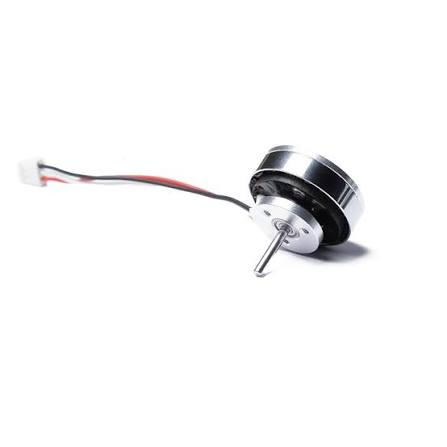
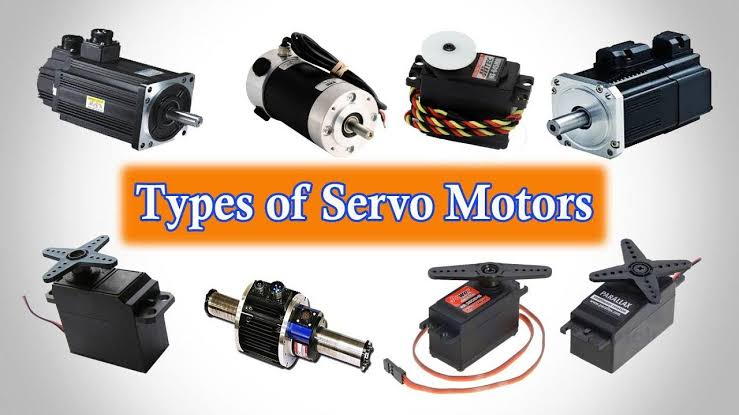
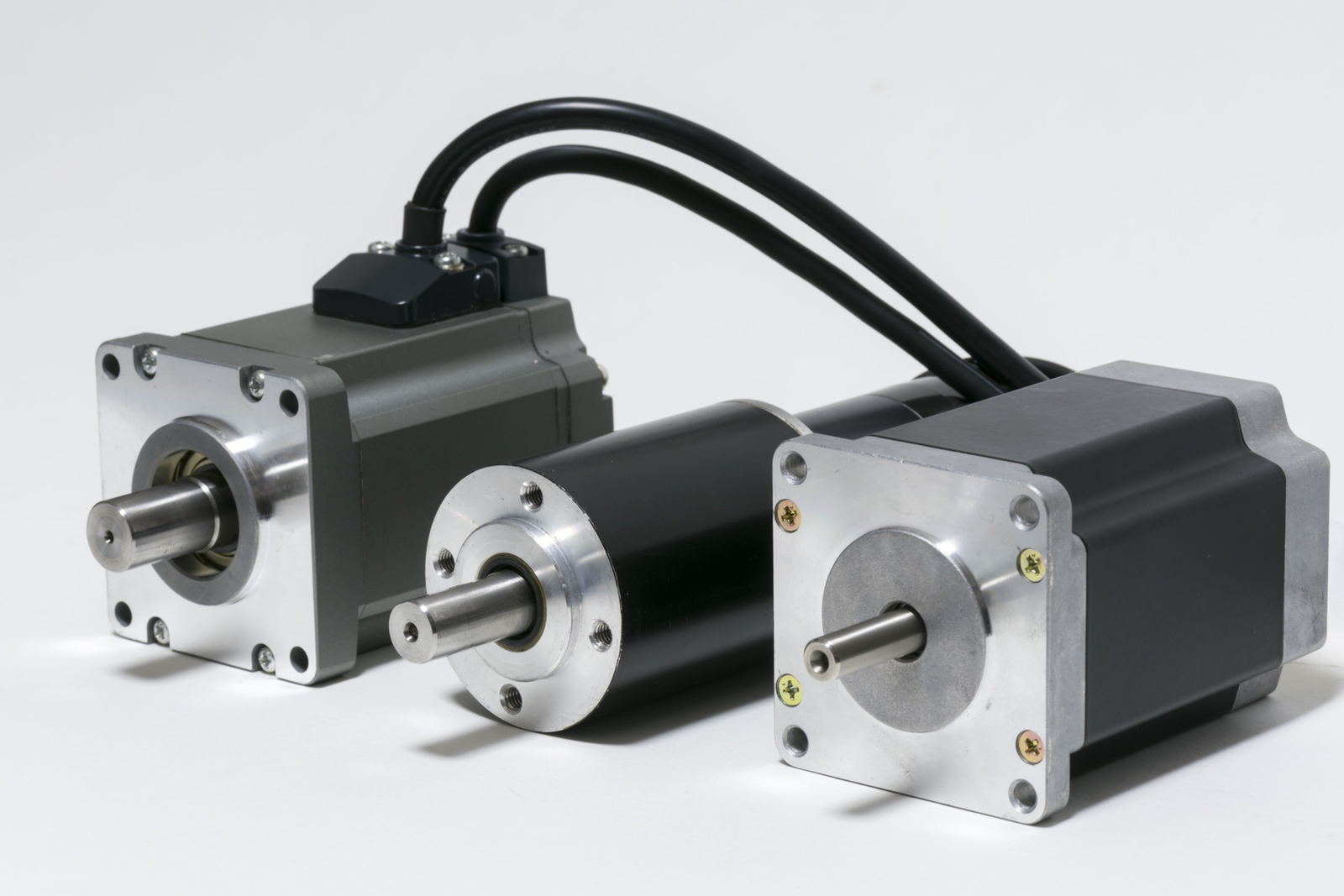
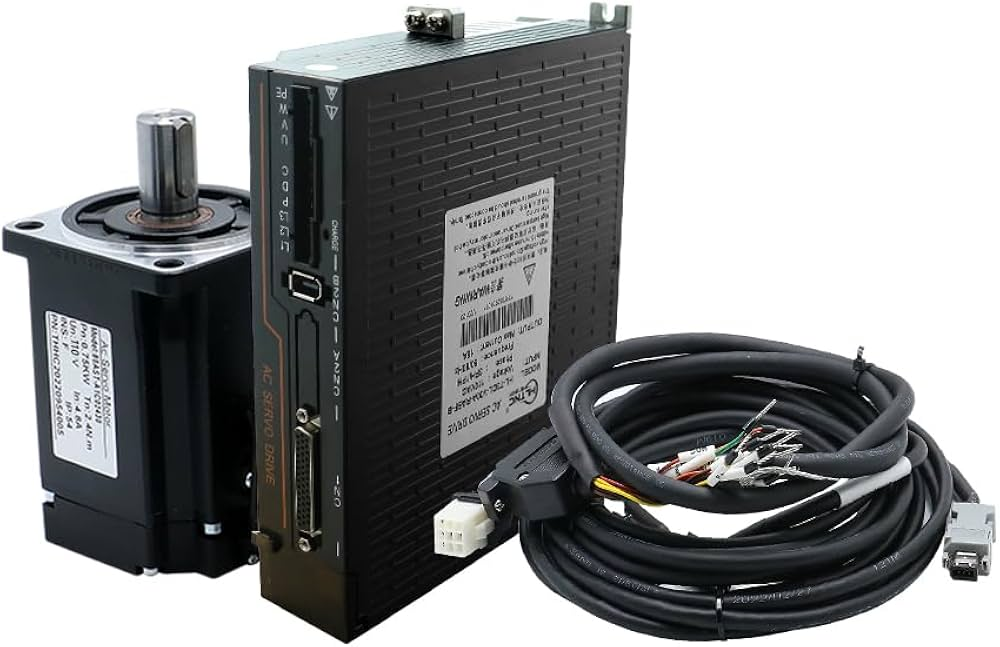
Les moteurs sans balais pour drones et les servomoteurs traditionnels peuvent tous deux être utilisés dans des applications nécessitant des mouvements contrôlés, mais ils sont conçus selon des priorités différentes. Un moteur sans balais pour drone est principalement axé sur efficacité à grande vitesse, tandis qu'un servomoteur est conçu pour assurer un positionnement précis, un contrôle du couple et des mouvements répétables.
Le choix entre ces deux options dépend des exigences du projet. Les développeurs amateurs optent souvent pour les moteurs de drone en raison de leur prix abordable et de la flexibilité qu’ils offrent en matière de personnalisation, tandis que les applications industrielles nécessitent généralement le fonctions de contrôle de précision de systèmes d'asservissement dédiés.
| Facteur | Moteur sans balais pour drone | Servomoteur traditionnel |
| Coût | En général, c'est plus abordable et on en trouve partout | Coût plus élevé en raison des fonctions de commande intégrées |
| Vitesse | Conçu pour une rotation à très grande vitesse | Conçu pour un contrôle de la vitesse et du positionnement |
| Couple | Peut nécessiter un système d'engrenages pour obtenir un couple de sortie plus élevé | Offre des performances de couple contrôlé plus élevées |
| Nécessité d'une modification | Nécessite des capteurs de rétroaction et des réglages du contrôleur | Intègre des fonctions de commande de servomoteurs |
| Précision | Cela dépend du retour d'information fourni et de la qualité du réglage | Assure une grande précision grâce à des systèmes intégrés |
| Meilleures applications | Robotique amateur, prototypes, projets expérimentaux | CNC machines, robotique et automatisation industrielle |
Un moteur sans balais pour drone peut constituer un excellent choix lorsque la flexibilité, les économies et l'expérimentation sont les principales priorités. Toutefois, les applications nécessitant une précision garantie, des charges lourdes ou un fonctionnement industriel en continu peuvent tirer parti de solutions de servomoteurs spécialisées conçues spécialement pour ces conditions.
L'avenir des systèmes de servomoteurs à monter soi-même, basés sur la technologie des moteurs sans balais, s'oriente vers des conceptions plus intelligentes, plus accessibles et plus efficaces. À mesure que les contrôleurs, les capteurs et les outils logiciels ne cessent de s'améliorer, l'adaptation d'un moteur sans balais de drone à des projets avancés devient une option de plus en plus envisageable pour les développeurs et les ingénieurs. développement d'automatisation à prix abordable
Trouvez les solutions de motorisation adaptées grâce à l'aide d'experts – Contactez DMKE
L'adaptation d'un moteur sans balais de drone à des projets de servomoteurs DIY à faible coût constitue un moyen efficace d'obtenir un contrôle de mouvement compact, performant et personnalisable. Grâce à une combinaison judicieuse de contrôleurs, de capteurs de rétroaction et de réglages mécaniques, ces moteurs peuvent dépasser le cadre de leurs applications initiales sur les drones et prendre en charge solutions servomoteurs innovantes dans les domaines de la robotique, des prototypes et des projets d'automatisation.
Toutefois, la réussite de cette adaptation dépend de la compréhension tant des atouts que des limites de la technologie des moteurs sans balais. Des facteurs tels que les exigences en matière de couple, la compatibilité des variateurs, la gestion thermique et le retour de position jouent un rôle important pour parvenir à des performances de mouvement fiables pour des applications pratiques.
Pour les développeurs et les utilisateurs industriels, les moteurs sans balais destinés aux drones illustrent la flexibilité et le potentiel de la technologie BLDC moderne. Si les conversions « fait maison » sont utiles à des fins d'expérimentation, les applications professionnelles nécessitent souvent des solutions motrices conçues de manière optimale, garantissant stabilité et précision à long terme.
DMKE propose des solutions de moteurs sans balais de haute qualité, en mettant l'accent sur personnalisé assistance technique, des performances efficaces et une grande fiabilité essais normes. Pour les projets nécessitant une technologie BLDC de pointe ou des conseils spécifiques à une application donnée en matière de moteurs, DMKE peut vous aider à développer des solutions adaptées à vos exigences de performance particulières.
Pour des conseils techniques ou des recommandations basées sur l'application, visitez notre site web ou contactez-nous dès aujourd'hui pour garantir une solution adaptée à vos besoins opérationnels.

 English
  English (Australia)
  English (Canada)
  Deutsch
  English (UK)
  Français