

If you are an engineer, technician, labourer, industrial owner, or anyone else working in heavy industries, you would know how failure is not an option in such setups. A single uncontrolled movement in heavy-duty manufacturing, or even a slight instability in the lifting of a crane, is more than a sin.
Whether we talk about uncontrolled movement in a forging press, unstable lifting of a crane system, or inconsistent force provided to a rolling mill, all such apparently minor mistakes can lead to massive production problems. These issues result in downtime, losses in terms of money and time, equipment damage, and serious safety risks.
As modern industries grow larger, heavier, and more automated, the challenge is no longer just about generating and providing enough power. Rather, it is now about controlling that power with precision. The precise and reliable control of power, along with offering repeatability, is what matters most.
Traditional heavy-duty drive solutions, such as hydraulic and non-induction-based systems, were definitely capable of delivering raw force. However, as operational demands increased, they began struggling with efficiency losses, limited control and accuracy, and rising maintenance requirements. Living in times where industries are expected to achieve higher output, tighter tolerances, and where compromise and mistakes are non-negotiable, ensuring low operational costs simultaneously is becoming increasingly difficult.
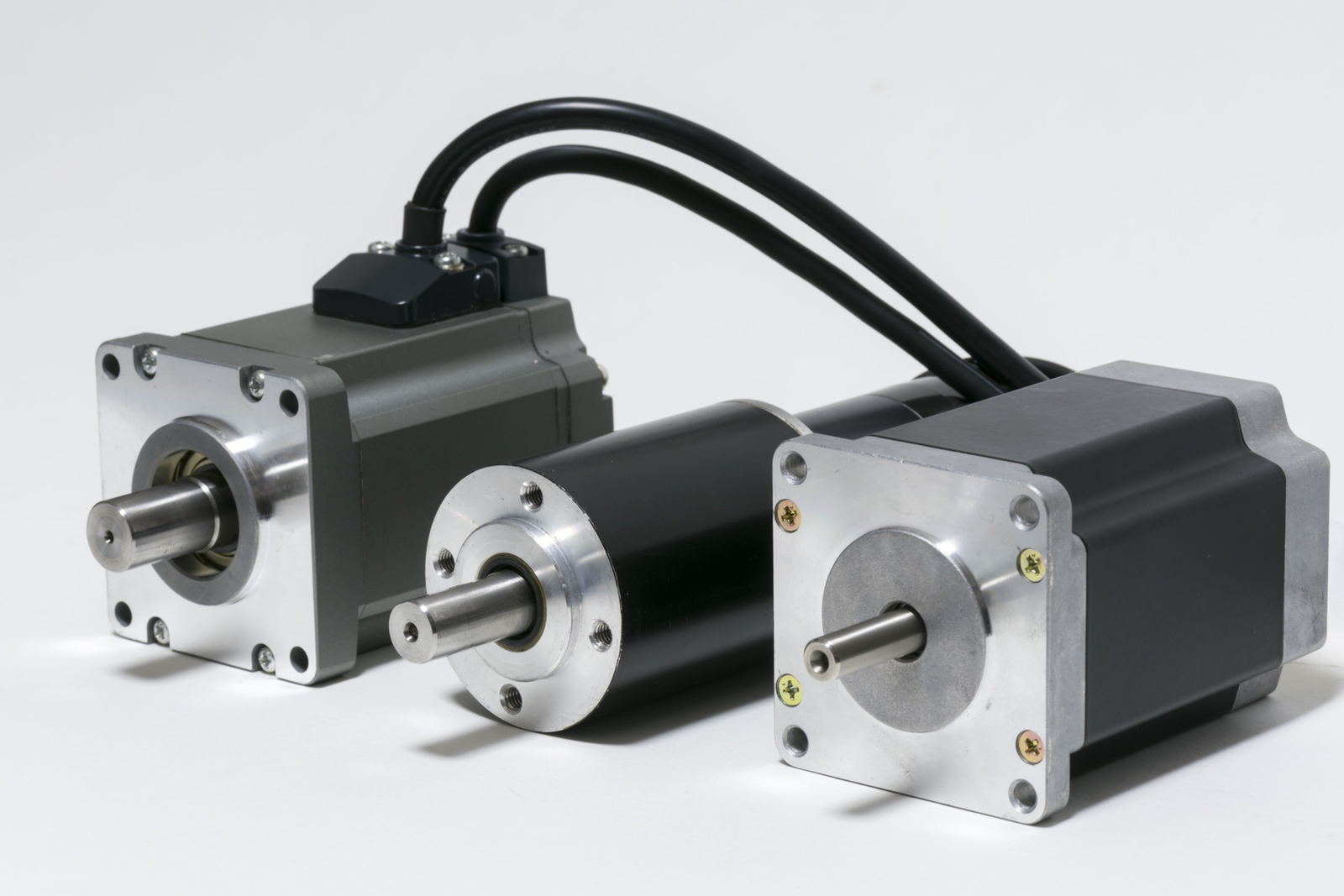
This is where large servo motor solutions come in. These systems are redefining how heavy-duty machinery operates. Unlike traditional drive technologies, large servo setups combine high torque capability with closed-loop control, allowing heavy loads to be moved, positioned, and regulated easily without compromising accuracy. These systems are capable of operating under continuous high-stress environments and enable heavy machinery not only to work harder, but also to deliver more innovative and more accurate outputs.
Below, we are going to explore how large servo motor setups are becoming so powerful that they are now the sole driving forces behind modern heavy industry automation. In this detailed article, we will examine what makes large servos essential for extreme industrial applications. We’ll also look at how servos are transforming heavy-duty industry sectors such as metal processing, mining, construction, large-scale manufacturing, and automation by delivering controlled power at an industrial scale.
Defining “Large” Servo Motors in an Industrial Context
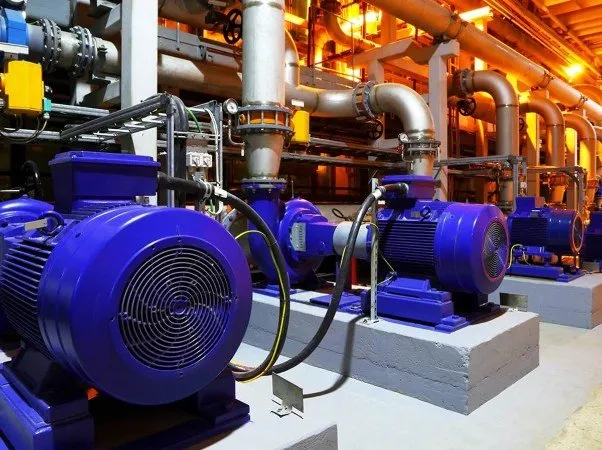
When we use the term large when referring to servos in the context of industrial automation, the word large does not simply refer to physical size. Instead, it describes a class of servos engineered to deliver high torque, sustainable power, and precise control under extreme external stress in terms of mechanical and thermal loads.
These large servo motor setups are basically designed for applications where simple, small, or standard servo solutions fail to reach their operational limits. Power range and torque capability are usually the major differentiating factors between a large servo system and a conventional one.
Large motors typically operate in the multi-kilowatt range, extending from several kilowatts into tens of kilowatts. The torque outputs in such systems are capable of handling heavy inertia and continuous load conditions. Unlike small servos that are optimised for rapid, lightweight motion, large setups are built to maintain stable torque delivery over prolonged operational periods with frequent start–stop cycles and high dynamic stress.
Physical size versus performance density is another defining characteristic of a large servo motor. While large servos are naturally bigger and heavier, modern designs focus on maximising torque and power density rather than simply increasing size for stability. Advanced magnetic materials, optimised winding designs, and efficient thermal components allow these setups to deliver high output within a compact footprint. This balance, although achievable through modern engineering and advanced technologies, is extremely critical in heavy machinery, where space constraints often coexist with extreme performance requirements.
Another difference between standard and heavy-duty-class servos lies primarily in durability and operational resilience. Heavy-duty servos feature reinforced mechanical structures with high-load bearings, enhanced installation systems, and robust feedback devices capable of operating reliably under harsh environments and continuous usage.
They are engineered for continuous duty cycles, higher overload margins, and long service life. All of these features provide what standard solutions typically fail to deliver under such heavy and performance-demanding tasks. Together, these characteristics define a large servo motor as a purpose-built drive solution that enhances system performance in heavy-duty setups and bridges the gap between raw industrial power and precision-controlled motion. Such a combination is essential for modern heavy-duty applications.
What Makes Large Servo Motors Essential for Heavy-Duty Applications?
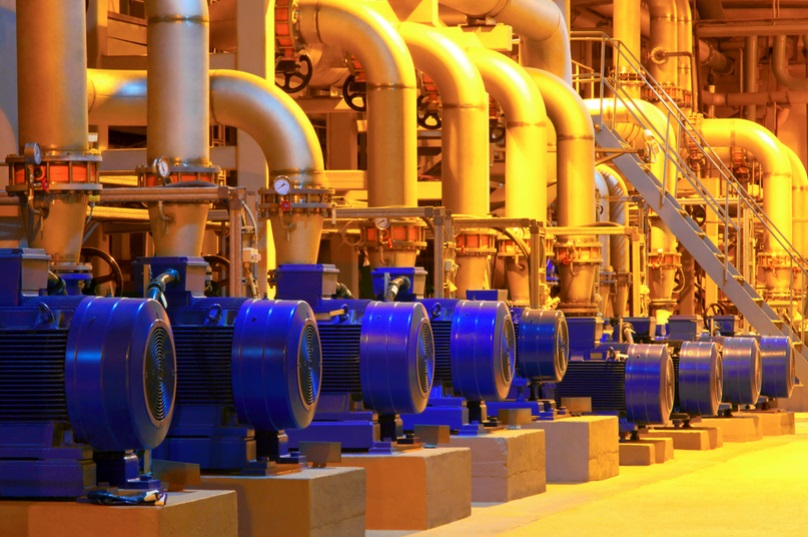
The capability of large servo setups to combine high power with precise closed-loop control is what makes them a critical determinant of performance in heavy-duty industrial applications. These systems are designed to handle extreme loads along with continuous operation in harsh industrial conditions, all while maintaining accuracy, stability, and reliability.
This combination of strength and control is what makes them fundamentally different from other drive systems that were previously used in heavy machinery. Below, we are going to look into the defining factors and features of large servo motor setups that make them ideal for heavy-duty applications.
1. High Torque Output for Extreme Loads
Heavy-duty machinery tends to operate under conditions where torque demand is both tight and highly variable. Large crushers, conveyors, and lifting systems require driving powers that can deliver stable, continuous torque during long operating cycles, while also handling high peak torque during startups, acceleration, and sudden load changes.
Any instability in torque output can result in shock, jitters, positioning errors, or complete component damage. Torque density plays a critical role here. While high torque output is essential, it must be achieved without introducing excessive mechanical stress on shafts, bearings, windings, and gear assemblies.
Large servos are engineered to balance torque density with structural reinforcement, ensuring that a sudden increase in power does not translate into reduced mechanical lifespan. Handling start–stop motion under massive inertia is another challenge for systems running heavy-duty setups. Large servos work with advanced control algorithms to enable smooth torque ramping and precise motion profiling, thus solving this challenge as well.
2. Precision Control Under Harsh Operating Conditions
It is rare for heavy-duty industrial environments to be smooth, clean, or stable. Vibration, dust, humidity, high temperatures, and mechanical shock are constant factors in such environments that can degrade motion accuracy as well as overall system performance.
Despite these problems, many applications such as metal forming, automated handling, and large-scale machining demand consistent positioning and force control. A large servo setup can maintain precision through a closed-loop control system. In such a system, performance is continuously monitored and corrected in real time. This feedback helps ensure high resolution and accurate precision regardless of external disturbances.
Repeatability is another essential and critical factor in heavy machining, where the same operation may have to be performed thousands of times a day. Inconsistent motion can lead to dimensional inaccuracies and material waste, ultimately resulting in downtime. Large servo motor setups are designed to deliver repeatable performance over long production periods while ensuring consistency and avoiding motion variations.
3. Continuous Duty Performance and Thermal Endurance
Compared to intermittent automation tasks, heavy-duty continuous applications often require their drive systems to operate continuously at high speeds without any breaks. At the same time, there are high load levels to deal with. Under such conditions, thermal stress becomes a primary concern. Excessive heat buildup can reduce overall system efficiency, degrade insulation materials, and lead to a shortened system lifespan if not properly managed.
Unless it is properly managed, heat can become a serious issue. Large servo motor systems are capable of addressing this challenge through advanced thermal dissipation designs. There are optimised winding layouts, efficient magnetic circuits, and integrated cooling mechanisms such as forced-air or liquid cooling to help ensure proper heat dissipation during operation. Such features allow the motor and the overall setup to sustain high output levels without worrying about performance degradation over extended operating cycles.
Derating strategies also play an important role in ensuring long-term reliability and continuous operation. By accounting for ambient temperature, load profiles, and duty cycles, large servo setups can be selected and operated within safe thermal limits. This approach helps prevent overheating while still enabling these systems to deliver the required performance in demanding industrial environments.

4. Reliability, Operational Longevity, and Safety
In heavy-duty setups, unplanned downtime can result in significant financial and client-related losses. Production delays and safety risks are also introduced due to such scenarios, which can lead to several other operational issues. As a result, reliability is often valued as highly as performance.
Large servo motor systems are designed with these factors in mind, offering robust construction and predictable behaviour under extreme operating conditions. When compared to hydraulic systems, large servo motor–driven solutions offer improved reliability due to fewer mechanical components, reduced fluid-related issues, and enhanced diagnostic capabilities.
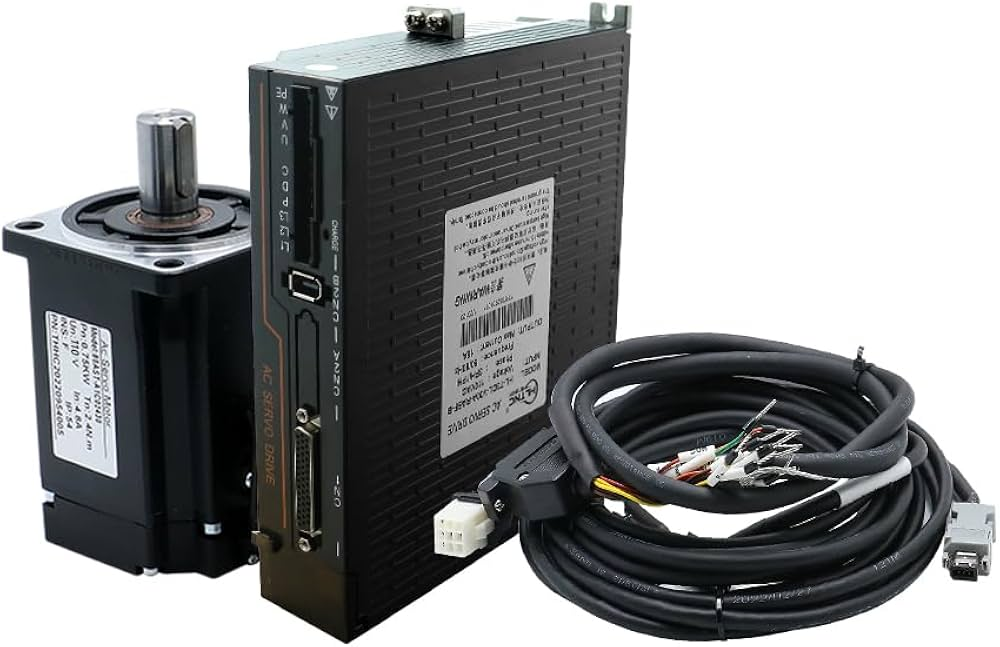
Servo systems allow real-time monitoring of load, temperature, and performance parameters, enabling preventive maintenance rather than reactive repairs. Safety is further enhanced through built-in protective functions. Large servo motors, along with their drives and controllers, typically include overload protection, controlled braking, fault detection, and emergency stop capabilities.
All of these features, combined with preventive maintenance capabilities, help protect both equipment and operators while also extending system lifespan by preventing damage caused by abnormal operating conditions.
How Large Servo Motors Power Key Heavy-Duty Industries
Large servo motors are not limited to a single industrial sector. Rather, their impact spans across multiple heavy-duty industries performing different functions and fulfilling their roles very effectively. These motor setups empower applications where power, precision, and reliability are required to coexist.
Whether it is high-force metal forming, bulk manufacturing, or the handling of energy infrastructure, these setups enable controlled motion at scales that were previously difficult to achieve with conventional motors or traditional drive systems.
In the following section, we are going to explore how large servo setups are applied across different forms of heavy-duty industries, while also highlighting their role in improving performance, operational stability, and efficiency in real-world applications.
| Industry | Typical Applications | Key Performance Demands | How Large Servo Motors Add Value |
| Metal Processing & Forging | Servo presses, stamping, and forming machines | High force, precision shaping, repeatability | Programmable force control, energy-efficient press cycles, consistent accuracy under extreme load |
| Mining & Bulk Handling | Conveyors, crushers, stackers, reclaimers | High inertia, variable loads, continuous operation | Smooth torque control, reduced mechanical shock, longer equipment life |
| Construction & Heavy Robotics | Cranes, lifting systems, robotic arms | Heavy payloads, multi-axis coordination, and safety | Synchronised motion control, load balancing, and anti-sway functionality |
| Energy & Oil & Gas | Valves, pumps, and drilling systems | Precision, reliability, and hazardous environments | Accurate positioning, fast response, improved operational safety |
| Steel, Cement & Heavy Manufacturing | Kilns, mills, mixers, rolling equipment | High torque at low speed, thermal endurance | Stable continuous torque, adaptive process control, reduced energy waste |
Metal Processing, Forging, and Press Machinery
Metal processing and forging operations demand precise force application under extreme mechanical stress. Traditionally, hydraulic presses dominated this industry due to their high force output. However, servo-driven presses are increasingly replacing older hydraulic systems by offering greater control over force, speed, and position throughout the press cycle.
Unlike hydraulic systems, servos allow precise adjustment of RAM motion at every operational stage. One of the major advantages of servo-driven presses is their programmable force control.
Large servos enable variable speed and force profiles, thus allowing manufacturers to optimise each press stroke for different materials and geometries used in a specific application. This not only improves forming accuracy but also reduces energy consumption, as power is delivered only when required rather than being continuously supplied to maintain hydraulic pressure.
Under extreme mechanical loads, precision becomes even more critical to achieve. Large servos provide consistent, repeatable motion even during high-force shaping operations. This enables accurate dimensional control and reduces material waste. Such a level of precision is particularly valuable in high-value metal components, where it directly and consistently translates into improved product quality and higher value.
Mining, Material Handling, and Bulk Automation
Mining and bulk material handling industries are among the most demanding industries and face some of the harshest operating conditions. Systems working in these environments must operate reliably despite dust, vibration, moisture, heavy loads, and continuous duty cycles.
Applications such as conveyor systems, crushers, stackers, and reclaimers must move massive volumes of material continuously, regardless of how harsh the environment is. These systems require drives that are capable of delivering high torque while also accommodating frequent load variations.
Large servos are very well suited for handling high-inertia loads and variable torque demands. As material flow changes, servo systems dynamically adjust torque output to maintain stable operation, preventing sudden shocks that can damage mechanical components. Such adaptability is especially important in long conveyor lines and heavy crushing equipment.
Smooth motion control is another critical benefit. By precisely controlling acceleration and deceleration, large servo motors reduce mechanical wear on gearboxes, belts, bearings, and other components. This results in longer equipment lifespan, lower maintenance costs, improved operational reliability, and reduced downtime. All of these are key priorities in mining and bulk automation environments.
Construction Equipment and Industrial Robotics
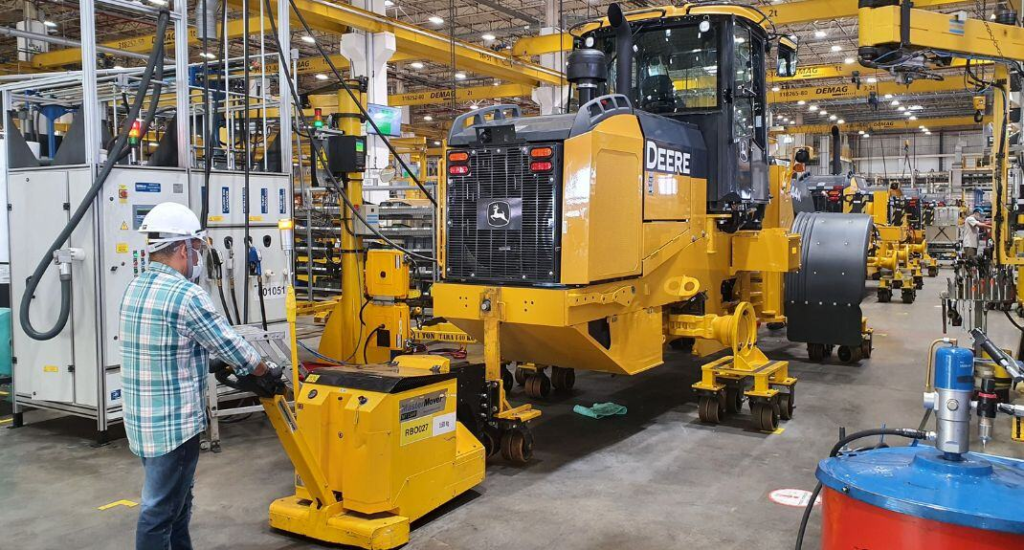
In construction equipment and heavy industrial robotics, the main challenge is not simply moving large payloads, but moving them in a controlled and coordinated manner. Cranes, lifting systems, robotic arms, and similar setups must operate safely while handling significant weight, often in dynamic and unpredictable environments.
Large servo motors enable coordinated multi-axis motion, allowing multiple joints or lifting points to work together in a precisely synchronised manner. This coordination is essential for maintaining stability while lifting or positioning heavy loads, particularly in robotic systems that perform complex movement patterns.
Advanced control capabilities also support load-balancing and anti-sway functions. By continuously monitoring load behaviour and adjusting motor output in real time, servo systems minimise oscillations and improve operator safety. Such features make large servos a critical component in modern construction machinery and heavy robotic applications.
Energy, Oil & Gas, and Process Industries
Energy and process industries have to operate equipment that must perform reliably in hazardous environments. Applications, including valve-controlled drilling systems and pumping mechanisms, demand precise motion control to ensure both efficiency and safety.
Large servos provide accurate positioning and force control for such critical operations. In flow control systems, this precision enables tighter regulation of pressures and flow rates while improving overall process efficiency. In drilling and extraction, servos allow controlled application of torque and speed under changing loads. Enhanced control directly translates into better safety and enables these systems to respond quickly to abnormal conditions.
Steel, Cement, and Heavy Manufacturing Plants
Steel mills, cement plants, and other heavy manufacturing facilities rely on large rotating machinery such as kilns, mills, mixers, and other rotating equipment. These applications typically require high torque at low speeds, combined with continuous operation and high reliability.
All of these requirements are effectively met by large servos, which excel in these conditions by delivering stable torque across wide speed ranges. Additionally, large servos enable adaptive process control. By adjusting motor behaviour in response to real-time feedback, heavy manufacturing plants can optimise production parameters, reduce energy consumption, and respond quickly to changing operating conditions.
Get Reliable Large Servo Motor Systems Built To Perform – Connect With DMKE Today!
At DMKE, our experts are capable of manufacturing and customising large servo solutions to drive your heavy industrial needs. Each of our products, once completed with quality components, undergoes rigorous testing to ensure its excellence.
Whether you want something in the energy, oil and gas, construction, industrial robotics, mining, material handling, or automation sector, we have it all for you.
Visit our website to get your hands on our ready-made servo solutions, or simply connect with us to begin consultations on your next custom large motor project.

 English
  English (Australia)
  English (Canada)
  Deutsch
  English (UK)
  Français