
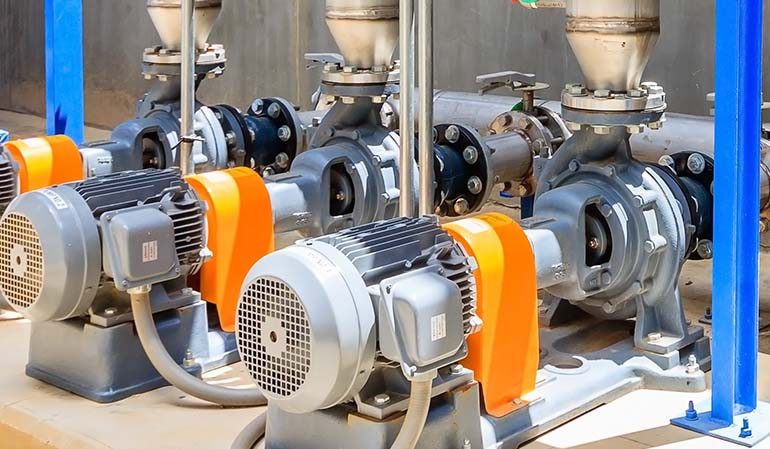
Industrial motor selection challenges continue to grow as industries demand higher efficiency, consistent performance, and minimal downtime across operations. Whether in manufacturing plants, HVAC systems, or automated production lines, choosing the right motor directly impacts productivity and long-term operating costs. In many cases, selecting the wrong industrial motor can lead to energy losses, frequent maintenance, and reduced equipment lifespan.
As industries evolve toward automation and energy optimization, the role of a reliable industrial motor solution becomes critical. Buyers are no longer just comparing prices; they are evaluating performance, durability, and compatibility with modern control systems. This shift has made it essential to understand which motor types are most commonly used and why they dominate industrial applications.
However, confusion often arises when comparing motor types, power ratings, and performance metrics. Questions such as which motor is most commonly used in industry, how horsepower is calculated from wattage, and what motor type is best for specific applications are common during the decision-making process. Without clear guidance, selecting the right unit can become a complex task.
This article provides a practical, buyer-focused overview of industrial motors, covering the most widely used types, their working principles, and real-world applications. It also explains key technical considerations, such as horsepower conversion and offers decision guidance to help you choose the most suitable industrial motor for your operational requirements. So, read on:
What Is the Most Common Industrial Motor?
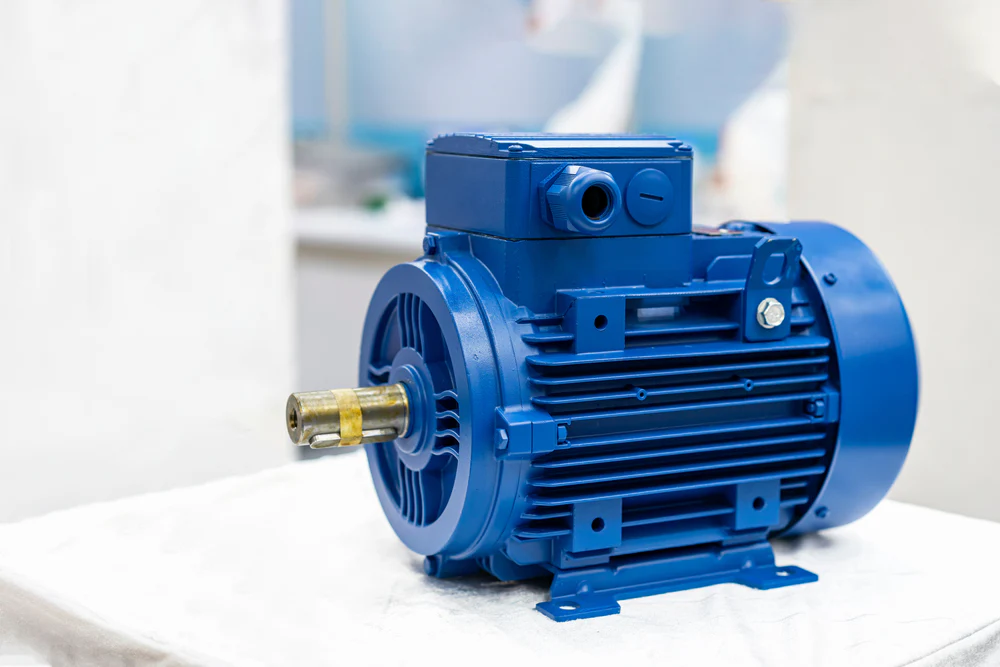
The most common industrial motor used across industries is the induction motor, particularly the AC induction type. Its widespread adoption is not accidental but driven by a combination of durability, simplicity, and cost-effectiveness that aligns well with industrial operating conditions.
In most facilities, an industrial motor is expected to run continuously with minimal maintenance while handling varying loads. Induction motors meet these requirements due to their rugged construction and lack of complex components such as brushes or commutators. This makes them highly reliable for long-term use in demanding environments.
One of the key reasons for their dominance is ease of operation. Induction motors can be directly connected to AC power supplies without requiring advanced control systems in basic applications. This reduces installation complexity and overall system cost, making them a preferred industrial motor choice for large-scale operations.
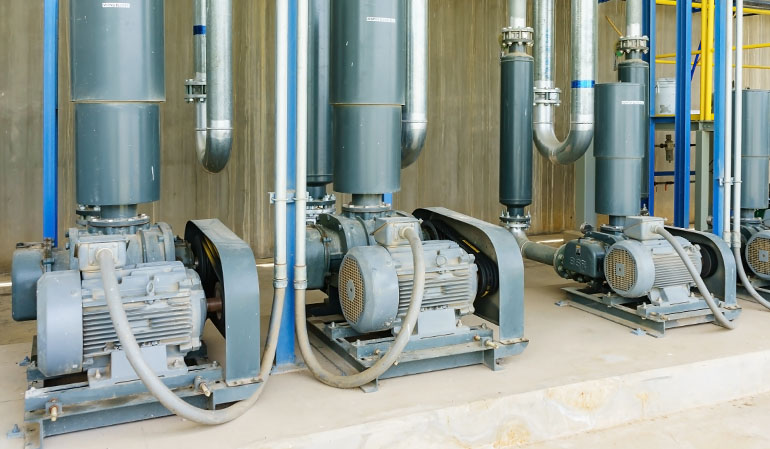
From an application standpoint, induction motors are widely used in pumps, compressors, conveyors, and ventilation systems. These are core industrial processes where consistent performance is more important than precision control. For such use cases, a simple and reliable industrial motor solution delivers better long-term value than more complex alternatives.
Another important factor is scalability. Induction motors are available in a wide range of power ratings, allowing industries to standardize their equipment across different applications. This flexibility makes them a practical industrial motor option for both small operations and large manufacturing plants.
For buyers, the takeaway is clear. If the application requires continuous operation, moderate control, and cost efficiency, induction motors remain the most common and dependable choice in industrial environments.
What Is The Most Used Motor In The Industry?
The most used motor in industry is also the AC induction motor, reinforcing its position as the backbone of industrial operations. While other motor types, such as BLDC and servo motors, are gaining popularity, induction motors continue to dominate due to their proven reliability and adaptability.
A major reason for this widespread use is compatibility with existing infrastructure. Most industrial facilities are built around AC power systems, making it easier to deploy an industrial motor based on AC technology without requiring additional conversion equipment or complex integration processes.
In terms of performance, induction motors provide a balanced combination of efficiency and durability. They may not offer the same level of precision as servo motors, but for general applications such as material handling and fluid movement, a standard industrial motor setup is more than sufficient.
Another factor driving their usage is maintenance simplicity. With fewer wear-prone components, induction motors require less frequent servicing, which reduces downtime and operational costs. For industries running 24-hour operations, this reliability makes them a preferred industrial motor choice over more complex systems.
However, it is important to note that usage trends are evolving. In applications requiring high precision, energy optimization, or variable speed control, alternatives such as BLDC and servo motors are being adopted. Even in these cases, the industrial motor landscape still relies heavily on induction motors for core operations.
For buyers, this means that while newer technologies offer advantages in specific scenarios, the induction motor remains the most widely used and practical solution for a majority of industrial applications.
Types of Industrial Motors Used in Modern Applications
Modern industrial operations rely on a variety of motor types, each designed to meet specific performance, efficiency, and control requirements. There is no one-size-fits-all solution, which is why understanding different motor types is essential for selecting the right industrial motor for a given application.
Induction motors remain the most widely used due to their durability and cost-effectiveness. However, other motor types, such as BLDC, servo, synchronous, and DC motors, are increasingly being used where higher efficiency or precision is required. Each industrial motor type serves a distinct role depending on operational demands.
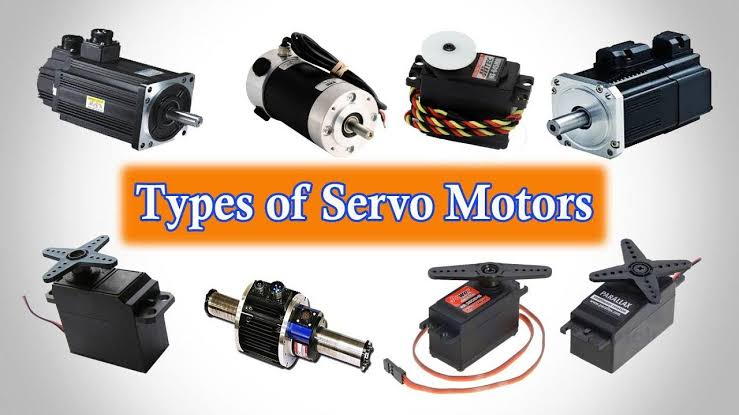
BLDC motors are known for their high efficiency and low maintenance, making them suitable for automation and HVAC systems, Servo motors, on the other hand, are designed for precision control and are commonly used in robotics and CNC machinery. Synchronous motors offer constant speed operation, which is beneficial in applications where stability is critical.
For buyers, understanding these differences helps in matching motor capabilities with application needs. Choosing the wrong type can lead to inefficiencies, higher operating costs, or performance limitations. A well-informed selection ensures that the industrial motor delivers both reliability and optimal performance over time.
| Motor Type | Key Features | Typical Applications |
| Induction | Durable, low-cost, simple design | Pumps, conveyors, compressors |
| Synchronous | Constant speed, high efficiency | Compressors, large drives |
| BLDC | High efficiency, low maintenance | HVAC, automation, robotics |
| Servo | Precision control, fast response | CNC machines, robotics |
| DC | Simple speed control | Legacy systems, small equipment |
How Different Motor Types Compare for Industrial Use
Comparing motor types practically allows buyers to evaluate which option aligns best with their operational priorities. Factors such as efficiency, cost, control, and maintenance play a crucial role in determining the right industrial motor for a specific application.
Induction motors are cost-effective and highly reliable, making them suitable for continuous duty operations. BLDC motors offer higher efficiency and better control but come with increased upfront costs. Servo motors provide unmatched precision but are typically used in specialized applications where accuracy is critical. Each industrial motor category differs in how it balances performance and cost.
From a lifecycle perspective, efficiency and maintenance requirements often outweigh initial investment. For example, while a BLDC motor may cost more initially, its lower energy consumption and reduced maintenance can deliver better long-term value. Buyers should evaluate the total cost of ownership carefully rather than focusing only on the purchase price.
Another key consideration is control capability. Applications requiring variable speed or precise positioning benefit from advanced motor types, while simpler systems can operate efficiently with standard induction motors. Selecting the right industrial motor configuration ensures that performance requirements are met without unnecessary complexity.
| Factor | Induction Motor | BLDC Motor | Servo Motor | DC Motor |
| Efficiency | Moderate | High | High | Moderate |
| Initial Cost | Low | Higher | High | Moderate |
| Maintenance | Low | Very Low | Moderate | High |
| Control | Limited | Good | Excellent | Basic |
| Typical Use | General industrial use | Automation, HVAC | Precision systems | Small or legacy systems |
Core Working Principles of Industrial Motors
Understanding how each industrial motor works allows buyers to move beyond basic comparisons and evaluate performance at a deeper level. Different motor types operate on distinct principles, which directly influence efficiency, control, and application suitability in real industrial environments.
At a system level, every industrial motor converts electrical energy into mechanical motion, but the method of achieving this varies significantly. These differences determine how well a motor performs under load, how much maintenance it requires, and how easily it integrates into existing systems.
Induction Motor Working Principle
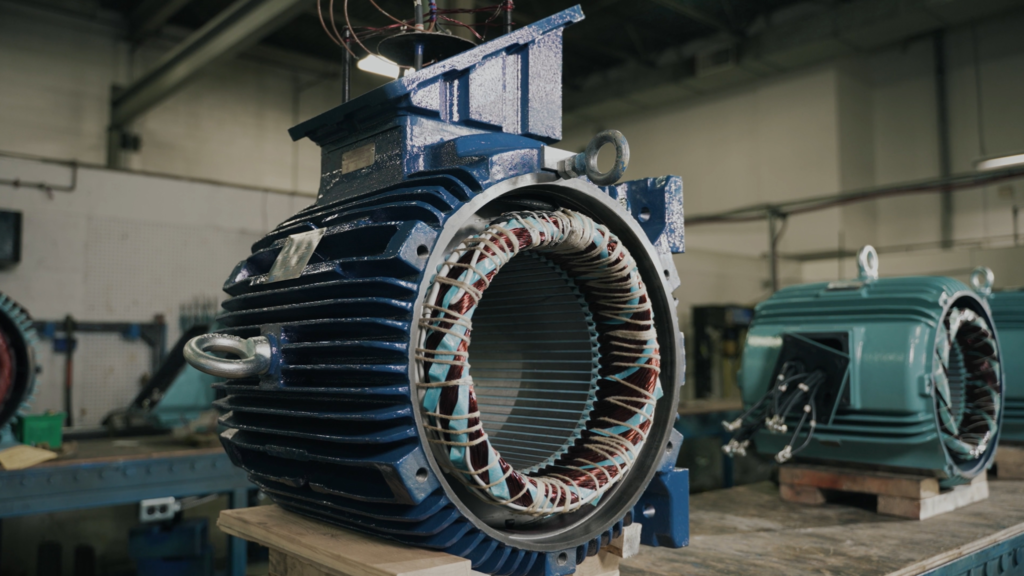
Induction motors operate on electromagnetic induction, where a rotating magnetic field is created in the stator and induces current in the rotor without direct electrical contact. This eliminates the need for brushes or commutators, resulting in a simple and highly durable design.
In practical applications, this design makes induction motors ideal for continuous operations. A typical industrial motor in this category is used in pumps, compressors, and conveyors, where consistent performance is required without frequent adjustments.
From a buyer’s perspective, the main advantage lies in reliability. With fewer components that can wear out, induction motors require less maintenance and offer long service life, making them a dependable choice for general industrial use.
BLDC Motor Operation
BLDC motors use electronic commutation, replacing mechanical brushes with controllers that manage current flow based on rotor position. This allows precise control over speed and torque, which is not easily achievable with conventional motor types.
In an industrial setting, a BLDC-based industrial motor setup provides higher efficiency and reduced energy losses. These motors are commonly used in automation systems, HVAC applications, and robotics, where performance optimization is important.
Another key benefit is reduced wear and heat generation. Since there are no brushes, friction is minimized, which improves lifespan and lowers maintenance requirements over time.
Servo Motor Precision Control
Servo motors are designed for accuracy, using closed-loop feedback systems to control position, speed, and torque with high precision. Sensors continuously monitor output and adjust performance in real time.
This makes them essential for applications such as CNC machines, robotic arms, and packaging systems. In such environments, even minor deviations can impact output quality, so a high-precision industrial motor solution is required.
For buyers, servo motors represent a specialized investment. While they are more expensive, their ability to deliver exact control makes them indispensable in industries where precision and repeatability are critical.
How Many HP Is a 72V 3200W Motor?
Understanding power conversion basics is important when evaluating motor specifications, especially when comparing wattage and horsepower ratings. Many buyers encounter confusion when translating electrical power into usable mechanical output.
To convert watts into horsepower, the standard formula is: 1 horsepower equals approximately 746 watts. Based on this, a 3200W motor delivers around 4.29 horsepower under ideal conditions. This means a 72V 3200W industrial motor output corresponds to roughly 4.3 HP.
However, real-world performance may vary depending on efficiency losses, operating conditions, and system design. Not all electrical input is converted into mechanical output, so actual usable power may be slightly lower in practice.
For industrial buyers, this calculation helps in selecting motors that match load requirements. A motor with insufficient horsepower can lead to inefficiency and overheating, while an oversized motor may increase costs unnecessarily.
When evaluating specifications, it is important to consider not just voltage and wattage, but also efficiency, duty cycle, and application requirements. A properly selected industrial motor ensures optimal performance without compromising reliability or energy consumption.
How Much Horsepower Is a 7V 3000W Motor?
Power rating confusion is common when buyers evaluate motors using voltage and wattage together. It is important to understand that horsepower depends on wattage, not voltage, which is often misunderstood during specification comparisons.
Using the standard conversion, 1 horsepower equals approximately 746 watts. Based on this, a 3000W motor produces around 4.02 horsepower under ideal conditions. This means that, regardless of voltage, a 3000W industrial motor delivers roughly 4 horsepower in practical terms.
The mention of 7V in this case may indicate a system-specific configuration or could be an input error, as such low voltage is not typical for industrial-scale motors. Buyers should verify specifications carefully to ensure accurate evaluation of motor performance.
From a selection standpoint, this highlights the importance of focusing on power output rather than voltage alone. A correctly sized industrial motor ensures efficient operation, prevents overheating, and supports long-term reliability in demanding environments.
What Is the Best Motor for Industrial Use?
There is no single best motor for all industrial applications, as the ideal choice depends on specific operational requirements. Different environments demand different performance characteristics, which is why motor selection must be application-driven rather than generic.
For general-purpose operations such as pumps, fans, and conveyors, induction motors are often the most practical solution. Their durability and cost effectiveness make them a reliable industrial motor choice for continuous duty applications where precision control is not critical.
In contrast, BLDC motors are better suited for applications requiring higher efficiency and variable speed control. Industries focusing on energy optimization and automation often prefer this type of industrial motor due to its reduced maintenance and improved performance under varying loads.
Servo motors, on the other hand, are ideal for precision-driven environments such as robotics and CNC systems. Their ability to deliver accurate positioning makes them essential where control and repeatability are critical. Choosing this type of industrial motor solution depends on whether the application demands high accuracy.
For buyers, the key is to evaluate load conditions, duty cycles, and control requirements before making a decision. Matching the motor type to the application ensures optimal performance, lower operating costs, and long-term system reliability.
Key Buyer Considerations When Selecting an Industrial Motor
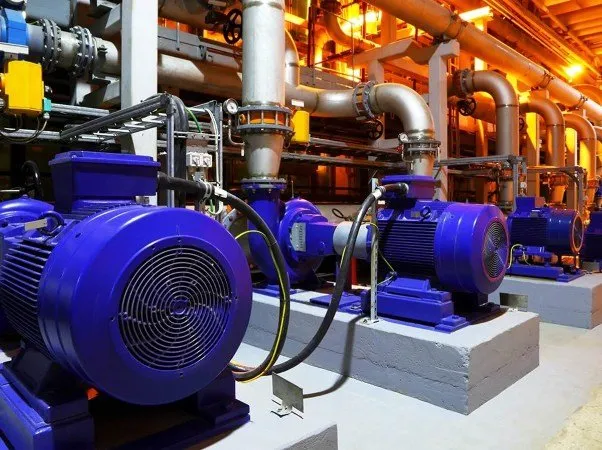
Selecting the right industrial motor requires a balance between performance, cost, and operational efficiency. Buyers should begin by evaluating the application type, as different motors are designed to handle specific tasks more effectively than others.
Load requirements and duty cycles are critical factors. An industrial motor must handle both peak loads and continuous operation without performance degradation. Incorrect sizing can lead to inefficiency, overheating, or premature failure.
Integration with existing systems is another important consideration. Compatibility with power supply, controllers, and automation systems ensures smooth operation and reduces installation complexity. Buyers should also assess environmental conditions such as temperature and dust exposure.
Finally, focusing on the total cost of ownership helps in making a strategic decision. While some motors have higher upfront costs, their efficiency and low maintenance requirements often result in better long-term value.
Long-lasting Industrial Motors For Reliable Usage – Connect With DMKE
Choosing the right industrial motor is a critical decision that affects efficiency, reliability, and long-term operational costs. From understanding the most common motor types to evaluating power ratings and application needs, buyers must take a practical and informed approach.
Induction motors remain the most widely used, while BLDC and servo motors offer advantages in efficiency and precision. The right choice depends on matching motor capabilities with operational requirements rather than relying on general assumptions.
At DMKE, the focus is on engineering-driven motor solutions that deliver consistent performance and reliability. With strong testing standards and customization capabilities, buyers can select motors with confidence based on real application needs.
Visit our website or contact us today if you are an industrial buyer looking to optimize performance and reduce risk. It is worth exploring solutions or reaching out to DMKE for expert guidance tailored to your specific operational requirements.

 English
  English (Australia)
  English (Canada)
  Deutsch
  English (UK)
  Français