
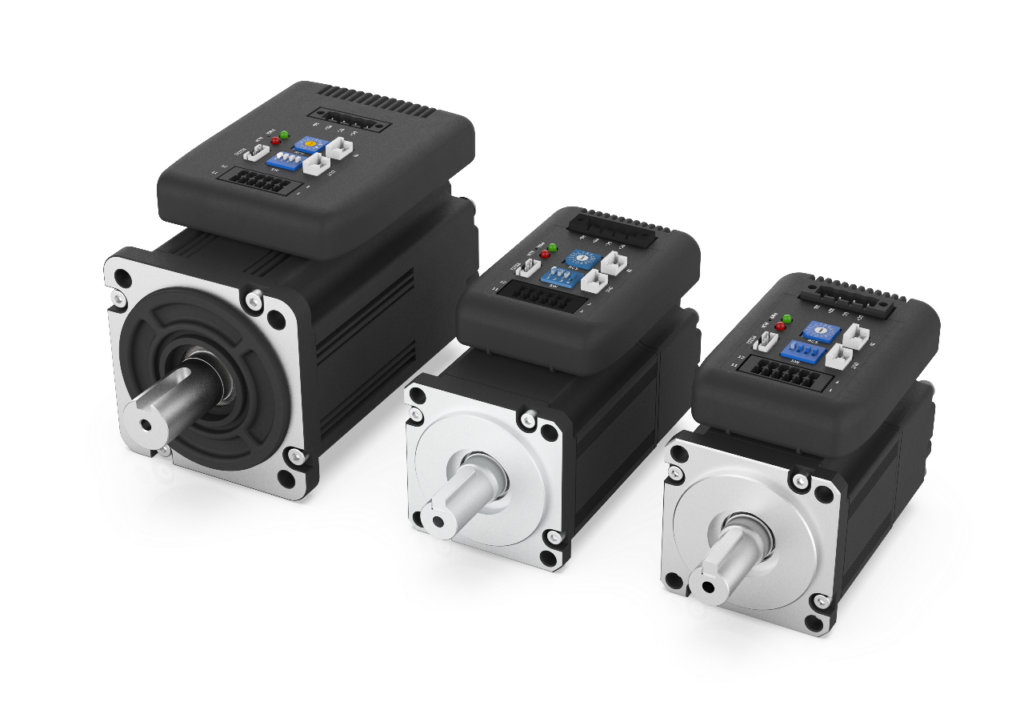
As automation systems become more compact and performance-driven, machine builders face increasing pressure to reduce equipment size without sacrificing power or precision. Industries such as robotics, packaging, medical automation, and semiconductor manufacturing now demand tighter layouts, cleaner mechanical designs, and more efficient use of installation space. Traditional servo systems often create design limitations because multiple external components consume valuable space and increase wiring complexity, making compact system integration more difficult for engineers.
Conventional servo architectures typically require separate motors, drives, controllers, and external cabling, which can crowd control cabinets and complicate machine layouts. These multi-component setups increase installation time, reduce design flexibility, and make maintenance more challenging in space-constrained environments. For OEMs and industrial designers, minimising footprint requirements has become a critical objective in modern equipment development.
An integrated servo motor addresses these challenges by combining multiple motion control components into a single compact unit. This architecture simplifies installation, reduces cabinet space, and enables more efficient mechanical layouts without compromising control accuracy or performance. As manufacturers continue prioritising miniaturisation and modular machine design in 2026, integrated motion solutions are becoming a preferred choice across advanced automation systems.
This guide explores how an integrated servo motor supports space-saving machine design, where these systems deliver the greatest value, and how buyers can evaluate the right configuration for their application requirements.
What Is an Integrated Servo Motor?
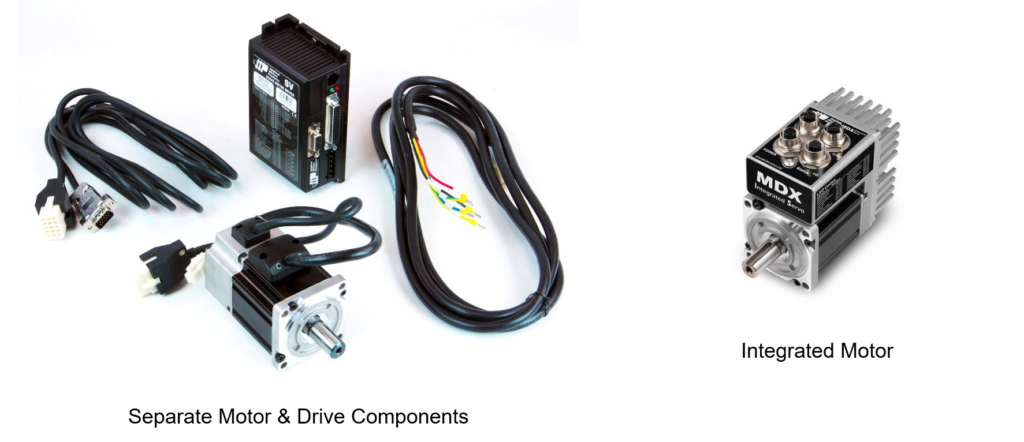
An integrated servo motor is a motion control solution that combines multiple servo system components into one compact unit. Instead of using a standalone motor connected to a separate drive, encoder, and controller, an integrated servo motor houses these elements within a unified assembly. This design creates a self-contained motion system that simplifies both mechanical and electrical integration.
Traditional servo architectures separate motion control components across different locations within a machine. The motor mounts at the point of movement, while the drive and control electronics are typically installed inside external cabinets or control panels. Although this setup has been widely used for years, it consumes valuable enclosure space and introduces greater installation complexity through additional cabling and component management.
By consolidating servo electronics directly into the motor housing, integrated designs reduce the number of external devices required to build a complete motion system. This enables engineers to simplify equipment architecture while maintaining the precise positioning, speed regulation, and torque control expected from servo-driven automation. For machine builders seeking compact and modular solutions, this creates significant design advantages over conventional layouts.
Another key advantage is scalability. Integrated servo motors support modular equipment design by allowing each axis to function as a more independent motion unit. This simplifies expansion, redesign, and system reconfiguration for OEMs developing flexible machinery platforms. As automation systems continue moving toward decentralized control strategies, integrated servo technology is becoming increasingly relevant in modern machine engineering.
How Integrated Servo Motors Enable Space-Saving Design
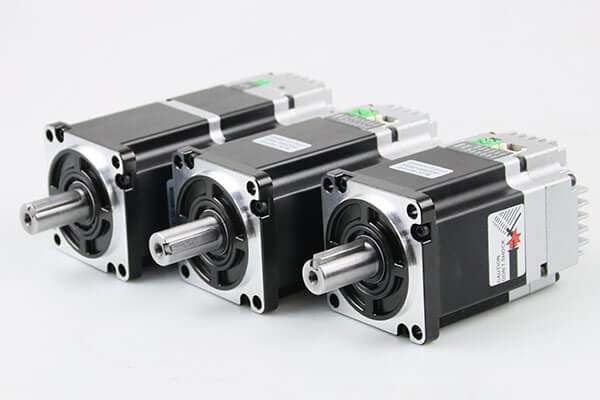
One of the primary reasons manufacturers adopt integrated servo technology is its ability to reduce the overall footprint of motion control systems. By consolidating multiple hardware components into one assembly, an integrated servo motor allows engineers to design machines with tighter layouts, smaller control enclosures, and more efficient internal architecture. This makes space-optimized engineering easier to achieve in compact automation systems.
Consolidated Component Architecture
Traditional servo systems require separate placement of the servo drive, encoder interface, control electronics, and motor assembly. Each component occupies physical space and demands its own mounting, cooling, and protection considerations. An integrated servo motor eliminates much of this hardware by embedding these functions directly into the motor structure, reducing external hardware dependency throughout the system.
This consolidation is especially beneficial in multi-axis machines where every additional axis would otherwise require separate drives and expanded control panel capacity. With integrated units, machine builders can significantly reduce cabinet size or eliminate large control enclosures entirely, creating more efficient layouts for equipment with numerous motion points.
Simplified Wiring and Installation
Wiring complexity often becomes a major challenge in conventional servo systems. Separate motors and drives require multiple power, feedback, communication, and grounding cables routed across the machine. These connections consume installation time, increase assembly labor, and make troubleshooting more difficult over the equipment lifecycle. Integrated designs solve this by reducing overall wiring requirements between components.
With fewer cables to route and terminate, installation becomes faster and cleaner. Engineers can create more organized internal layouts while minimizing opportunities for wiring errors or signal interference. Reduced cabling also lowers long-term maintenance effort, making simplified electrical integration a practical operational benefit in addition to space savings.
Compact Mechanical Footprint
Integrated servo motors also reduce the total mechanical footprint of a motion system by combining all control functions into the actuator itself. This enables machine builders to fit motion control into tighter spaces where conventional architectures may be impractical. Compact packaging supports greater mechanical flexibility during equipment design and helps engineers optimize the use of limited installation space.
In robotics, portable equipment, and compact manufacturing cells, this smaller footprint can improve overall machine ergonomics while freeing space for additional tooling, sensors, or process components. For OEMs focused on miniaturization, integrated servo systems offer a practical path toward high-density automation without sacrificing motion performance.
| Feature | Traditional Servo System | Integrated Servo Motor |
| Drive Location | Separate Cabinet | Built Into Motor |
| Wiring Complexity | High | Low |
| Cabinet Space Required | Large | Minimal |
| Installation Time | Longer | Shorter |
| Mechanical Layout Flexibility | Moderate | High |
Key Benefits of Using Integrated Servo Motors
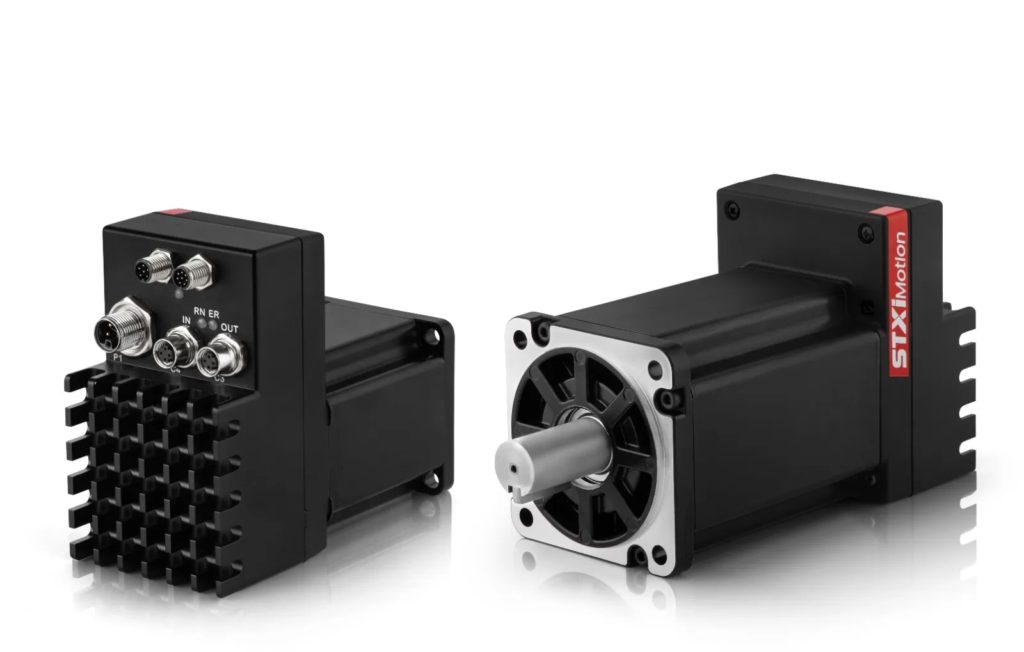
Beyond reducing physical footprint, an integrated servo motor offers several operational advantages that improve machine design, installation efficiency, and long-term maintainability. For OEMs and industrial buyers, these benefits extend beyond convenience and can directly impact equipment cost, scalability, and system reliability. Understanding the broader value of integration helps buyers evaluate total system efficiency rather than focusing only on component size.
One major benefit is reduced installation time. Because the drive and control electronics are already integrated into the motor, engineers spend less time mounting external hardware, routing cables, and configuring separate components. This shortens assembly cycles and allows manufacturers to bring equipment online faster, delivering quicker deployment timelines for both new builds and retrofits.
Integrated systems also lower wiring and labour costs. Traditional servo setups often require extensive cable management, cabinet assembly, and connection testing, all of which add labour hours during production. By reducing hardware and cable count, integrated solutions help manufacturers achieve lower installation costs while simplifying procurement and assembly processes.
Maintenance and diagnostics can improve as well. Fewer separate components mean fewer potential failure points within the motion control architecture. Troubleshooting becomes more straightforward because each axis operates as a more self-contained unit, helping technicians isolate issues faster and reduce maintenance downtime risks during operation.
Another key advantage is modular machine design. Integrated servo systems make it easier to scale or replicate machine platforms because each motion axis can be deployed using a repeatable, compact architecture. This supports OEMs developing standardised equipment lines where design consistency matters across multiple machine configurations.
Applications Where Integrated Servo Motors Deliver the Most Value
Integrated servo technology provides the greatest value in applications where space constraints, modularity, and installation efficiency are critical design priorities. While these motors can benefit many automation systems, certain industries gain particularly strong advantages from their compact architecture and simplified integration. Evaluating application fit helps buyers determine where integration delivers maximum ROI.
Robotics and collaborative robots frequently use integrated servo systems because robotic joints require compact, lightweight motion components positioned directly at articulation points. Reducing external drives and cable routing improves mobility while supporting more compact arm designs. In these systems, integrated solutions enhance robotic design flexibility and simplify multi-axis motion control.
Packaging equipment also benefits significantly from integrated servo motors. Modern packaging lines demand compact layouts, rapid motion cycles, and efficient machine footprints to maximize production floor utilization. Integrated motors help designers reduce cabinet size and streamline machine architecture, creating more compact packaging systems without sacrificing motion precision.
Medical automation systems often require small, precise, and highly reliable motion components in limited installation spaces. Integrated servo technology supports compact diagnostic, dispensing, and handling equipment where cleanliness and design efficiency are essential. These applications benefit from high-density motion in tightly engineered devices.
Automated guided vehicles and mobile robotics represent another ideal use case. Because these systems carry their own power and controls, minimising component count and space consumption directly improves mobility and payload efficiency. Integrated motors help reduce onboard hardware requirements while supporting compact mobile platforms.
Semiconductor and electronics manufacturing equipment also increasingly adopts integrated servo systems due to strict space, precision, and cleanliness requirements. Compact motion control enables dense machine layouts while maintaining the accurate positioning needed in high-precision manufacturing. For these environments, integrated designs provide precision in compactness that traditional architectures struggle to match.
How to Choose the Right Integrated Servo Motor
Selecting the right integrated servo motor requires more than choosing the most compact model available. Buyers must evaluate performance requirements, electrical compatibility, environmental demands, and installation constraints to ensure the selected unit delivers reliable long-term operation. Proper specification matching is essential for achieving consistent motion performance while preserving the space-saving benefits of integration.
Torque and speed requirements should be the starting point in any selection process. Every motion application places unique demands on the motor based on payload weight, acceleration rate, duty cycle, and movement precision. An undersized motor may struggle to maintain speed under load or overheat during continuous operation, while an oversized unit increases cost and occupies unnecessary space. Engineers should calculate operating loads carefully to achieve balanced motor sizing that aligns with actual performance requirements.
Electrical compatibility must also be verified early in the evaluation process. Buyers should confirm that the integrated servo motor supports the available system voltage, power supply architecture, and communication protocols used by the machine controller. Overlooking these factors can create commissioning delays or require expensive redesigns later in the project. Ensuring proper compatibility from the start helps maintain smooth system integration throughout installation and operation.
Thermal management is another important consideration when selecting integrated designs. Because the motor and drive electronics share one housing, heat generation becomes more concentrated than in conventional distributed servo systems. Applications with high duty cycles, elevated ambient temperatures, or limited airflow may require motors specifically designed for enhanced cooling. Evaluating thermal conditions early helps preserve long-term reliability and prevents premature performance degradation.
Environmental conditions should also influence product selection. Motors operating in dusty, humid, washdown, or vibration-prone environments need robust housing protection and durable internal construction. Choosing a unit suited to real operating conditions ensures stable field performance and reduces maintenance risks over time.
Finally, installation constraints should be reviewed alongside mechanical performance. Even compact integrated servo systems vary in body dimensions, connector placement, and mounting requirements. Buyers should confirm that the selected motor fits the machine layout without interfering with surrounding components or limiting service access. Considering these details early supports efficient mechanical integration and helps avoid costly design revisions during assembly.
| Selection Factor | What to Evaluate | Why It Matters |
| Torque Requirement | Load weight, acceleration, duty cycle | Prevents undersizing or overload |
| Speed Range | Required RPM and dynamic response | Ensures proper application performance |
| Voltage Compatibility | Available power supply | Avoids electrical mismatch |
| Communication Protocol | PLC/network interface support | Enables seamless control integration |
| Thermal Conditions | Ambient temperature, airflow, duty cycle | Protects long-term reliability |
| Environmental Exposure | Dust, moisture, vibration | Ensures housing durability |
| Mounting Space | Housing dimensions, connector clearance | Confirms fit in the machine layout |
A well-selected integrated servo motor improves machine efficiency, simplifies installation, and supports long-term operational reliability. Taking a structured engineering approach to specification ensures buyers achieve both space-saving benefits and dependable motion performance in demanding automation applications.
Common Design Mistakes to Avoid
Although integrated servo motors simplify machine design, improper specification or implementation can reduce their performance benefits. Many design issues arise when buyers focus only on footprint reduction without fully evaluating operational requirements. Avoiding common mistakes helps ensure successful system integration and long-term reliability.
One frequent issue is undersizing torque capacity in pursuit of a smaller package. Compact motors may fit the available space, but if torque reserves are insufficient, the system can experience instability, overheating, or premature wear. Buyers should prioritize performance before size when evaluating motor options.
Another common mistake is overlooking thermal management. Because integrated servo motors contain both mechanical and electronic components in one housing, heat dissipation becomes more important than in traditional distributed architectures. Failing to account for airflow, ambient temperature, or duty cycle can reduce operational lifespan significantly.
Communication compatibility is also sometimes underestimated. Integrated motors must interface correctly with the machine’s PLC, controller, or network architecture. Selecting units without confirming protocol support can create costly integration challenges and require unexpected system modifications during implementation.
Finally, some designers fail to plan for service access when installing compact motion systems. While integrated motors reduce component count, they still require reasonable accessibility for inspection, replacement, and maintenance. Smart machine layouts preserve maintenance accessibility while maximising space savings.
Why Integrated Servo Motors Are Becoming Standard in 2026
Integrated servo motors are becoming increasingly common as servo manufacturers prioritize compact automation design and simplified machine architecture. OEMs now face growing pressure to deliver smaller, more efficient equipment without sacrificing motion performance.
One key driver is the push toward miniaturisation. Industries such as robotics, medical automation, and electronics manufacturing require tighter layouts where traditional servo systems consume excessive space. Integrated solutions provide the compact motion control needed for these constrained designs.
Smart factory adoption is also accelerating demand. Modern integrated servo motors support advanced communication protocols and decentralised control strategies, making them well-suited for connected automation systems built around Industry 4.0 principles.
In addition, OEMs increasingly prefer modular machine platforms that can be scaled or reconfigured easily. Because each integrated servo motor functions as a self-contained motion unit, it supports flexible machine design and faster platform replication.
Choose the Right Servo Solution With Expert Engineering Support – Connect With DMKE
Selecting the right integrated servo motor requires balancing space limitations with performance, thermal, and system compatibility requirements. Buyers who take a structured engineering approach to specification are more likely to achieve reliable long-term results while maximising the design benefits of integrated motion control.
Proper sizing and application matching remain critical. Choosing a motor based only on footprint reduction can create torque, thermal, or control limitations that reduce performance over time. Evaluating the full operating environment ensures the selected integrated servo motor delivers optimal application fit rather than simply meeting dimensional requirements.
At DMKE, we help industrial buyers evaluate motion control needs through engineering-led selection and application support. Our team works closely with OEMs and automation designers to recommend integrated servo solutions based on real operating requirements, ensuring precision-matched performance for each application.
Every solution is backed by rigorous testing, quality verification, and customisation capabilities to meet specialised torque, speed, and environmental requirements. Whether you need standard configurations or application-specific modifications, DMKE provides engineered motion reliability built for modern industrial automation.
Visit our website or contact us today to discuss your project and receive expert guidance on selecting integrated servo motor solutions tailored to your machine design and operational goals.

 English
  English (Australia)
  English (Canada)
  Deutsch
  English (UK)
  Français